

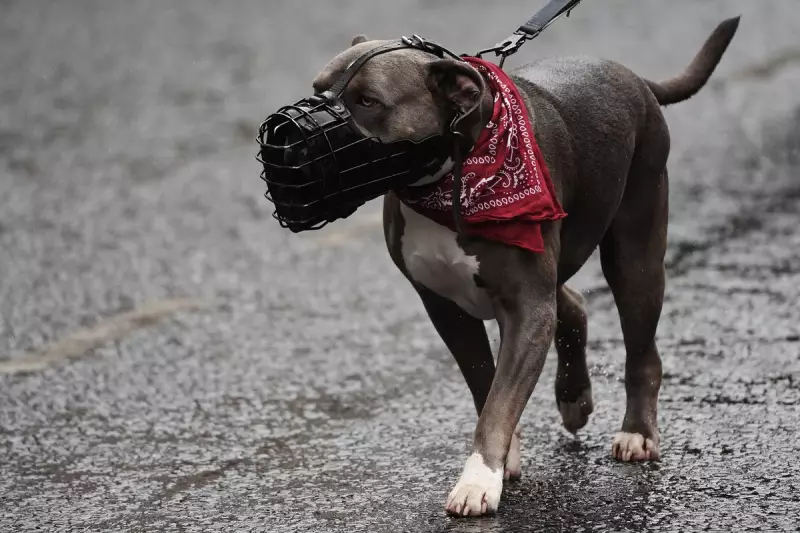
The government's ban on XL bully dogs has been firmly upheld after campaigners saw their legal challenge dismissed by the Court of Appeal. This ruling solidifies the criminal status of owning this breed without an official exemption certificate in England and Wales.
Legal Challenge Dismissed
Campaign group Don't Ban Me, Licence Me, led by director Sophie Coulthard, had launched legal action against the Department for Environment, Food and Rural Affairs (Defra). Their challenge came after it became a criminal offence to own an XL bully without an exemption certificate in February 2024.
The group argued the ban was based on "unreliable" material and "vague" standards, which they said risked people unknowingly breaking the law. They also claimed there was a lack of proper impact analysis. While Mrs Justice Lang, in an earlier ruling, found the Government had failed to comply with its public sector equality duty in assessments during September and October 2023, she dismissed the core challenge.

She concluded that a correct assessment conducted later, in May 2024, meant the outcome would not have been "substantially different". The campaigners' subsequent appeal against part of this ruling was dismissed on Friday 19 December 2025.
The Consequences of the Ban
The law change has significant implications for owners. Unregistered pets can be seized, and owners face potential fines and prosecution. Police have warned that illegal XL bullies may be put down if owners are non-compliant.
Those who hold an exemption certificate must adhere to strict requirements, which include:
- Microchipping their dog
- Neutering their pet
- Keeping the dog muzzled and on a lead in public
- Holding third-party liability insurance
In a written judgment, Lord Justice Singh, sitting with Dame Victoria Sharp and Lord Justice Warby, clarified the legal position. He stated: "The judge held that the Secretary of State had breached the PSED before the orders were made but she did not hold the orders were therefore 'unlawful'. In fact she held the opposite... The consequence in law is that the orders are valid and were valid in the period between February and May 2024."
Why Was the Ban Introduced?
The government's decision to add the XL bully to the Dangerous Dogs Act was driven by alarming statistics on attacks. At least six out of ten fatal dog attacks in the UK in 2022 involved an XL bully.
According to data from Bully Watch, a monitoring group set up by dog owners, XL bullies were responsible for 45 per cent of dog attacks on humans and other dogs in 2023 before the ban came into force.
The American XL bully is closely related to the pit bull terrier and has been cross-bred with other powerful breeds like the English and American bulldog. It became the fifth type of dog prohibited under the UK's Dangerous Dogs Act, joining the:
- Pit bull terrier
- Japanese tosa
- Dogo Argentino
- Fila Brasileiro
It is now against the law to own, breed, sell, advertise, exchange, or abandon any of the dogs on the list drawn up by Defra. The Court of Appeal's decision marks a definitive moment in this contentious policy, leaving the ban firmly in place.






