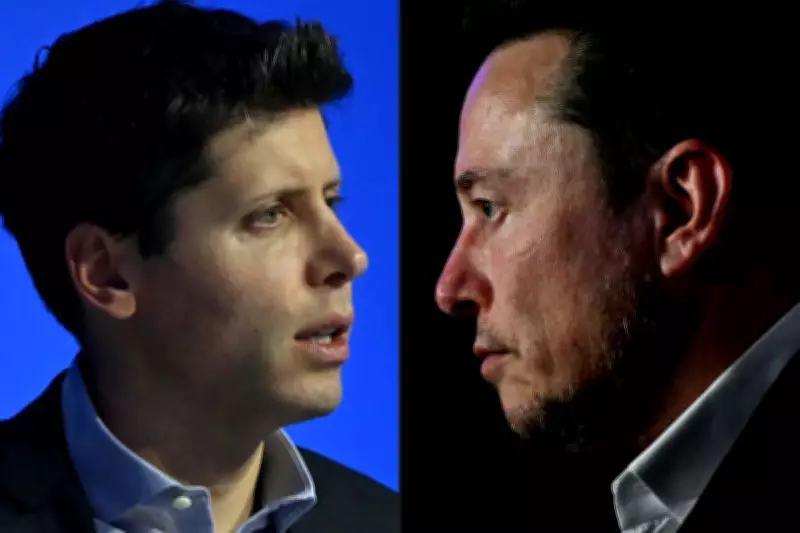
A long-running 'tech soap opera' between Elon Musk and Sam Altman is set to be hashed out in court starting this week, with potentially disastrous consequences for OpenAI and the future of the AI industry.
The Core Dispute
Elon Musk, the South African-born founder of SpaceX, and Sam Altman, the CEO of OpenAI, are two tech titans who believe they will have the biggest impact on humanity. Musk helped establish OpenAI in 2015 as a non-profit dedicated to developing AI for the betterment of humanity. However, OpenAI later created a 'capped profit' subsidiary in 2019 to attract investment from Microsoft, while legally binding returns to its mission of safe artificial general intelligence (AGI). Musk alleges that Altman has gone back on that founding principle.
The Lawsuit
The trial, beginning in Oakland, California, is expected to run for several weeks. If Musk succeeds, the court could force OpenAI to unwind its for-profit structure, alter who controls the company, and potentially reshape how charities and donors challenge mission drift in Silicon Valley. This would complicate OpenAI's path to an initial public offering (IPO) and raise questions for investors and regulators about how much freedom a non-profit-backed AI lab has to become a commercial giant.

Dan Ives, principal analyst at Wedbush Securities, calls it a 'tech soap opera' with 'a lot of dirt and slings thrown around in court.' Andres Guadamuz, a legal scholar at the University of Sussex, adds that the case is 'about personal disputes between two very unlikeable people.'
Arguments and Defenses
Musk argues that OpenAI is no longer open-source or sufficiently non-profit. However, Anupam Chander, professor of law at Georgetown University, notes that 'openness is a fluid concept, and there may be good societal reasons for not releasing the most powerful models to the public.' OpenAI denies the claims, stating that Musk had plenty of opportunity to raise concerns without lawsuits. Lawyers for OpenAI wrote that this 'is the latest move in Elon Musk's increasingly blusterous campaign to harass OpenAI for his own competitive advantage.'
Potential Outcomes
Guadamuz expects the case to be settled out of court, as neither party wants a negative result. For OpenAI, the outcome could be make-or-break, with their IPO on the line. For Musk, it seems more about personal animosity. If Musk wins, OpenAI could cede supremacy to another AI company. The outcome could also affect how non-profits and charitable organisations are run, potentially allowing donors to reassert control over charities even without contractual rights.