IOC's Olympic Delusion Exposed as Ukrainian Athlete Banned for War Memorial Helmet
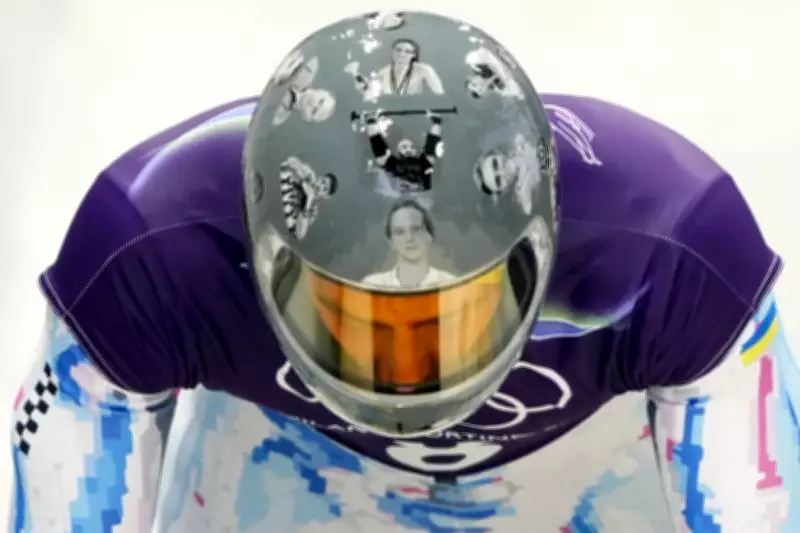
The International Olympic Committee has tied itself in knots attempting to maintain its fantasy of an apolitical Games, but the disqualification of Ukrainian skeleton star Vladyslav Heraskevych has exposed this as an impossible battle. The 27-year-old athlete, a serious medal contender who recorded the fastest training time, has been sent home from the Winter Olympics not for doping but for wearing a hand-painted helmet commemorating Ukrainian athletes killed in the Russian war.
Personal Remembrance Deemed Political Propaganda
Heraskevych, whose family members are currently fighting on the front lines and who worked delivering humanitarian aid when Russia first invaded, refused to back down over his helmet choice. "I will not betray these athletes," he declared. "These athletes sacrificed their lives, and because of this sacrifice, I am able to be here, so I will not betray them."
The IOC pointed to its labyrinthine rules, specifically citing Rule 50.2 which prohibits "political, religious or racial propaganda" in Olympic venues. Yet equating a personal memorial for war dead with political propaganda represents a disturbing interpretation that has drawn widespread condemnation.

Selective Enforcement and Hypocritical Standards
The decision appears particularly hypocritical when contrasted with other cases. While Heraskevych faces disqualification, Russian athletes have been permitted to compete following a controversial vetting process. Meanwhile, Afghan breakdancer Manizha Talash was previously disqualified for wearing a 'Free Afghan Women' cape, yet Chinese cyclists wearing Mao Zedong badges on the Tokyo podium received only warnings.
Ukrainian President Volodymyr Zelenskyy responded forcefully: "Sport shouldn't mean amnesia, and the Olympic movement should help stop wars, not play into the hands of aggressors. Having courage is worth more than any medal."
The Inextricable Link Between Sport and Politics
This incident represents just the latest chapter in the undeniable intertwining of sports and global politics. From US Vice President JD Vance's mixed reception at the Opening Ceremony to FIFA President Gianni Infantino's closeness to the Trump administration, from Saudi Arabia's sportswashing investments to Vladimir Putin claiming Russian-born Wimbledon champion Elena Rybakina's victory as propaganda, the separation has become a total farce.
Even within these Games, political realities have been unavoidable. The reading of 'Chinese Taipei' during the Opening Ceremony demonstrated deference to China, while the IOC has been testing waters for Russia's full return despite widespread opposition.
IOC's Leadership Crisis and Backtracking
The IOC's handling of the situation has revealed a crisis of confidence. Initially withdrawing Heraskevych's accreditation entirely, the committee backtracked hours later after personal intervention from IOC President Kirsty Coventry. This reversal turned a complete public relations disaster into merely a serious one, but exposed organizational indecision.
Notably, the IOC moved its daily press conference half an hour earlier with minimal notice, seemingly hoping to avoid questions about the controversy. IOC spokesperson Mark Adams defended the decision by stating: "There are 130 conflicts going on in the world. We cannot have 130 different conflicts featured, however terrible they are, during the competition."
An Olympic Charter Unfit for Modern Reality
The fundamental conclusion from this debacle is that the Olympic Charter exists in a fantasy world where complex geopolitical issues can be neatly compartmentalized. The IOC's insistence on neutrality has become impossible to maintain in an undeniably political global landscape.
Sport represents power, influence, and platform. To pretend otherwise is to engage in dangerous denial. The IOC must fundamentally reconsider how it positions itself in this reality, what stances it takes, and how it approaches situations where personal remembrance clashes with bureaucratic rules designed for a world that no longer exists.

The message currently being sent is that the IOC would rather curry favor with authoritarian regimes than allow grieving athletes from war-torn nations to express their devastation. But as Heraskevych's case demonstrates, the committee can only barricade itself from reality for so long before the contradictions become impossible to ignore.