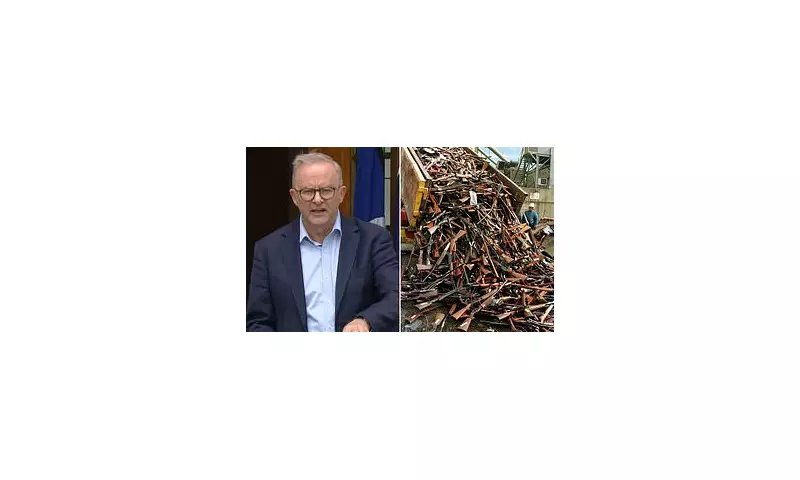
Prime Minister Anthony Albanese has performed a dramatic U-turn on his government's combined firearms and hate crime legislation, announcing he will split the bill to salvage its core components. The move comes just days before the controversial package was due to be introduced to Parliament, following clear signals it would be blocked by both the Coalition and the Greens.
Legislation Divided to Secure Gun Law Passage
In a surprise press conference held on Saturday, Mr Albanese confirmed the omnibus bill drafted after the Bondi Beach terrorist attack would be separated. The new gun laws, which include a national firearm buyback scheme modelled on the post-Port Arthur initiative, will now proceed independently to the House of Representatives on Tuesday. The provisions concerning hate crimes and migration will form a second, separate bill.
"We will separate out the bills - the gun laws will be separate and then the laws on hate crimes and migration will proceed," the Prime Minister stated. However, he conceded defeat on a key element, adding, "We will not be proceeding with the racial vilification provisions because it's clear that it won't have support."

Albanese emphasised that the government would only advance measures with parliamentary backing and called on the Coalition to clarify its stance. "We want to know what their position is on these measures because... we don't want there to be an ongoing debate of conflict," he said.
Opposition and Greens Force Government Retreat
The decision follows fierce criticism from across the political spectrum. Opposition Leader Sussan Ley had previously labelled the legislation "pretty unsalvageable," criticising it as "half-baked." She argued that laws of such seriousness demanded "precision, confidence and clarity."
Ms Ley announced the Coalition would push its own package when Parliament returns, focusing on deporting non-citizens and arresting citizens who preach radical Islamic extremism, glorify terrorism, or incite violence. "The parliament has to eradicate anti-Semitism and remove radical Islam. Those are our tests," she declared.
Similarly, Greens leader Larissa Waters stated just hours before Albanese's announcement that the bill needed a "huge amount of work" to gain her party's support. She expressed concerns on social media platform X, writing, "The Greens won't support laws that may risk criminalising legitimate political expression. The risk of unintended consequences is too great to rush passage of this legislation."
Concerns Over Free Speech and Broad Definitions
The original, now-abandoned, racial vilification provisions had drawn significant scrutiny from free speech advocates and human rights observers. The proposed law would have required a court to find that an accused person intended to cause hatred and that their conduct would cause a "reasonable" person from the targeted group to fear for their safety.
Critics argued that inserting the concept of "hatred" into criminal law was overly vague and open to wide judicial interpretation. Further anxieties were raised about a proposed new "hate group" listing, which would criminalise membership or support of a designated organisation. Some legal experts warned the definition was so broad it could potentially ensnare academics, journalists, and activists.
By dividing the bill, the Albanese government aims to secure the immediate passage of tighter gun controls, a measure with stronger cross-party support, while postponing the more contentious debate on hate speech and vilification. The political manoeuvre sets the stage for a focused parliamentary debate on firearm reforms this week, while the fate of the government's broader national unity and security agenda remains uncertain.