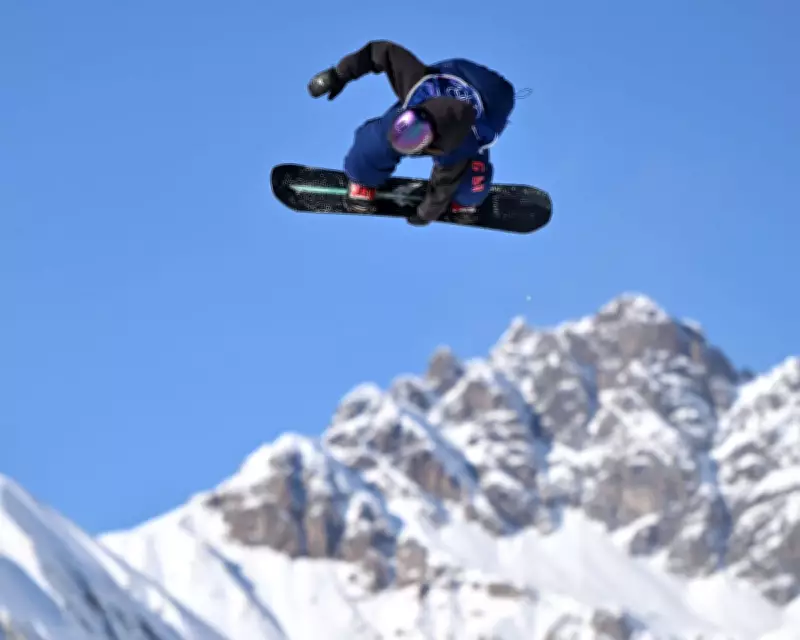
As relentless rain and biting winds have dominated the British winter, the Milano Cortina Winter Olympics have provided a stunning visual contrast. Under pristine blue Italian skies, skiers, skaters, and snowboarders have competed in a spectacle that has served as both a feast for the eyes and a balm for the soul. This backdrop has set the stage for an unprecedented weekend of sporting triumph for Team GB, a nation not traditionally known as a winter sports powerhouse.
Unprecedented Gold Medal Success
In a remarkable turn of events, Team GB secured two gold medals within just five hours on Sunday. Charlotte Bankes and Huw Nightingale made history by becoming the first British athletes to win on snow, triumphing in the mixed snowboard cross event. Simultaneously, in Milan, Tabitha Stoecker and Matt Weston edged out German competition to claim victory in the inaugural mixed team skeleton event. These achievements mark a significant departure from the days of Eddie the Eagle, whose heartwarming but unsuccessful ski jumping at the 1988 Games is now a distant memory.
Targeted Investment Yields Results
The success of Team GB is no accident. Over the past four-year Olympic cycle, UK Sport has invested millions in developing a formidable skeleton-racing team. Matt Weston, a current double world champion, was already a favourite, but the fourth-place finish by Freya Tarbit and Marcus Wyatt in the mixed event highlights the growing depth of talent. Charlotte Bankes, who grew up in the French Alps and initially competed for France, delivered a bravura performance that has been a highlight of the tournament, showcasing how targeted support can yield exceptional results.

Inspiring a New Generation
Britain's most successful Winter Olympics ever, broadcast in a time zone conducive to primetime viewing, is poised to spark increased interest in winter sports across the UK. However, this enthusiasm faces practical challenges. For instance, while Matt Weston may be the world's best skeleton racer, the UK lacks even one suitable ice track for aspiring athletes to train on. Similarly, Tabitha Stoecker's background as a gymnast and trapeze artist, discovered at a talent identification event, underscores the need for diverse pathways into these sports.
Charlotte Bankes's scintillating performance on the slopes has the potential to inspire a new generation to take up snowboarding, perhaps starting on indoor slopes in Britain, which have already nurtured talents like Mia Brookes. For the Milano Cortina 2026 Games to truly launch a golden age of British winter sports, they must act as a catalyst for further investment in grassroots participation, ensuring resources and outreach keep pace with growing interest.
Ongoing Drama and Future Prospects
As the Olympics continue, viewer attention is turning to an increasingly compelling and ill-tempered curling competition, where allegations of foul play have prompted calls for video assistant referees or Hawk-Eye-style technology. Team GB remains in contention for semi-final spots in both the men's and women's events, offering the prospect of more medals in northern Italy. In the midst of a grey February, the drama and inspiration provided by these Games may only be beginning, offering a much-needed distraction and a hopeful glimpse into the future of UK winter sports.