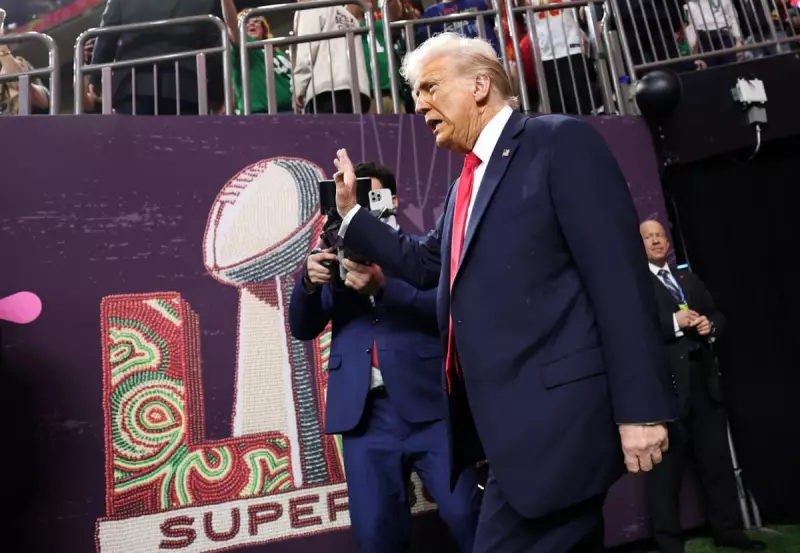
Donald Trump has announced he will not be attending next month's Super Bowl in northern California, with the former US president citing the significant travel distance as his primary reason for skipping the event. This decision marks a departure from his historic appearance at last year's game in New Orleans, where he became the first sitting president to attend the NFL's premier showcase.
Travel Distance Cited as Key Factor
In an interview with the New York Post, Trump explained that the trip to Levi's Stadium in Santa Clara for the 8 February championship is "just too far away." He indicated that he would have considered making the journey if it involved a shorter flight, highlighting how proximity often influences his attendance at such high-profile sporting events.
A Pattern of Sporting Appearances
Trump has frequently used sporting events as platforms during his political career, with many held in locations convenient to his bases in Florida or along the US east coast. Notable appearances include last year's Daytona 500, the recent college football national championship, and September's Ryder Cup in Bethpage, New York. These venues are typically within easy reach of the White House or his Mar-a-Lago compound, underscoring the logistical challenges posed by the California-based Super Bowl.

Criticism of NFL Entertainment Lineup
Beyond the travel issues, Trump voiced strong disapproval of the NFL's entertainment selections for the Super Bowl. He specifically targeted Puerto Rican rapper Bad Bunny, who is headlining the half-time show, and punk rock band Green Day, set to perform pregame. Trump labelled the choices as "terrible" and claimed they "sow hatred," reflecting ongoing culture-war tensions surrounding the event.
Bad Bunny's Political Stance
Bad Bunny, born Benito Antonio Martínez Ocasio, has been an outspoken critic of Trump in the past. Last year, he opted for a month-long concert residency in Puerto Rico instead of touring the mainland United States, a move seen by some as a political statement. Trump previously called his selection "absolutely ridiculous" and admitted unfamiliarity with the artist, further fuelling the controversy.
NFL Stands Firm on Decisions
NFL commissioner Roger Goodell has defended the league's choice of Bad Bunny, emphasising his global popularity and dismissing the backlash as typical for Super Bowl entertainment. Speaking after owners meetings in October, Goodell stated, "We're confident it's going to be a great show," indicating no plans to reconsider the lineup despite the criticism from Trump and others.
Impact on Super Bowl Viewership
The Super Bowl remains the most-watched annual television event in the United States, with last year's game averaging nearly 130 million US viewers and an additional 62.5 million internationally. The teams competing this year will be determined after Sunday's conference championship games, featuring matchups like the New England Patriots versus Denver Broncos and Los Angeles Rams against Seattle Seahawks. Trump's absence and his comments may add an extra layer of political discourse to the widespread viewership.
Trump clarified that the presence of Bad Bunny and Green Day did not influence his decision to skip the game, attributing it solely to the distance. However, his remarks have reignited debates over the intersection of sports, entertainment, and politics, particularly as Green Day has a history of politically charged lyrics and criticism of Trump's policies, such as immigration.