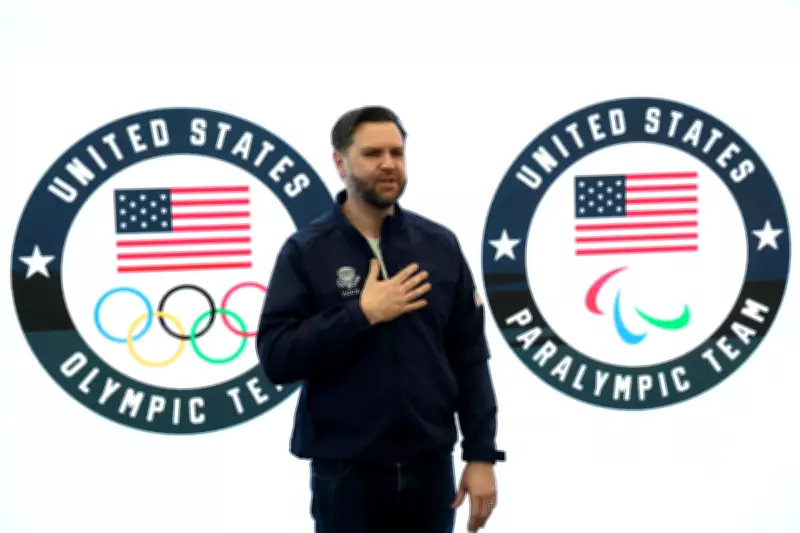
Team USA's women's ice hockey team kicked off their Winter Olympics campaign with a decisive victory against Czechia in Milan, but the sporting event was heavily overshadowed by underlying political tensions. The opening game saw a backdrop of anti-ICE protests and the controversial presence of US Vice-President JD Vance, who attended both the Opening Ceremony and the match, adding a layer of political scrutiny to the proceedings.
Political Backdrop Overshadows Sporting Triumph
Despite the American team's triumphant win, with goals scored by Megan Keller, Joy Dunne, Hayley Scamurra, and Hilary Knight, the focus remained partly on the political climate. JD Vance, who has recently made contentious remarks regarding a federal agent shooting, maintained a relatively low profile during the game, with cameras largely avoiding his entourage. However, his attendance sparked discussions about the intersection of sports and politics, particularly in light of ongoing debates over immigration policies.
IOC's Stance on Neutrality Fuels Further Debate
Prior to the event, International Olympic Committee (IOC) President Kirsty Coventry issued a statement emphasising sport neutrality, urging that the Games remain free from political influence. Ironically, this declaration was itself perceived as politically charged, given the context of the protests and Vance's presence. The anti-ICE demonstrations outside the venue highlighted broader societal issues, with activists using the global platform of the Olympics to voice their concerns over immigration enforcement practices in the United States.

As the Winter Olympics continue, the article suggests that these political questions will persist, potentially affecting the atmosphere around future events. While the US women's ice hockey team celebrated their victory, the broader narrative remains one of a sporting spectacle grappling with real-world controversies, underscoring how major international competitions often become arenas for wider social and political discourse.