

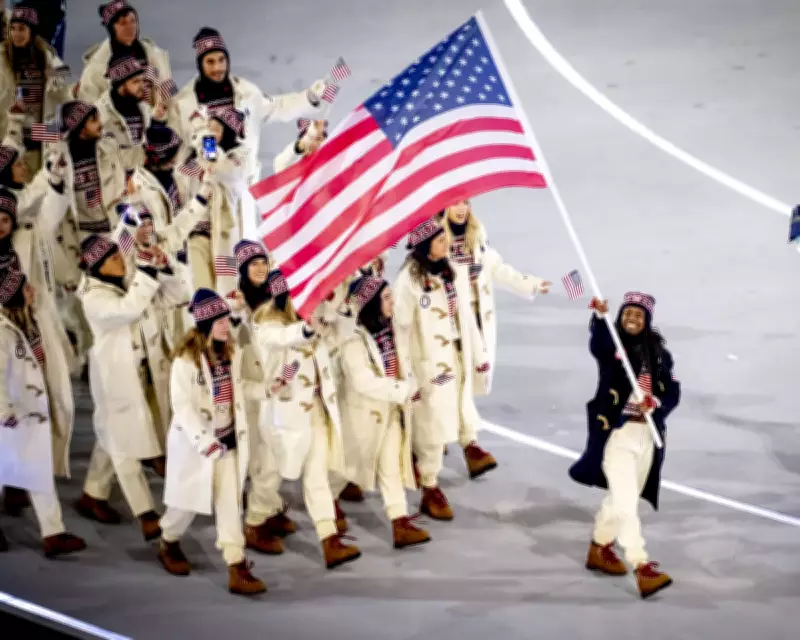
US Winter Olympians Confront Political Firestorm Over Flag Representation
American athletes competing at the Milano Cortina Winter Olympics are navigating a complex landscape of patriotism and politics, with several team members speaking openly about the emotional challenges of representing the United States in a highly charged political climate. This unprecedented candor has ignited fierce backlash from political figures, including former President Donald Trump, exposing a deepening rift between athletic representation and political expectations.
Trump's Direct Criticism of Ambivalent Athletes
The controversy escalated dramatically when Donald Trump targeted freestyle skier Hunter Hess on his Truth Social platform, calling the Oregon native "a real loser" for expressing mixed emotions about representing his country. Trump's post mischaracterized Hess's nuanced position, suggesting the athlete shouldn't have tried out for the team if he felt ambivalent. This exchange has become the most visible example of political friction surrounding the US Olympic delegation in Italy.
The Trump administration's increasingly aggressive international posture—including tariffs on allies, military actions in Venezuela, and rhetoric about acquiring Greenland—has created what diplomats describe as a more politically charged atmosphere at the Games. This backdrop has made athletes more willing to discuss the tensions they experience while competing under the American flag.

Athletes Distinguish Between Nation and Government
During a Milan news conference, members of the US freeski team articulated careful distinctions between representing their country and endorsing specific government policies. Hunter Hess explained that wearing the flag doesn't mean representing everything happening in the United States, emphasizing that his representation aligns with his moral values. Fellow freestyle skier Chris Lillis echoed this sentiment, expressing heartbreak over recent US immigration policies while viewing his Olympic appearance as an opportunity to represent an alternative vision of America.
Figure skater Amber Glenn, who won gold in the team event, highlighted the particular challenges facing LGBTQ+ Americans in the current political moment. She subsequently announced a social media break after receiving what she described as a "scary amount" of hate messages and threats following her comments. The US Olympic and Paralympic Committee confirmed it is monitoring abusive online activity and working with platforms and law enforcement on credible threats.
Backlash Extends Beyond Current Team Members
The hostility has not been confined to active Team USA athletes. Gus Kenworthy, a British freestyle skier who previously represented the United States and won Olympic silver in 2014, revealed he received death threats after posting criticism of US Immigration and Customs Enforcement on social media. Kenworthy described receiving messages wishing for career-ending injuries and containing slurs, while simultaneously expressing support for current US athletes navigating political discomfort.
Conservative commentators and influencers have amplified the criticism, with YouTuber-turned-boxer Jake Paul criticizing Hess before attending a US women's hockey game alongside Vice President JD Vance. Other prominent figures including former NFL quarterback Brett Favre, actor Rob Schneider, and Florida Congressman Byron Donalds have condemned athletes for speaking out. Richard Grenell, former US ambassador to Germany, suggested Hess should "move to Canada if you aren't proud to wear USA."
Athletes Emphasize Core American Values
Despite the controversy, many athletes have carefully avoided direct attacks on the administration while emphasizing fundamental American principles. Snowboard champion Chloe Kim framed the discussion through her family's immigration story from South Korea, acknowledging recent events have "hit really close to home" while expressing pride in representing the United States. Cross-country skier Jessie Diggins, who helped secure historic team sprint gold in 2018, described racing for an American people defined by love, acceptance, and compassion.

Alpine skiing superstar Mikaela Shiffrin maintained that representing the United States remains "an honor and a privilege," while hoping to demonstrate values of diversity, inclusion, and respect through her performance and platform. These athletes collectively articulate a vision of Olympic representation that transcends political divisions while acknowledging current tensions.
Political Theater at the Games
The political dimension became particularly visible during the opening ceremony when Vice President JD Vance—who spent five days in Milan attending Olympic events alongside Secretary of State Marco Rubio—received audible and sustained boos when shown on stadium screens. Notably, this reaction appeared edited out of the US television broadcast. Vance's presence, along with meetings with US athletes, Italian Prime Minister Giorgia Meloni, and IOC President Kirsty Coventry, created what observers described as a soft-launch of a potential 2028 GOP presidential ticket.
Protests in Milan targeting the presence of US immigration enforcement personnel supporting Olympic security operations have further complicated the political landscape. While US officials and Italian authorities emphasize these personnel focus on cross-border crime and athlete security rather than enforcement operations, the optics have reinforced perceptions among athletes that domestic political debates are following them to the global stage.
Broader Implications for Olympic Sport
This situation reflects a longer Olympic history of athletes navigating national identity and personal conscience, but the unprecedented speed and scale of online reaction has raised serious concerns about athlete safety and mental health. The comments from multiple US athletes and former Olympians point to what many see as a defining tension of modern Olympic sport: representing a nation while maintaining individual political and moral beliefs.
Hunter Hess perhaps best summarized this complex position, explaining that wearing the flag represents his family, community, and the people who helped him reach the Olympic stage. As the Games continue, American athletes will continue balancing pride in their nation with concerns about its current direction, all while facing unprecedented political scrutiny and backlash for expressing nuanced positions about what it means to represent their country on the world's biggest winter sports stage.





