Ex-Prince Andrew's Louvre Photo Stunt Signals End of Royal Deference Era
A public that once celebrated Andrew Mountbatten-Windsor's marriage with nationwide street parties has now completely lost any shred of deference for the royal family. Instead, open mockery has become the prevailing sentiment, according to cultural commentator Victoria Richards. The dramatic shift in public attitude has been powerfully illustrated by a recent activist stunt that placed Andrew's arrest photograph within the hallowed halls of the Paris Louvre museum.
The Art of Humiliation
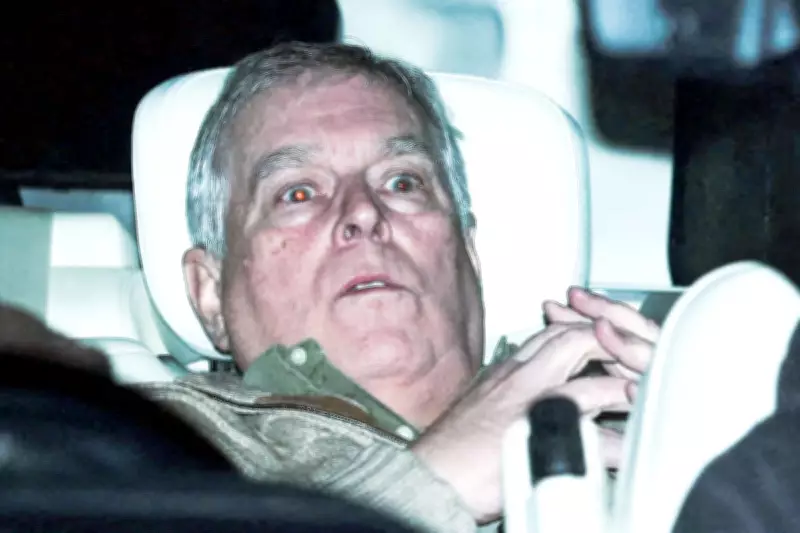
In ex-Prince Andrew's taxi mugshot, taken immediately following his arrest, his mouth gapes open reminiscent of Edvard Munch's "The Scream," while one eye appears red and wild with rage, echoing Alexandre Cabanel's "The Fallen Angel" depiction of the Devil after his heavenly expulsion. Campaign group Everyone Hates Elon reportedly executed the simple yet brilliant stunt, secretly placing the photograph in the Paris museum shortly after Andrew's arrest on suspicion of misconduct in public office.
The allegations center on claims that Andrew sent confidential government documents to convicted sex offender Jeffrey Epstein. Andrew has since been released and consistently denies any wrongdoing. The Louvre mischief works fundamentally because it's genuinely funny and therefore completely humiliating for the royal establishment.

Laughter as the Ultimate Weapon
Just as South Park effectively satirized Harry and Meghan's move to California and Donald Trump's controversies, the placement of Andrew's image in the Louvre demonstrates that ridicule remains humanity's most potent weapon. The old adage proves correct once again: if you truly want to undermine someone's authority, you must mercilessly mock them. Andrew being "hung" in the Louvre achieves precisely this effect with elegant simplicity.
This artistic protest cements Andrew's fall from grace as a seismic moment that marks a turning point not just for him personally, but for the entire institution of monarchy and aristocracy. It definitively proves that nobody remains too powerful or too privileged to escape public ridicule—not presidents, not politicians, and certainly not princes.
Devastating After-Effects
The consequences continue to unfold dramatically. This week revealed ongoing discussions about removing Andrew from the line of succession to the throne, where he currently occupies eighth position after the families of William and Harry. Police searches continue at his former Windsor residence, while Metropolitan Police officers have asked his protection officers to come forward with information.
There are suggestions that protection officers may have turned a blind eye to activities at Jeffrey Epstein's private island. Additionally, salacious new claims have emerged that Andrew may have charged taxpayers for "massage services" during his tenure as a trade envoy. These developments collectively suggest that past actions inevitably catch up with individuals, regardless of their privileged status.
The End of Deference
The Louvre stunt reveals something deeper, darker, and more dangerous for the British monarchy than Andrew's personal disgrace. No amount of casting Andrew aside or branding him the "black sheep" will alter this fundamental reality: the era of deference has conclusively ended. Gone are the days of automatic respect for kings and queens, of epic queues to view royal remains, of ceremonial bowing at coronations, and of flag-waving jubilee celebrations.
Our entire democratic culture has been built upon this deference structure. Parliament's clerks historically vetoed every attempt to raise concerns about Andrew and other royals, citing Erskine May's parliamentary procedure "bible" that prevented discussion of matters reflecting personally on the sovereign or royal family. Andrew's arrest—his excoriating fall from grace amid potential illegality—signals we have entered a new epoch.

A Post-Royal Period Dawns
We now inhabit a post-royal period characterized by raucous and distinctly republican sentiment. The age of irreverence has properly begun, fittingly originating in France where revolutionary traditions run deep. We have discarded deference through South Park sniggers and Louvre laughter. The concept that an image can become so iconic and meaningful that it qualifies as genuine art has evolved into an internet meme phenomenon.
The "Hang It In the Louvre" phrase now applies to snapshots that transcend their original moment to become something larger than themselves, permanently altering cultural landscapes. Consider Muhammad Ali standing over Sonny Liston in 1965, screaming at his opponent to "get up and fight" after a phantom punch knockdown—an image so legendary it could literally hang in the Louvre. Now Andrew's mugshot joins this pantheon of accidental art.
When examining Andrew's arrest photograph, one naturally considers other "great" works of accidental art: Diego Maradona's "Hand of God" 1986 World Cup goal, Pelé carried on teammates' shoulders after winning the 1958 World Cup, Michael Jordan's iconic 1988 slam dunk. And now, the fallen prince expelled from heavenly privilege. The monarchy will never be the same again.