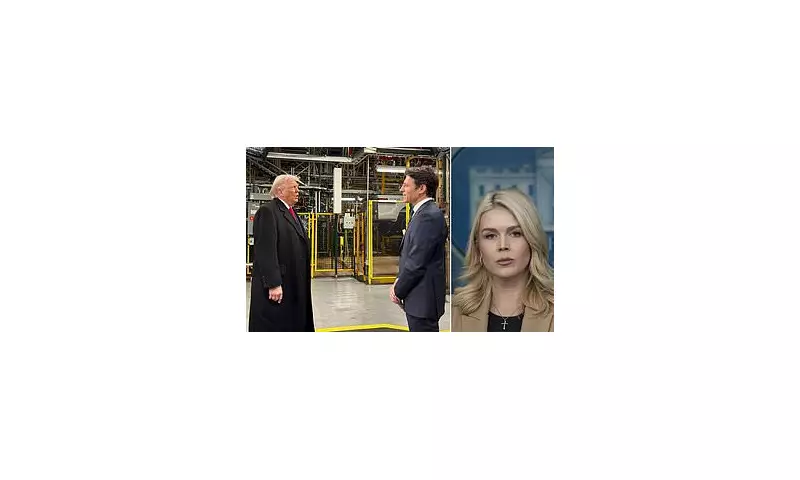
CBS News has stated that its decision to broadcast an unedited interview with President Donald Trump was made independently, despite facing a direct threat of legal action from the White House if the footage was altered. The network's assertion follows a report detailing how a senior administration official warned producers they would be sued if the full conversation was not aired.
A Blunt Warning from the White House
According to a recording obtained by The New York Times, the confrontation occurred after an interview conducted by CBS Evening News anchor Tony Dokoupil with the president on January 13. Following the session, White House Press Secretary Karoline Leavitt issued a stark ultimatum to Dokoupil and his team.
Leavitt relayed the president's demands, stating: "He said, 'Make sure you guys don't cut the tape, make sure the interview is out in full.'" She then added the blunt warning: "If it’s not out in full, we’ll sue your a** off."

In response, Dokoupil was reportedly heard agreeing, "Yeah, we're doing it, yeah," and later laughed off the threat, joking "He always says that!" However, the report noted that Leavitt did not appear to be joking and did not laugh. Kim Harvey, the executive producer of CBS Evening News, also reportedly agreed excitedly to air the interview in full.
CBS's Insistence on Editorial Independence
Despite the recorded exchange, CBS News presented a different narrative to the public. On January 17, the network told The New York Times: "The moment we booked this interview, we made the independent decision to air it unedited and in its entirety." This statement was later reiterated to the Daily Mail.
Leavitt, however, claimed victory for the administration's pressure tactic. She told the Times, "The American people deserve to watch President Trump’s full interviews, unedited, no cuts. And guess what? The interview ran in full."
The 13-minute interview, filmed at an assembly line in Michigan, covered topics including Iran, the economy, and the investigation into Federal Reserve Chair Jerome Powell. During the discussion, Trump suggested Dokoupil would be out of a job if Kamala Harris had won the 2024 election, a comment the anchor later brushed aside.
A History of Legal Tension and Network Turmoil
This incident is not an isolated one in Trump's relationship with CBS. The network has a complicated and litigious history with the president:
- In 2024, Trump filed a $10 billion lawsuit against CBS for airing an edited interview with Vice President Kamala Harris.
- The lawsuit was settled by CBS's parent company, Paramount, for $16 million in July of that year.
- Weeks after the settlement, the FCC approved the purchase of Paramount by MAGA allies Larry and David Ellison.
- In October, David Ellison appointed controversial figure Bari Weiss as editor-in-chief of CBS News, a move followed by significant internal changes and accusations of the network softening its coverage of Trump.
Critics have accused the network of capitulating to White House pressure under its new leadership. This perception was bolstered when sources told The Independent that Weiss and Trump exchanged kisses on the cheek after a November interview with anchor Norah O'Donnell, an act that reportedly shocked other staff in the room.
The threat of legal action has proven to be a recurring tool for the Trump administration in dealings with media outlets. In addition to the CBS case, ABC News also settled a lawsuit with the president for $16 million over an error made by anchor George Stephanopoulos.
This latest episode provides a candid look into the ongoing efforts by the White House to exert influence over media coverage, raising significant questions about editorial independence and the power dynamics between a sitting administration and the press.