César Chavez's Legacy Faces Unprecedented Reckoning
Communities across the United States are confronting the complex legacy of Latino labor rights icon César Chavez following shocking allegations of sexual abuse against girls and women. This revelation has forced many who revered Chavez to reconsider their admiration for the man who fought tirelessly for farmworker rights.
Restaurant Owners Remove Chavez Memorials
Former Phoenix City Council member Mary Rose Wilcox and her husband, who had marched and fasted alongside Chavez, have removed all photographs of the activist from their Mexican restaurant walls. They plan to cover a mural featuring his image after learning about the allegations from their daughter.
"We love César Chavez. But we cannot honor him and we cannot even love him anymore," Wilcox stated, describing the news as "a punch to the gut."

Allegations Rock Latino Community
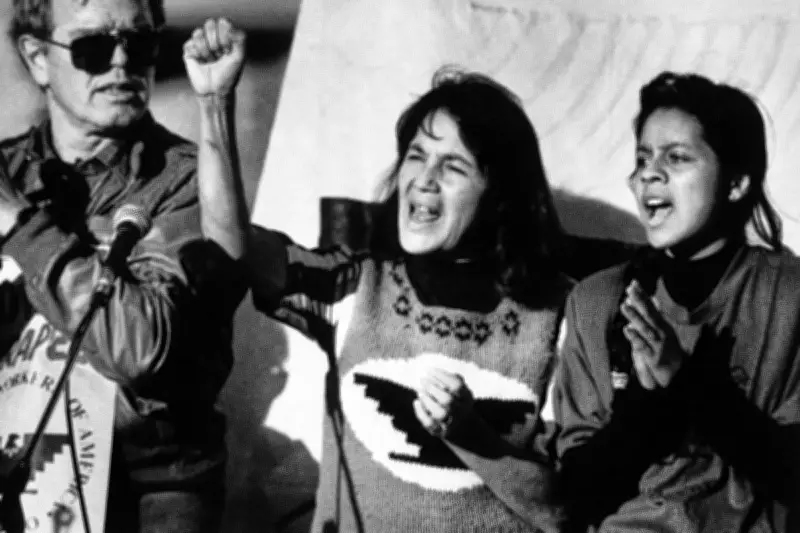
The New York Times reported that Chavez groomed and sexually abused young girls who worked within the farmworker movement. Dolores Huerta, co-founder of the United Farm Workers of America union, revealed she was a victim of Chavez's abuse in her 30s, describing two sexual encounters—one where she was "manipulated and pressured" and another where she was "forced against my will."
Huerta said both encounters led to pregnancies that she kept secret, arranging for the children to be raised by other families. She explained she remained silent for sixty years out of concern that speaking out would damage the farmworker movement.
Institutional Responses and Memorial Changes
The California Museum announced it will remove Chavez from the state's Hall of Fame—an unprecedented action it has never taken with any other inductee. The Cesar Chavez Foundation pledged unequivocal support for victims and stated it would reconsider its identity moving forward with the Chavez family's support.
Celebrations for Chavez's birthday on March 31st have been canceled in San Francisco, Texas, and Arizona at the foundation's request. Some political leaders from both parties have urged communities to rename buildings and streets honoring Chavez and to forego traditional birthday observances.
Historical Context and Contradictions
Chavez, who died in 1993 at age 66, helped secure better wages and working conditions for farmworkers through early organizing, hunger strikes, and grape boycotts. His name adorns streets, schools, and parks across the Southwest, and California became the first state to commemorate his birthday.
Miriam Pawel, a veteran California journalist who wrote a Chavez biography, noted that abusive behaviors existed within the union but went unchallenged because members believed the organization was essential for protecting farmworkers. "For many, many years, for most of those people, even when they saw things that they found disturbing, they did not wanna talk about it," Pawel explained.
Political Reactions and Family Statement
President Joe Biden, who installed a bronze bust of Chavez in the Oval Office, and former President Barack Obama, who proclaimed March 31st as national César Chavez Day, have not yet commented on the allegations. California Governor Gavin Newsom stated he was still processing the news.
The Chavez family released a statement expressing devastation over the allegations: "We wish peace and healing to the survivors and commend their courage to come forward. As a family steeped in the values of equity and justice, we honor the voices of those who feel unheard and who report sexual abuse."
Separating the Man from the Movement
Latino leaders and community groups have emphasized that the farmworker movement extended beyond any single individual. The United Farm Workers union quickly distanced itself from annual celebrations of its founder, calling the allegations troubling.
Wilcox reflected on the difficult distinction between Chavez's public achievements and private actions: "There's two things: Chavez the man and Chavez the man who we didn't know. And the one we knew, we knew the good things he did and the things we saw put in place. ... And the one we did not know is like a monster."

Born in Yuma, Arizona, Chavez grew up in a Mexican American family that traveled throughout California picking seasonal crops. His early experiences with agricultural labor fueled his lifelong commitment to workers' rights, creating a legacy now being painfully reevaluated across the nation.