Freshly released government documents have revealed that former Prime Minister Tony Blair was explicitly warned to steer clear of overt party politics before his infamous, disastrous address to the Women's Institute in 2000.
The Wembley Arena Debacle
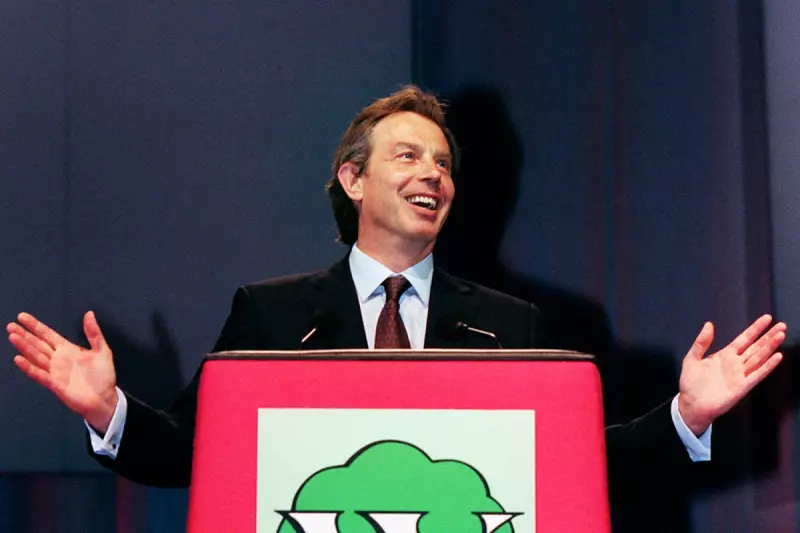
The speech, delivered to a vast audience of 10,000 WI members at Wembley Arena in June 2000, spectacularly backfired. Mr Blair was heckled and subjected to a slow-handclap by furious attendees who felt he had hijacked their non-partisan conference for what they saw as a party political broadcast. The event became a defining public relations disaster, widely interpreted as proof that New Labour was losing its connection with the Middle England voters who had propelled it to a landslide victory just three years earlier.
Conflicting Advice from Within Number 10
Files now available at the National Archives in Kew detail the starkly contrasting advice given to the Prime Minister in the run-up to the event. A week before the speech, Julian Braithwaite from the Number 10 press office met with WI leaders and reported back to Mr Blair. He noted the Institute wanted a vision for future communities, but were "wary of anything that smacked of capital P politics" and sensitive to being patronised.

However, Mr Blair's inner circle of political advisers vehemently disagreed with this cautious approach. After reviewing an initial draft—prepared as Mr Blair returned from paternity leave following the birth of his son Leo—they demanded more political content, not less.
Special adviser Peter Hyman rejected the idea of a "discursive and whimsical" speech, arguing it failed to seize the political moment. David Miliband, then also a special adviser, suggested the address should begin defining the policy terrain for the next general election. Key allies Anji Hunter and Sally Morgan called for a "more policy-rich" and confident tone, with Morgan criticising the draft as "too defensive, apologetic, unconfident".
Campbell's Scathing Critique
The most dismissive feedback came from Mr Blair's formidable press secretary, Alastair Campbell. He warned the draft lacked challenge and danger of sounding "rather Majoresque", a pointed comparison to the previous Conservative Prime Minister, John Major. "Where is the sense of the modernising leader spelling out the need for real change and reform?" Campbell wrote, concluding the speech would not work and risked having the opposite of its intended effect.
As the speech was rewritten to incorporate this more combative political direction, Julian Braithwaite raised a further alarm, noting it had grown to be "probably twice as long" as the WI expected.
The Lasting Legacy of a Political Raspberry
On the day, the hostile reaction in the hall was so severe that Mr Blair was forced to cut his address short, never reaching its conclusion. Reflecting on the event years later for a BBC documentary, a rueful Mr Blair summarised the exchange succinctly: "I gave them a lecture, they gave me a raspberry."
The newly public papers provide a definitive behind-the-scenes look at the misjudgements and internal conflicts that led to one of the most memorable public rebukes of a sitting Prime Minister, cementing its place in modern British political folklore.