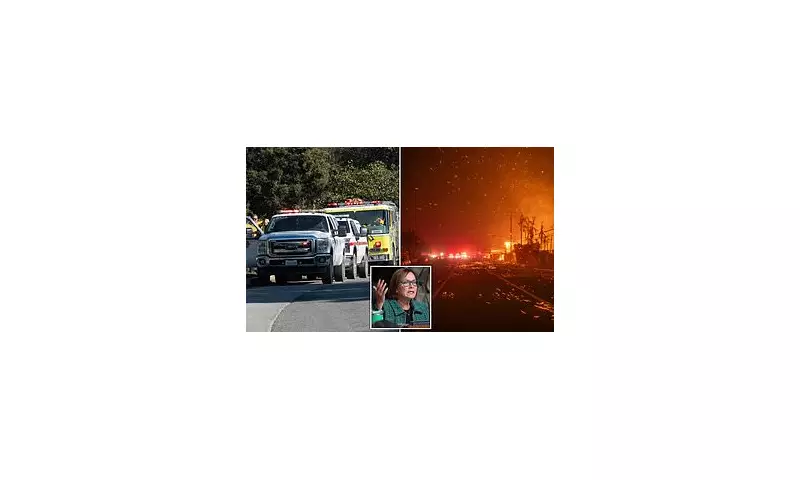
A Los Angeles City Council member has declared the catastrophic January wildfires that ravaged the Pacific Palisades were not a 'once-in-a-lifetime' disaster, but a profound failure of city preparedness. The claims follow the release of a chilling documentary that alleges fire crews were ordered to stand down as neighbourhoods burned.
Documentary Alleges Systemic Failures and Abandonment
Councilwoman Traci Park, who represents the Palisades, erupted at her colleagues after viewing filmmaker Rob Montz's documentary, Paradise Abandoned. The film scrutinises the response to the fire on January 8, 2025—the blaze's second day—arguing that hundreds of homes, including Montz's childhood home, could have been saved.
Following a screening in Santa Monica, Park stated: 'Not only were the initial preparations inadequate, but the response as well. Everything from the evacuations that day and how they were managed to how perimeter control was managed.' Her outburst echoes the documentary's central allegation: that city and state officials made a 'conscious decision to give up'.

Montz, 42, told the Daily Mail his investigation uncovered that while the fire raged on January 8, fire trucks were parked as a backdrop for a mayoral press conference, and a dozen more sat idle on streets far from the flames. 'LA was being flooded with fire crews because of the state's policy of mutual aid, yet the streets of the Palisades were empty,' Montz said.
Critical Delays and Missed Opportunities
The documentary presents a damning timeline of the initial response. Resident Alan Feld discovered the fire near his Highlands Palisades home around 10:30 am on January 7. He reported it took the fire department 22 minutes to arrive, by which time Santa Ana winds of up to 100 mph had whipped the blaze through bone-dry brush.
Feld claimed the responding truck came from Station 69, nearly six miles away, not the local Station 23 less than a mile and a half from his home. The film alleges Station 23's crew were 'on the beach doing training and missed the call'—a claim an LAFD spokesperson denied to the filmmaker.
Further compounding the crisis, the 117-million-gallon Santa Ynez reservoir, built for firefighting, was left empty for months prior. This allegedly caused hydrants to lose pressure or run dry. While a state investigation downplayed the reservoir's significance, the documentary showed the fire department had training to use swimming pools as water sources, an option residents say was not utilised.
Nate Miller, a former Las Casas resident who lost his home, recounted a neighbour's experience on January 8: 'He went back and told the firefighters who were on the beach. He said they were eating breakfast burritos and had been told to stand down. And they didn't come.'
Aftermath and Official Defence
The Palisades Fire ultimately destroyed 6,837 structures, claimed 12 lives, and incinerated the entire neighbourhood. The documentary was released on YouTube earlier this month, following a congressional hearing on November 13 that scrutinised the widely criticised response.
Councilwoman Park concluded, 'No amount of courtroom justice is ever going to replace what was lost or undo the damage that was done.' The film also highlights failures in brush clearance on state-owned land surrounding the community, for which the LAFD had reportedly issued repeated, ignored citations.
In contrast, an LAFD after-action report released on October 8 defended the response, calling it a 'relentless firefight' and noting that 12,317 threatened structures were successfully saved. The report stated that crews 'worked beyond the normal operational period without hesitation.'
Despite this official defence, the documentary and Councilwoman Park's reaction paint a picture of a devastating event exacerbated by what they claim were preventable failures in preparedness, resource allocation, and on-the-ground decision-making.