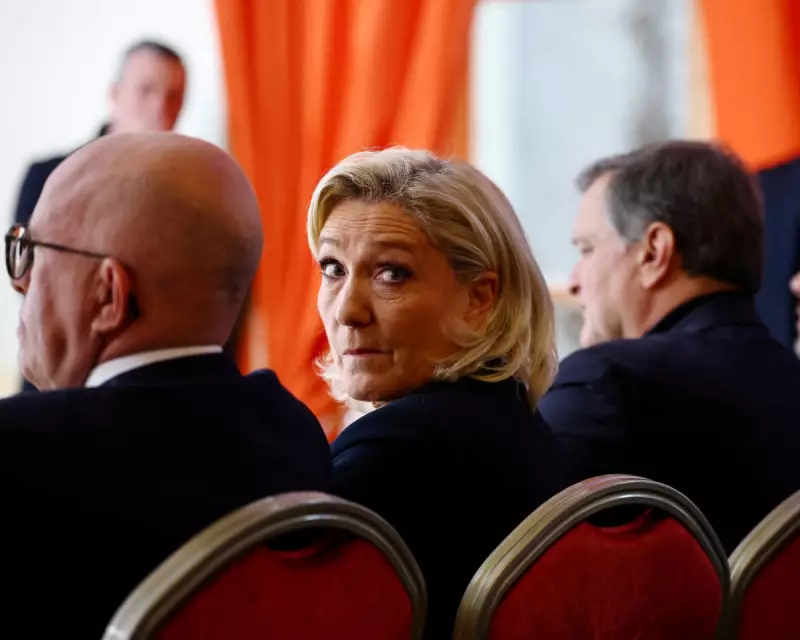
The political future of French far-right leader Marine Le Pen hangs in the balance this week as her appeal against a conviction for embezzling European Union funds gets underway in Paris. The outcome will definitively rule on whether she can stand as a candidate in the pivotal 2027 presidential election.
The Stakes of the Paris Appeal
Le Pen, the 57-year-old head of the anti-immigration National Rally (RN), was found guilty last March in a significant fake jobs scandal. The court ruled she was at the heart of a system that siphoned off European Parliament funds meant for assistants in Brussels and Strasbourg to pay party workers in France between 2004 and 2016.
This resulted in a conviction for embezzlement, carrying a four-year prison sentence (with two suspended) and, crucially, an immediate five-year ban from holding public office. She was also fined €100,000. Le Pen has consistently denied any wrongdoing, labelling the case a political tyranny of judges designed to block her path to the Élysée Palace.

A Successor Waiting in the Wings
Should her appeal fail and the ban be upheld, Le Pen would be barred from the 2027 race. In that scenario, the party's mantle is expected to pass to her 30-year-old protégé, Jordan Bardella, the current president of the National Rally.
Recent polling suggests Bardella's star has risen amid Le Pen's legal troubles. A survey for Le Monde indicated 49% of French citizens believe Bardella has the best chance of winning, compared to just 18% for Le Pen. The leader herself has begun to publicly frame Bardella as a viable alternative, stating he can win in my place.
The appeal trial, which runs until the 12th of February and includes ten other convicted party members, will deliver its verdict before summer. The RN has stated its presidential candidate will only be confirmed once the legal outcome is clear.
International Reactions and Legal Nuances
The case has reverberated beyond France's borders, drawing sharp criticism from figures on the international populist right. Former US President Donald Trump decried the original conviction as a witch-hunt by European leftists.
Reports in German media suggested Trump allies had discussed sanctioning French judges involved in the case, a claim vehemently denied by the US State Department and labelled an unacceptable interference by French judicial authorities.
Legal experts note that the sentence on appeal could still leave a narrow path for Le Pen. Her current ban runs until March 2030. However, if the appeal court were to reduce the ineligibility period to one or two years, it could theoretically expire just before the expected April 2027 election, allowing her to run.
With the European Parliament estimating the fraud cost taxpayers €4.8 million, the trial is not just about one politician's fate, but a defining moment for France's political landscape as it approaches a highly consequential election.