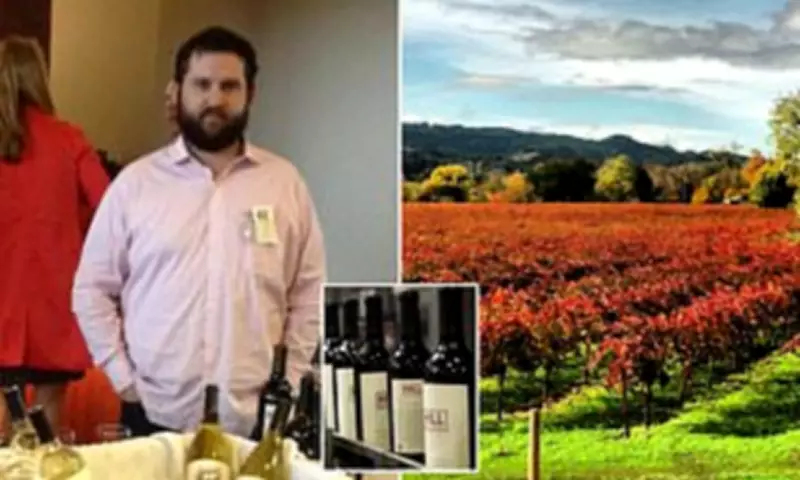
Napa Valley Wine Mogul Admits to Multi-Million Dollar Grape Fraud Scheme
Jeffry Hill, a prominent Napa Valley wine entrepreneur, has confessed to orchestrating a sophisticated fraud scheme involving the substitution of premium grapes with inexpensive alternatives in his upscale wines. The owner of the now-defunct Hill Wine Company entered a guilty plea for an elaborate mislabeling operation that prosecutors estimate generated over $2.5 million in fraudulent sales.
Deceptive Practices and False Claims
Investigators uncovered that Hill's winery falsely advertised its products as being crafted from grapes cultivated in the sun-drenched vineyards of Napa Valley. In reality, he systematically replaced these with low-cost substitutes and bulk grape juice. This deception allowed Hill to market his wines under the prestigious American Viticultural Areas (AVA) designation, which requires that at least 85 percent of the grapes originate from the specified region.
By exploiting the AVA label, Hill was able to exponentially increase his prices compared to more affordable options. His indictment detailed that he either grew or purchased grapes, pre-fermented grape juice, or wine from outside Napa Valley, then sold bulk grape juice, bulk wine, or bottled wine made from these non-Napa Valley grapes.
Legal Proceedings and Sentencing
Hill was initially indicted in 2016, and his case languished in the courts for nearly a decade before he admitted to the scheme. Last January, he was sentenced to three years of probation, avoiding jail time despite prosecutors recommending an 18-month prison term. He faced charges including four counts of mail fraud and four counts of wire fraud, which could have resulted in up to 20 years in federal prison.
The vineyard owner will also incur a financial penalty of at least $500,000 in restitution, though the final amount remains undetermined. Hill's legal troubles extended beyond this case; in 2015, he served four months in jail for a separate incident involving the theft of grapes from a competitor in 2012.
Apology and Personal Accountability
This week, Hill publicly apologized for his actions, attributing his crimes to alcoholism. In a letter to the court, he expressed, "I allowed my ego and drinking to dictate my priorities. I thought I was in control. I lost sight of my values. I ignored responsibilities." He added that his "blind pursuit" not only ruined his own future but also harmed those who trusted him.
Hill claimed to have achieved sobriety in 2014, following the conclusion of his fraudulent activities, and has since worked "tirelessly" to make amends. His efforts include volunteering to build playgrounds for children, assisting a family of war refugees fleeing Ukraine, and traveling to the Middle East to support farmers. He told the judge he "fears repeating harm."
Business Collapse and Financial Struggles
At its peak, Hill's wines commanded prices exceeding $100 per bottle, and his vineyard along Napa's Silverado Trail positioned him among the industry's elite. His commercial clients included some of the world's largest wine brands, and his bottles were even served on flights transporting US athletes to the 2014 Winter Olympics in Sochi, Russia.
However, his business was secretly accumulating substantial debt, which motivated the deceptive scheme. Hill executed the fraud by altering shipping labels, fabricating paperwork, and either providing false information to growers or instructing them to deny his purchases. By the time of his arrest, he owed more than $8 million to creditors and was forced to file for bankruptcy.
The prolonged nature of Hill's case remains unclear, with 85 of 177 hearings and document filings in his federal case under seal, as reported by The Mercury News. Despite the decade-long legal battle, Hill's guilty plea ultimately resulted in probation, marking a significant chapter in the Napa Valley wine industry's history of regulatory enforcement.