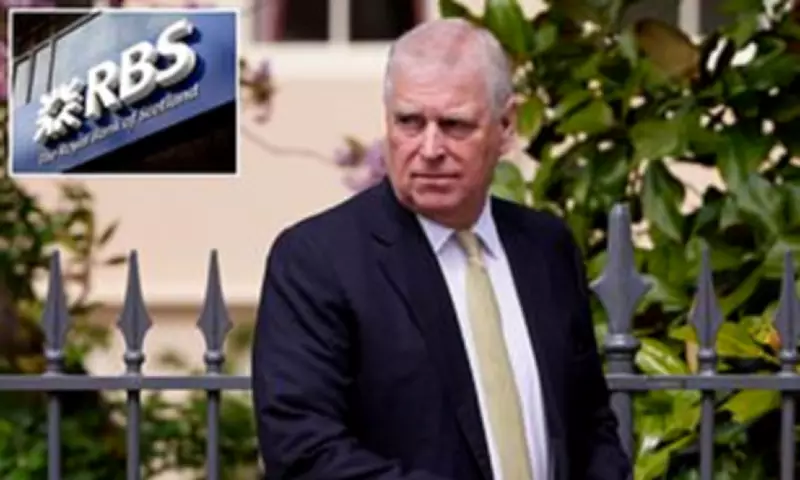
Prince Andrew Accused of Leaking Confidential RBS Information to Jeffrey Epstein
Newly released documents from the US Department of Justice have exposed shocking revelations about Prince Andrew's conduct during his tenure as a UK trade envoy. The Mail on Sunday can exclusively reveal that Andrew Mountbatten-Windsor, the disgraced former duke, leaked sensitive information about the taxpayer-owned Royal Bank of Scotland to convicted sex offender Jeffrey Epstein.
This breach occurred while Andrew was supposed to be representing British interests in his taxpayer-funded trade envoy role, which he held from 2001 to 2011. The documents show he passed on confidential details learned from private meetings with RBS executives following the bank's £45 billion state bailout.
Details of the Confidential Information Leaked
Among the three million documents in the Epstein Files is an email exchange from July 2010 between Prince Andrew and Terence Allen, an investment banker based in the United Arab Emirates. In this correspondence, Andrew revealed sensitive information about RBS shake-up plans and, without any foundation, alleged that experts overseeing the bank were privately critical of its chief executive.

Specifically, Andrew disclosed that RBS-owned private bank Drummonds would 'be reviewed' and become 'more integrated' with Royal bankers Coutts. He also revealed that chief executive Sir Stephen Hester was not considering selling stakes in RBS's 'subsidiary brands' because he had 'more important things to worry about.'
Shockingly, Andrew forwarded these emails to his adviser David Stern, a German-born businessman, who then sent them directly to Jeffrey Epstein. Financial expert Ian Fraser, author of 'Shredded' which detailed RBS's near-collapse, stated this information could have been 'very useful' to potential investors.
Additional Revelations About Aston Martin
The leaked documents also show Andrew claimed to have been 'kept in the picture' about Aston Martin, alleging there were 'conflicts between internal parties' and tensions between management and its Kuwaiti owners amid a sales slump. However, Aston Martin last night stated it had no evidence in its records of Andrew having any direct contact with its executives.
Mr. Allen's initial message to Andrew indicated there was 'clearly' a 'bunch of assets for sale' at RBS, adding: 'We are looking at some of their distressed real estate for our clients.' This correspondence occurred as RBS bosses were engaged in a massive 'fire sale' following the bank's government rescue in 2008.
Political Fallout and Calls for Investigation
These revelations are fueling urgent calls for Thames Valley Police to open a formal investigation into allegations that Andrew leaked confidential reports to Epstein during his time as trade envoy. Former business secretary Vince Cable last night accused Andrew of 'dreadful, cynical behaviour,' adding that police and the Director of Public Prosecutions must judge whether 'criminal misconduct' had taken place.
Ian Fraser expressed outrage at Andrew's actions, stating: 'Why the hell did Andrew consider it appropriate to glean potentially market-sensitive information about the state-rescued bank RBS from private meetings and then leak this to contacts he clearly wished to impress?' He described Andrew's comments about Sir Stephen Hester as 'shocking and disgraceful,' noting that Hester is widely credited with stabilising RBS (now NatWest) when he took over in 2009.
Andrew had suggested that UK Financial Investments, the organisation overseeing RBS, was privately critical of how the bank was being run, claiming Sir Stephen 'isn't all that well thought of.' NatWest Group has declined to comment on these allegations.
The scandal raises serious questions about Andrew's judgment and conduct while representing British trade interests, with potential implications for his remaining royal duties and public standing.