Raskin Accuses Justice Department of Epstein Cover-Up After Reviewing Unredacted Files
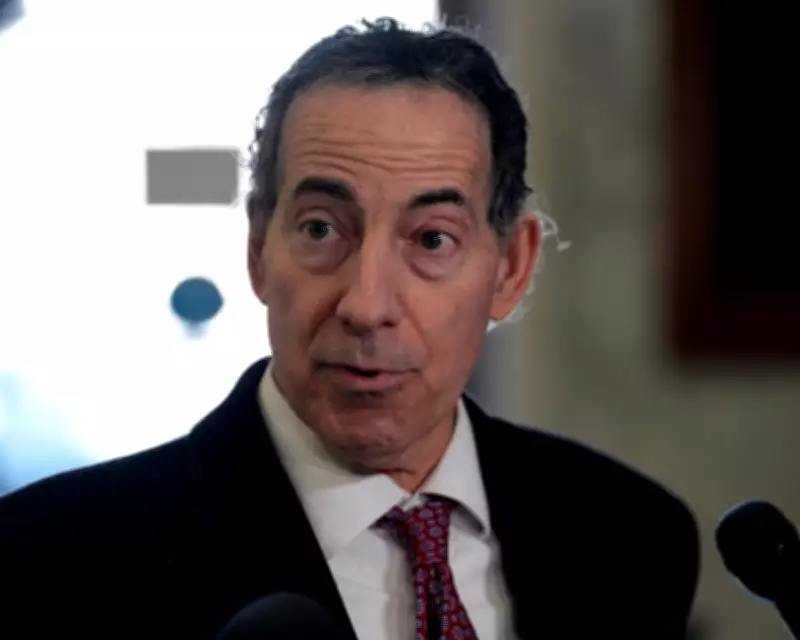
Top House Democrat Jamie Raskin has launched a scathing attack on the Justice Department, accusing it of engaging in a cover-up after viewing unredacted versions of the Jeffrey Epstein files. Raskin, the ranking member of the House judiciary panel, made these allegations on Monday, following his review of the documents at a government facility in Washington DC.
Mysterious Redactions Obscure Abuser Identities
Raskin claimed that the Justice Department made "mysterious redactions" to the Epstein-related documents, which he says obscured the names of abusers while paradoxically allowing the identities of Epstein's victims to become public. This occurred despite the Epstein Files Transparency Act, passed by Congress in November, which mandates the release of millions of files related to Epstein but permits redactions only in limited circumstances, such as to protect victims' privacy.
Under this legislation, the Justice Department has publicly released approximately 3.5 million files, with Raskin noting that around 3 million more are still awaiting release. However, he argued that the redaction process has been deeply flawed, leading to unnecessary secrecy and potential legal violations.

Allegations of Incompetence or Deliberate Threats
In his remarks to reporters, Raskin expressed grave concerns over the handling of the files. "I went over there, and I was able to determine, at least I believe, that there were tons of completely unnecessary redactions, in addition to the failure to redact the names of victims, and so that was troubling to us," he stated. He accused the Justice Department of being "in a cover-up mode" and breaking the law by exposing victims' details.
Raskin suggested that this could be due to "spectacular incompetence and sloppiness" or, as many survivors fear, a deliberate tactic to intimidate other potential victims from coming forward. "They can be exposed and have their personal information dragged through the mud as well," he warned, highlighting the severe implications for survivors of Epstein's crimes.
Specific Examples of Questionable Redactions
During his review, which was conducted on one of four computers at the Justice Department facility—where lawmakers must enter without electronic devices or staff—Raskin examined about 30 to 40 unredacted files. He reported seeing names redacted for "mysterious or baffling or inscrutable reasons," including that of Les Wexner, the Victoria's Secret founder whose association with Epstein is already public knowledge.
One particularly notable document was an unredacted email from Epstein to his associate Ghislaine Maxwell. This email contained an account from Epstein's lawyers of a conversation with attorneys representing Donald Trump around 2009. In it, Trump is quoted as saying that while Epstein was never a member of his Mar-a-Lago club, he had been a guest and was never asked to leave. This appears to contradict previous statements from Trump that he had barred Epstein from his Florida property at one point.
Political Repercussions and Upcoming Testimony
Raskin announced plans to address these issues directly with Attorney General Pam Bondi, who is scheduled to testify before the House judiciary committee on Wednesday. "We're going to start by posing questions directly to attorney general Bondi about the process that produced such flawed results, and that has created such mystery," he said. He also aims to secure a commitment from the Justice Department to rectify the redaction errors and expedite the release of the remaining documents.
In a related development on Monday, Ghislaine Maxwell, who is currently serving a prison sentence for child sex trafficking convictions, refused to answer questions during a deposition by the House oversight committee. This committee is leading the investigation into the government's handling of Epstein's prosecutions, adding another layer of complexity to the ongoing scrutiny.

International Comparisons and Calls for Action
Raskin drew attention to the contrasting political responses in the United States and the United Kingdom. In the UK, Prime Minister Keir Starmer's government has faced significant turmoil due to revelations about ties between Epstein and Peter Mandelson, whom Starmer appointed as ambassador to the United States. Raskin noted that while the Epstein files have sparked a major political scandal in Britain, a similar uproar has not materialised in the US, despite Trump being mentioned repeatedly in the documents.
"It is a huge political scandal [in Britain], and I'm just afraid that the general coarsening and degradation of American life has somehow conditioned people not to take this as seriously as we should be taking it," Raskin lamented. He emphasised the gravity of the crisis, pointing out that some files discuss victims as young as nine years old, and urged the nation to focus on the severity of the situation.
As the investigation continues, Raskin's accusations underscore ongoing concerns about transparency, accountability, and the protection of victims in high-profile cases involving powerful figures.