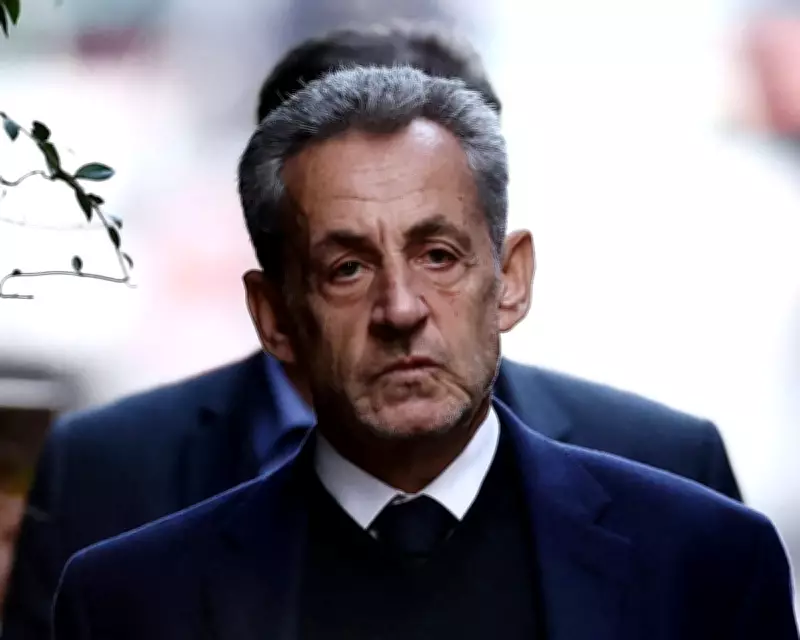
Nicolas Sarkozy, the former French president, is set to appear at the Paris Court of Appeal for a new trial concerning allegations that he conspired to obtain illegal election campaign financing from the late Libyan dictator Muammar Gaddafi's regime. The rightwing leader, who served as president from 2007 to 2012, has consistently denied any wrongdoing in this high-profile case.
Background of the Case and Previous Conviction
In a landmark ruling last year, Sarkozy was sentenced to five years in prison for criminal conspiracy related to the alleged scheme to secure campaign funds from Gaddafi's government. This made him the first former head of an EU country to serve time behind bars and the first postwar French leader to be incarcerated. After spending 20 days in a Paris jail, which he described as a "gruelling nightmare," Sarkozy was released in November pending his appeal. During his brief imprisonment, he was held in solitary confinement for security reasons, occupying an individual cell of approximately 9 square metres equipped with a private shower and toilet.
Details of the Alleged Conspiracy
Prosecutors have accused Sarkozy of striking a deal with Gaddafi in 2005, while serving as interior minister. According to the state prosecution, this agreement involved receiving financing for his successful 2007 presidential campaign in exchange for supporting Libya's then-isolated government on the international stage. The court heard that in return for the funds, the Libyan regime sought diplomatic, legal, and business favours, with an understanding that Sarkozy would help rehabilitate Gaddafi's global image.

Gaddafi, whose 41-year rule was marked by severe human rights abuses, had been internationally isolated due to his regime's connections to terrorism, including the bombing of Pan Am flight 103 over Lockerbie, Scotland, in December 1988. Prosecutors allege that members of Sarkozy's entourage met with Gaddafi's officials in Libya in 2005 to facilitate this arrangement.
Current Trial and Potential Consequences
The fresh trial, which begins on Monday, will see Sarkozy tried again on all four original counts: criminal conspiracy, corruption, misuse of Libyan public funds, and illegal election campaign funding. This comes after he appealed his conviction, and the state prosecutor appealed the acquittals on the three other charges from last year's trial. If found guilty, the 71-year-old former president could face up to 10 years in prison, significantly extending the legal repercussions of this case.
In the initial trial, Sarkozy was found guilty only of criminal conspiracy, while being acquitted of the other three charges. The appeal trial will re-examine the evidence and testimonies, with a total of 10 individuals facing retrial in this complex and politically charged matter.
Historical Context and Sarkozy's Actions
Soon after his election in 2007, Sarkozy invited Gaddafi for a lengthy state visit to Paris, where the Libyan leader famously set up his Bedouin tent in gardens near the Élysée Palace. However, in a dramatic turn of events in 2011, Sarkozy positioned France at the forefront of NATO-led airstrikes against Gaddafi's troops, which ultimately helped rebel fighters overthrow the regime. Gaddafi was captured and killed in October 2011, marking the end of his autocratic rule.
This case continues to captivate public attention, highlighting the intricate ties between politics, international relations, and alleged financial misconduct. As the trial unfolds, it underscores the ongoing legal challenges facing high-profile figures and the broader implications for democratic processes and accountability in France and beyond.