Seven British nationals have disembarked from the hantavirus-hit cruise ship MV Hondius mid-voyage, alongside a Dutch woman who later died, it has emerged. A total of 29 people left the vessel when it docked on the remote South Atlantic island of St Helena, including the woman who became unwell during onward travel and subsequently passed away.
Details of the Disembarkation
The woman was accompanying her husband's body, which was being repatriated after he died on the ship on April 11. Tour operator Oceanwide Expeditions stated: “On 1 April 2026, 114 guests boarded MV Hondius in Ushuaia, Argentina. Thirty guests disembarked MV Hondius on Saint Helena on 24 April 2026. This number includes the body of the guest who passed away on board MV Hondius on 11 April 2026.”
The 30 individuals who disembarked hailed from 12 nations, including seven Britons. Oceanwide Expeditions confirmed that all guests who left the ship have been contacted.
Health Authority Responses
On Wednesday, the European Centre for Disease Prevention and Control (ECDC) declared that everyone on board should be considered a “close contact.” This follows the UK Health Security Agency’s (UKHSA) announcement that two Britons who had already returned from the vessel are isolating at home. These passengers flew back to the UK via Johannesburg after leaving the ship in St Helena.
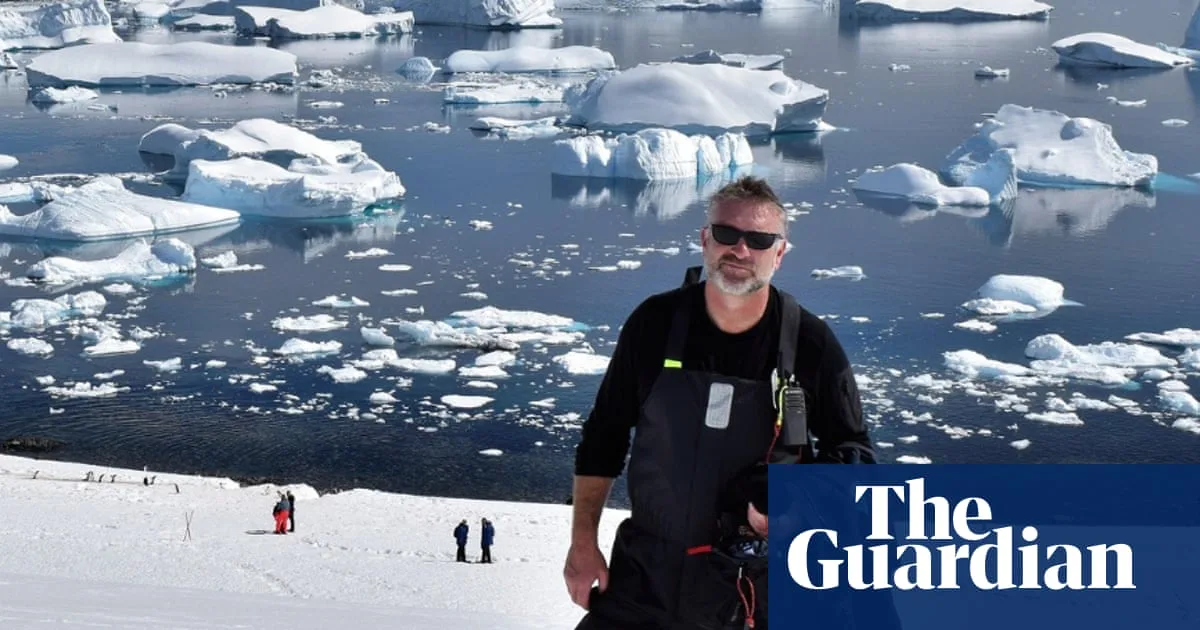
Of the 19 British nationals listed as passengers on the MV Hondius, which was sailing from Argentina to Cape Verde, four were crew members. Two British individuals have been medically evacuated, including crew member Martin Anstee, 56. The expedition guide and former police officer was flown to the Netherlands for specialist medical care after being airlifted off the vessel on Wednesday. A British passenger, reportedly a 69-year-old man, was evacuated to South Africa on April 27 and is receiving care at a private health facility in Sandton, Johannesburg.
Isolation and Repatriation Plans
UK health experts have advised that British passengers on board will be asked to self-isolate for 45 days upon return. Professor Robin May, chief scientific officer at UKHSA, stated: “For the broader public, not directly involved in this cruise ship, the risk here is really negligible.” However, he told the BBC’s Radio 4 Today programme that British passengers currently en route to Tenerife will be flown home and asked to self-isolate, likely at home, for 45 days.
The Foreign Office is arranging a charter flight to repatriate the remaining Britons on board who are not displaying symptoms once the ship docks in Tenerife in the coming days. According to UKHSA, none of the British citizens on board are currently reporting symptoms, but they are being closely monitored.
Incubation Period and Transmission
Professor May explained that the “most extreme case of incubation” of hantavirus “may be up to eight weeks,” but the general consensus is that people need to isolate for “probably six weeks, and so that’s the period of isolation, 45 days that we’re likely to be recommending.” He added: “For the individuals that are on the ship at the moment, we’re working, obviously, to repatriate them as soon as we possibly can. The Foreign Office is leading on that, and once they’re back, they’re going to be asked to self-isolate.”
Regarding the two British passengers who have already returned to the UK, Professor May noted that contact tracing is underway for anyone who may have sat next to them on their flight home. The two individuals contacted health officials upon learning of the outbreak and are voluntarily self-isolating, showing no symptoms.
He stressed that hantavirus “is actually not that easy to transmit between individuals so a quick pass in an airport, for example, is not going to put you at risk.” He elaborated: “We focus our attention on people who might, for example, have been sat next to a passenger for a long time, several hours on the flight. Those are the people that we’re contacting.”
Origin of the Outbreak
The outbreak, linked to three deaths, has been connected to a birdwatching expedition in Argentina that two passengers attended before boarding. Despite concerns from locals and officials, Spanish authorities have granted permission for the ship to dock in the Canary Islands. The vessel left Cape Verde at 19:15 (CET) on Wednesday, with the journey to the port of Granadilla in Tenerife expected to take three to four days.
Approximately 150 people remain on the cruise ship under “strict precautionary measures,” according to Oceanwide Expeditions. Three individuals were evacuated to the Netherlands for treatment on Wednesday, including Martin Anstee.
Passenger Accounts
Speaking from hospital, Mr Anstee told Sky News: “I’m doing OK. I’m not feeling too bad. There are still lots of tests to be done. I have no idea how long I’ll be in the hospital for. I’m in isolation at the moment.” His wife Nicola described the situation to the Telegraph as “a very traumatic few days,” adding: “He’s relieved to be off the ship. He had it quite mild then it got a bit more serious and now he’s stable again. The fear with this virus is it can deteriorate very quickly so it’s been a bit up and down for him. I don’t believe he’s in imminent danger now but it was horrible.”
The Associated Press reported that the Argentine government hypothesises a Dutch couple contracted the virus during a birdwatching outing in Ushuaia before boarding. Two Argentine officials indicated the couple visited a landfill during the tour, where they may have been exposed to rodents carrying the infection. Passengers have been confined to their cabins while “disinfection and other public health measures are carried out,” the World Health Organisation stated on Tuesday.