A recent Vanity Fair magazine feature has ignited a political firestorm in Washington DC, drawing starkly divided reactions for its candid portrayal of Donald Trump's inner circle. The article, based on multiple interviews with White House chief of staff Susie Wiles and accompanied by dramatic, close-up photographs, has been hailed by administration critics as vital scrutiny while being dismissed by allies as a malicious 'hit piece'.
Unvarnished Portraits and Candid Assessments
The controversy centres on a piece published following 11 separate interviews conducted by reporter Chris Whipple with Susie Wiles. In her remarks, Wiles offered blunt characterisations of her colleagues, describing former President Trump as possessing "an alcoholic's personality". She labelled Vice-President JD Vance a "conspiracy theorist for a decade" and called budget chief Russell Vought a "right-wing absolute zealot".
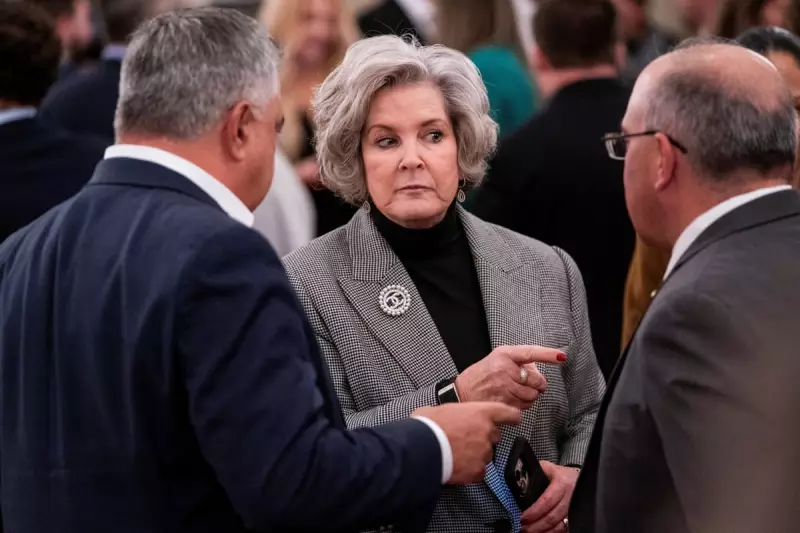
Perhaps generating equal attention were the high-contrast, close-up photographs by acclaimed photographer Christopher Anderson. The images featured top Trump lieutenants including Wiles, her deputy Stephen Miller, press secretary Karoline Leavitt, and Secretary of State Marco Rubio. The unretouched style, which some noted included visible lip-filler marks on Leavitt, led to widespread debate on social media about their intent—whether they were a stark critique or an unexpected glamorisation.

A Clash of Narratives and Accusations
The White House response was swift and condemnatory. Wiles herself denounced the article as a "disingenuously framed hit piece". Marco Rubio accused the magazine of deliberately manipulating pictures and reporting statements without context to make the team "look bad". Defence Secretary Pete Hegseth framed it as typical left-wing strategy, stating, "This is what the Left does: trash & smear our best & most effective people."
However, these claims faced significant pushback. A New York Times report revealed that Whipple possessed an audio recording of Wiles discussing Elon Musk's use of ketamine, a comment she later tried to deny. Photographer Christopher Anderson also firmly rejected allegations of manipulation. In a statement to the Washington Post, he defended his artistic approach: "I didn't put the injection sites on her. People seem to be shocked that I didn't use Photoshop... I find it shocking that someone would expect me to retouch out those things." He emphasised his long history of similar close-up portraiture across the political spectrum.
Social Media Frenzy and Political Fallout
The reaction online was intense and polarised. Supporters of the administration rallied to defend the officials and attack Vanity Fair's credibility. One commentator argued the magazine had "damaged more than its own credibility" and made life harder for journalists operating in good faith.
Conversely, critics celebrated the piece's perceived honesty. Many on platforms like Threads and X praised Anderson's photographic technique for capturing what they saw as the true nature of the administration. One user wrote that the subjects were "deceived" and "tricked" into believing it was a glamorous shoot, while another highlighted the cultural nod to "Mar-a-Lago face" and Trump's signature bronzer in Leavitt's photo.
High-profile allies also weighed in. FBI Director Kash Patel, himself under scrutiny for a recent podcast appearance, defended Wiles on X, writing, "Fake news comes after you when you're effective." Republican House Majority Leader Steve Scalise called the article "another hack job from the mainstream media." In a contrasting take, Florida Representative Anna Paulina Luna praised Leavitt's photo as "stunning!".
The episode, centred on events at the Kennedy Center in Washington DC on 10 November 2025, underscores the deeply fractured media and political landscape. It raises persistent questions about portraiture in political journalism, the boundaries of candid access, and the ongoing battle to control the narrative around the Trump administration.