Prime Minister Dodges Parliamentary Question on Former Australian of the Year's Protest Chant
Prime Minister Anthony Albanese has declined to publicly condemn former Australian of the Year Grace Tame over her controversial protest chant calling to 'globalise the intifada'. The refusal came during a heated parliamentary Question Time session on Tuesday, where the Prime Minister faced direct questioning about Tame's conduct at a large Sydney rally opposing Israeli President Isaac Herzog's visit.
Controversial Rally Speech Sparks Political Backlash
Grace Tame, who received the prestigious Australian of the Year award in 2021, addressed thousands of protesters on Monday evening. During her speech, she led the crowd in chanting: 'From Gadigal to Gaza, globalise the intifada'. The term 'intifada' translates to 'uprising' in Arabic and historically refers to two violent Palestinian uprisings against Israeli occupation.
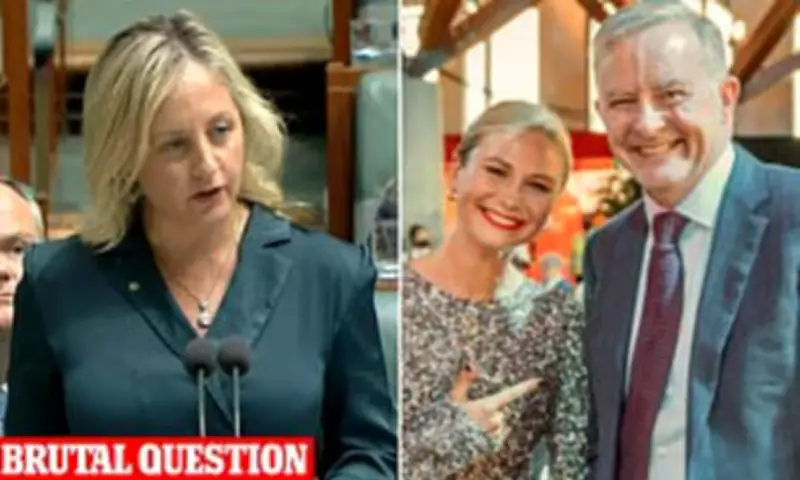
The chant has drawn significant criticism from Jewish community leaders and politicians across party lines. Liberal MP Melissa McIntosh, serving as shadow communications minister, directly challenged the Prime Minister during Question Time, accusing Social Services Minister Tanya Plibersek of failing to specifically condemn Tame's comments earlier in the day.

Parliamentary Confrontation Over Leadership and Condemnation
'A senior member of the Prime Minister's cabinet, the Minister for Social Services and member for Sydney, today refused to specifically condemn Grace Tame's conduct at a Sydney rally, where Tame chanted a vile anti-Semitic slur,' McIntosh stated in Parliament.
She continued with a direct challenge to the Prime Minister: 'Will the Prime Minister today show leadership, disassociate himself from these words and unequivocally condemn this disgusting display of anti-Semitism by the former Australian of the Year?'
Albanese refused the request, instead warning Members of Parliament against seeking political advantage from what he described as a 'devastating situation'. 'We need to not continually look for political opportunities from what is a devastating situation. We need to turn the temperature down,' the Prime Minister responded.
Widespread Political and Community Condemnation
The phrase 'globalise the intifada' has been condemned by numerous political figures and Jewish community leaders who argue it invokes violent historical uprisings. New South Wales Premier Chris Minns described post-protest clashes as 'distressing' and backed police response, while also condemning the use of the term at the rally.
'You know... in the circumstances where six weeks ago we lost 15 members of the Jewish community to a hate crime, a violent terrorist uprising, that's what the consequences of "globalise the intifada" mean, a violent uprising in Sydney's streets,' Minns stated. 'I can only imagine what those families thought when they saw someone screaming it from the steps of Town Hall, the pain they would have gone through.'
Queensland Opposition Leader David Crisafulli has joined Minns in pledging to ban the phrase, while Pauline Hanson has called for Tame to be stripped of her Australian of the Year title, claiming her remarks were incompatible with the honour.
Calls for Consequences and Title Revocation
'The National Australia Day Council (NADC) should revoke Grace Tame's Australian of the Year award for bringing both the award and this nation into disrepute,' Hanson declared. 'She remains an angry young lady whose rise to prominence went to her head.'
Daily Mail Political Editor Peter van Onselen has also suggested Tame should lose her title, adding to growing calls for consequences following the controversial chant. Tame, who publicly supported Albanese during his 2022 election campaign, has responded to the controversy by posting a video of her entire speech online.
The parliamentary session concluded minutes after Albanese's response, with the Prime Minister scheduled to meet Israeli President Isaac Herzog later that day. The incident highlights ongoing tensions surrounding Middle East politics in Australian public discourse and the challenges facing political leaders in navigating sensitive international issues.