Alberta Separatists' Covert US Meetings Ignite Treason Debate in Canada
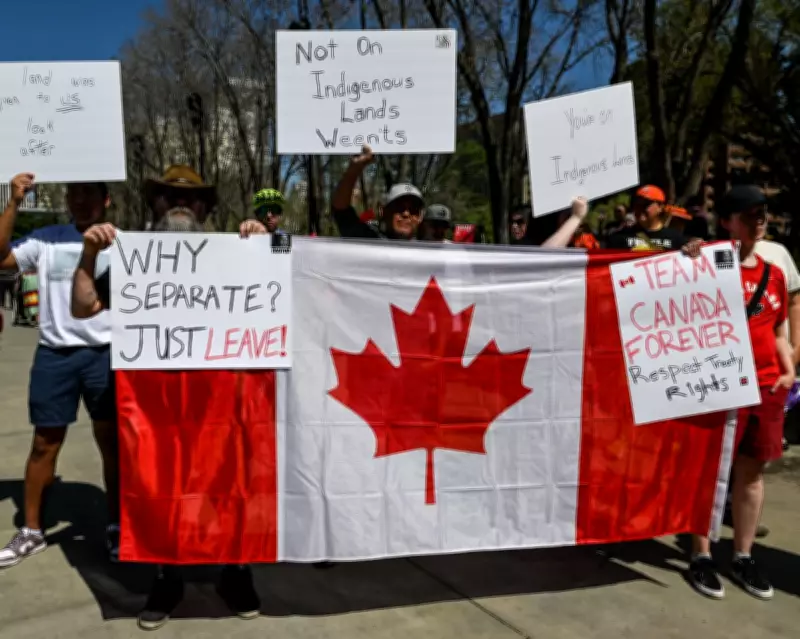
First Nations protesters and their allies gathered outside the Alberta legislature in Edmonton on 3 May 2025, demonstrating against the Rally for Alberta Independence. This protest occurred amidst revelations of secret meetings between unelected Alberta separatists and United States officials, which have been branded as treasonous by prominent Canadian political figures.
Historical Parallels and Provocative Diplomacy
Canada has long grappled with separatist movements, most notably in Quebec, where leaders historically engaged in proto-diplomacy by courting foreign governments for support. In 1995, ahead of Quebec's sovereignty referendum, the province's premier received a statesman's welcome in Paris, outraging anglophone Canada. Three decades later, reports of covert visits to the US by Alberta separatists have triggered a similar backlash, raising concerns about foreign interference in Canada's domestic unity debates.
British Columbia Premier David Eby explicitly condemned the actions, stating, "To go to a foreign country and to ask for assistance in breaking up Canada, there's an old-fashioned word for that. And that word is treason." This strong language reflects heightened anxieties about the integrity of Canadian sovereignty.

The Unprecedented Nature of Alberta's Separatist Movement
André Lecours, a political science professor at the University of Ottawa, noted that while separatist movements often seek international sympathy, Alberta's situation is markedly different. "None of these people associated with Alberta's push for independence are democratically elected. They don't hold any public office," Lecours explained. "I find it strange that the Trump administration would meet with non-elected officials. They have no formal democratic legitimacy."
Within Alberta's legislative assembly, no pro-independence parties currently hold seats. Historical context shows only one Alberta separatist ever won election briefly in 1982. Recent polling indicates limited public support, with approximately 18% of Albertans favoring independence. Prominent Alberta politicians, including former Prime Minister Stephen Harper and former premiers, have rejected separation, advocating instead for national unity.
Political Responses and Conflicting Messages
Alberta's current Premier Danielle Smith has publicly opposed separation, though her call for "a strong and sovereign Alberta within a united Canada" has drawn criticism for potentially confusing the issue. Meanwhile, in Quebec, the separatist Parti Québécois is expected to win the upcoming provincial election and has pledged to hold a third independence referendum, highlighting Canada's ongoing constitutional challenges.
Canadian law permits advocacy for provincial independence, and Alberta separatists are currently campaigning to collect nearly 178,000 signatures by May. However, the movement's engagement with a US administration that has shown hostility toward Canadian sovereignty has raised national security concerns.
US Involvement and Sovereignty Threats
Unlike France's neutral stance toward Quebec separatism, the Trump administration has demonstrated willingness to engage with Alberta separatists. Lawyer Jeffrey Rath, part of the delegation that met secretly with State Department officials, stated last year that he wanted to "petition" for Alberta to gain US statehood. This aligns with Donald Trump's previous threats to annex Canada as the 51st state.
US Treasury Secretary Scott Bessent has publicly commented on Alberta's independence aspirations, telling Real America's Voice, "Albertans are a very independent people. Rumour [is] that they may have a referendum on whether they want to stay in Canada or not... People are talking. People want sovereignty. They want what the US has got."

Former Bank of England Governor Mark Carney has expressed expectation that the US administration would respect Canadian sovereignty. However, senior officials in Ottawa increasingly worry that the US might exploit secession movements to interfere in Canadian domestic affairs. Lecours warned, "It seems now that if there were to be a referendum on independence in Alberta – or in Quebec for that matter – the US would not stay silent and/or support Canadian unity. You'd likely hear another, far different message."
The convergence of First Nations protests, secret diplomatic engagements, and treason accusations underscores the complex dynamics of Canadian separatism in an era of shifting international alliances and domestic political tensions.