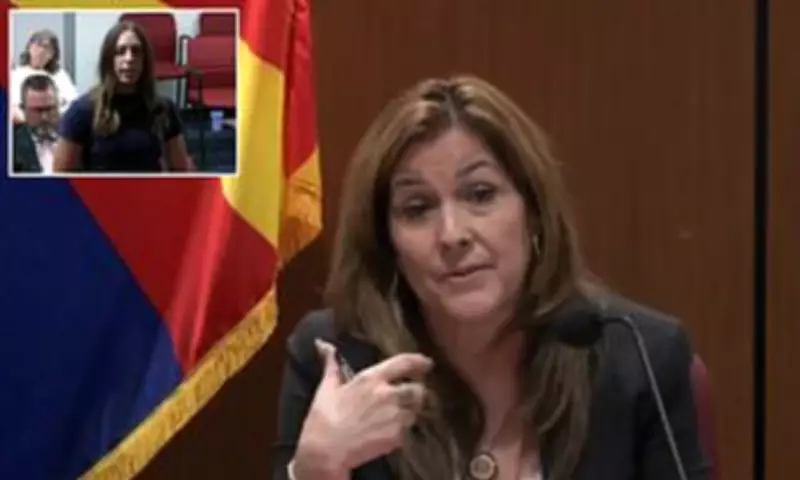
A Democratic senator in Arizona has faced intense criticism following her remarks during a legislative hearing where she questioned a young female athlete's competitiveness and made comments about her physical appearance. The incident occurred on March 11 when former Utah State volleyball captain Kaylie Ray, 23, testified before a committee in support of the Protect Girls' Sports in Arizona Act.
Contentious Exchange During Hearing
During the hearing, Senator Catherine Miranda, 61, responded to Ray's testimony with remarks that many have characterized as inappropriate and demeaning. "You look pretty healthy," Miranda told the former Division 1 athlete. "I've played against girls that look like you. You look very in shape and strong."
The senator then questioned Ray's competitive spirit, asking, "So how competitive do you think you really are?" Miranda contrasted her own upbringing with Ray's, stating that she would have "taken on a man in a heartbeat" during her athletic career.

Background of the Testimony
Ray had appeared before the committee to share her experiences competing against biological males in women's sports. She previously led a protest against San Jose State University's volleyball team for fielding biological male athlete Blaire Fleming. Ray described this experience as she respectfully addressed the panel of legislators.
"As elite level athletes, I would say we're very competitive, which is why this bill designates three categories: male, female, and co-ed," Ray responded to Miranda's questioning. "The idea is that everyone can participate in sport. If you want to compete against a man, absolutely, let's do that in the coed section because when men are allowed access into women's sports and spaces, it's not women's sports and spaces anymore."
Public Outrage and Social Media Response
The senator's comments generated significant backlash on social media platforms, with many users expressing outrage at what they perceived as disrespectful treatment of the young athlete.
One social media user wrote: "Someone tell the Senator to go into a locker room with a biological male identifying as a female. Shower next to them and get dressed next to them. Then let's hear her answer."
Another commenter added: "Good for that young girl and shame on that lady Catherine Miranda. Obviously, she thinks she can beat a man competitively, so go let her play in co-ed."
A third user criticized Miranda's demeanor: "The smugness of this woman. The criticism and ridicule couldn't be any more deserved when you sit on your throne and mock a young woman, thinking you have some superior moral high ground."
Legislative Outcome and Broader Context
Despite the contentious exchange, the Protect Girls' Sports in Arizona Act narrowly passed in a 4-to-3 vote to move forward after hours of testimony from various speakers. The legislation comes amid ongoing national debate about transgender participation in women's sports.
A New York Times poll conducted in January 2025 found that 79 percent of Americans believe transgender men should be barred from women's athletics. This statistic highlights the broader context of the debate that Ray's testimony addressed.
Legal Proceedings and Ongoing Controversy
The controversy surrounding biological males in women's sports gained significant attention in 2024 when multiple opponents refused to play against San Jose State University and Blaire Fleming. This allowed the Spartans to advance to the playoffs with a 12-6 record after picking up seven wins by forfeit.
Ray has joined a lawsuit headed by Fleming's ex-teammate, Brooke Slusser, along with other players from different teams. The legal action targets the California State University Board that manages SJSU and the Mountain West Conference, alleging violations of the First and 14th Amendments as well as Title IX, which prohibits sex-based discrimination.
However, on March 3, a federal judge reportedly dismissed all but one claim in the lawsuit filed by 11 female college volleyball stars over the incident. The judge dismissed all claims against the Mountain West Conference based on the accusation that Slusser was intended to be the victim of that attack.

Personal Impact and Aftermath
Despite maintaining her composure during the hearing, Ray later revealed to Fox Digital that she was "absolutely fuming" during the moment of disrespect and needed to call her parents afterward to vent her frustration. The former volleyball captain's calm response during the contentious exchange contrasted sharply with the emotional impact she experienced privately.
The incident has highlighted the deeply personal nature of the debate surrounding women's sports and the emotional toll it can take on athletes who find themselves at the center of these controversies. As legislation continues to move forward in various states, exchanges like the one between Miranda and Ray demonstrate how policy debates can become intensely personal for those directly affected.