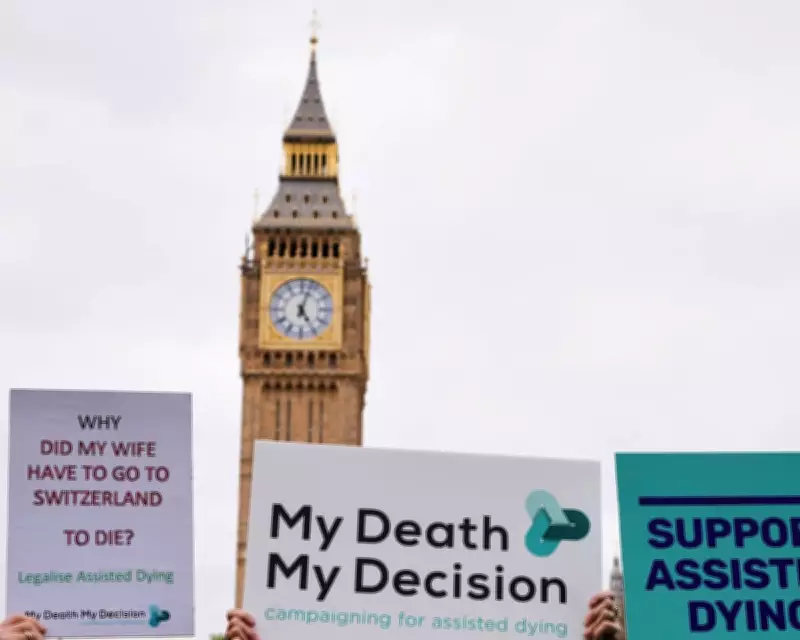
Assisted Dying Bill Stalls in House of Lords Amid Sabotage Allegations
Efforts to introduce a new law permitting assisted dying for terminally ill individuals with less than six months to live appear poised for failure. The legislation, which successfully passed the House of Commons, has encountered significant resistance in the House of Lords. Campaigners advocating for the bill have levelled accusations of "sabotage" against peers, claiming deliberate obstruction tactics have thwarted its progress.
Why the Legislation Is Failing to Become Law
The bill was proposed by backbench MP Kim Leadbeater and received majority support in the House of Commons. Although it lacked official government backing, No 10 permitted a "free vote", allowing MPs to vote according to their conscience without party whips. However, upon reaching the House of Lords, a small group of opponents tabled an overwhelming number of amendments. With fewer than six days remaining for debate in the current parliamentary session ending in May, there is insufficient time for a vote, effectively stalling the bill.
Government's Refusal to Grant Additional Time
The Labour whip in the House of Lords, Roy Kennedy, informed a parliamentary committee that the government would not allocate more time for the bill. This decision stems from the limited number of sitting Fridays left and the government's focus on other legislative priorities. Extending the parliamentary session would have been an extraordinary measure, deemed impractical given competing demands.

Future Prospects and Potential Strategies
MPs are expected to reintroduce the bill in the new parliamentary session. Leadbeater and Lord Falconer, key backers of the legislation, have sought advice on employing an archaic parliamentary procedure—the 1911 Parliament Act—to force the bill through if the Lords continue to block it. This "nuclear option" would mark the first use of the act for a private member's bill, allowing the Commons to override the Lords by reintroducing the exact same version in the next session.
Rationale Behind Lords' Opposition
Opponents in the House of Lords feel empowered to frustrate the bill's passage because it is not government-sponsored nor part of the Labour party manifesto, lacking a direct electoral mandate. While there are no rules prohibiting such tactics, supporters argue this undermines parliamentary spirit, where MPs should hold primacy over peers. Critics counter that the Commons did not adequately scrutinise the legislation, and they are fulfilling their duty to hold it accountable.
Historical Use of the Parliament Act
The Parliament Act enables the House of Commons to bypass the Lords by reintroducing a bill in a new session if it is repeatedly blocked. Since its revision in 1949, it has been invoked sparingly, notably for laws such as decriminalising homosexuality and banning foxhunting. To trigger the act, the bill must be identical to the version passed by the Commons and can be advanced either through a private member's ballot or with government time allocation.
Reactions from Bill Supporters
Supporters have condemned the Lords' actions as undemocratic. Dame Esther Rantzen accused certain peers of "blatant sabotage", highlighting that over 1,200 amendments were tabled not for scrutiny but to obstruct the bill. This sentiment underscores the high-stakes nature of the debate, with campaigners vowing to persist in their efforts to enact the legislation.