Assisted Dying Bill's Parliamentary Journey Reaches Critical Juncture
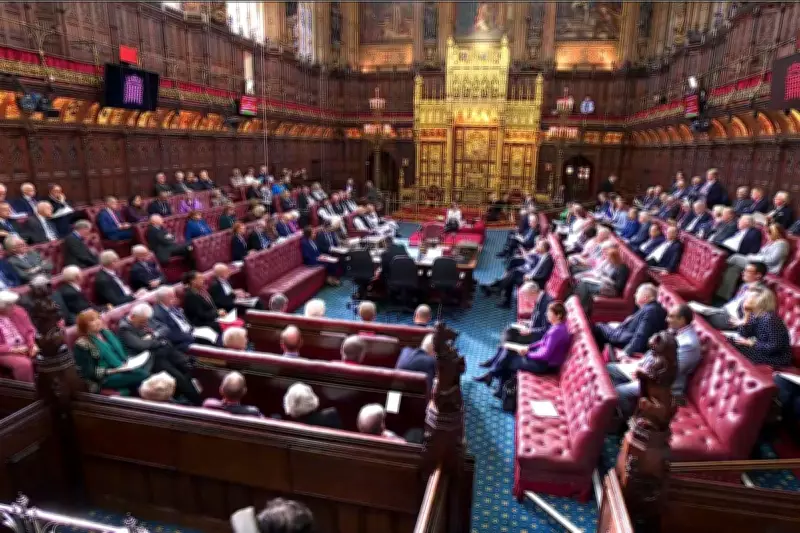
The proposed assisted dying legislation, widely regarded as one of the most significant social reforms in recent memory, finds itself in a precarious position as it navigates the parliamentary process. With the current session scheduled to conclude in May, the bill faces an effective deadline of 24th April in the House of Lords, where its progress has become frustratingly slow for supporters. This legislative impasse raises the genuine possibility that the bill could be lost for the remainder of this parliament, potentially delaying its implementation for several years.
Parliamentary Obstacles and Procedural Maneuvers
As a private member's bill that has attracted substantial controversy and resistance, the legislation remains highly vulnerable to parliamentary tactics designed to delay or derail it. The government's officially neutral stance, reflecting its own internal divisions on the matter, means it is unlikely to allocate the virtually unlimited parliamentary time required to overcome determined opposition through filibustering.
In response to these challenges, the bill's sponsors – Labour MP Kim Leadbeater and Labour peer Charlie Falconer – have indicated their intention to employ the Parliament Act as a mechanism to override the House of Lords. This rarely used procedural tool would effectively force the bill through parliament by circumventing the upper chamber's objections.

How the Parliament Act Could Reshape the Legislative Landscape
The Parliament Act establishes the constitutional principle that the elected House of Commons ultimately possesses primacy over the unelected Lords, though this power is balanced to prevent the complete disregard of the upper chamber's scrutiny function. When the volume of amendments or filibustering opposition threatens to defeat a bill, as currently appears to be the case, the Parliament Act can be invoked to resolve the deadlock.
This would involve either the government allocating time for a vote in the next parliamentary session beginning in June, while maintaining its formal neutrality, or a backbench MP reintroducing the Terminally Ill Adults (End of Life) Bill in the exact form it last received Commons approval. Crucially, the Speaker would need to rule that this "new" bill is substantively "the same" as its predecessor. Should the Commons approve it once more under these circumstances, the Lords' opinions would become irrelevant and the legislation would proceed to become law.
Opposition Concerns and Legislative Scrutiny
Critics of the bill argue that it contains significant flaws and practical shortcomings that render it unworkable. Parliamentary expert Nikki da Costa has voiced particular concern, stating: "This bill is dangerous for the vulnerable and people will be failed. So, you've got a situation where Lord Falconer wants the Lords, as a scrutinising chamber, to stop doing the work and just wave it through."
Falconer counters this perspective by asserting that the Lords should proceed with making necessary improvements to the legislation, emphasising that "it can be improved" through the normal parliamentary process rather than being subjected to endless delay.
Uncertainty Surrounding Future Commons Votes
The path forward remains far from certain, even if procedural hurdles are overcome. The bill's previous passage through the Commons occurred with relatively modest majorities, with many MPs anticipating that the Lords would undertake substantial refinement of the legislation. A second Commons vote in favour cannot therefore be taken for granted, particularly given the narrowing margins observed during earlier stages.
The second reading in November 2024 passed by 330 votes to 275, while the third reading last June produced an even tighter result of 314 votes to 291. These figures suggest that parliamentary support, while present, remains fragile and subject to potential erosion.

Potential Compromises and Long-Term Prospects
Neither supporters nor opponents currently appear inclined toward compromise, though opportunities for negotiation remain. Some observers suggest that government intervention could take the form of proposing a Royal Commission, with eventual legislation being introduced through normal government channels. However, even this approach might encounter similar parliamentary obstacles to those currently being experienced.
Falconer has made clear his determination that the issue "will continue to demand parliamentary action until it is resolved," indicating that this contentious debate is unlikely to conclude regardless of the immediate fate of the current bill. The assisted dying question therefore seems destined to remain a fixture of parliamentary discussion for the foreseeable future, with profound implications for end-of-life care and personal autonomy in the United Kingdom.