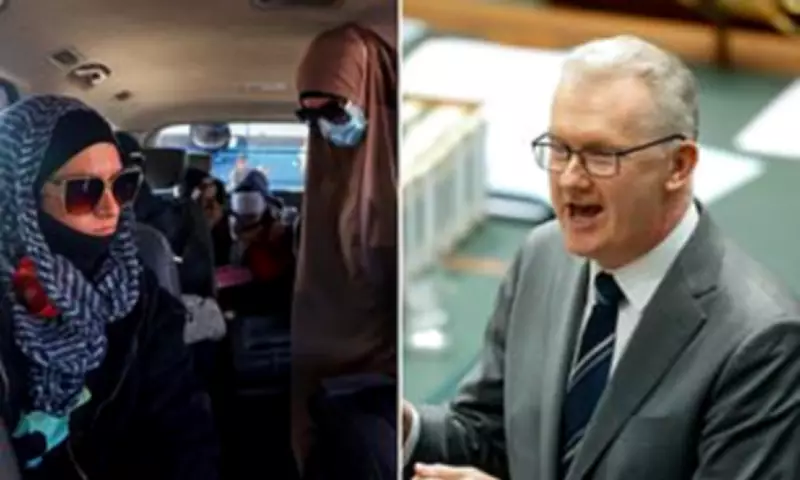
The Australian federal government, led by Prime Minister Anthony Albanese, has decisively blocked a legislative proposal from the opposition Coalition that sought to establish a criminal offence for assisting Islamic State-linked families in returning to Australia. This move occurred during a parliamentary session on Tuesday afternoon, sparking intense debate over national security and legal principles.
Coalition's Proposed Legislation
The federal opposition attempted to introduce a bill that would impose severe penalties, including up to 10 years' imprisonment, on anyone found guilty of helping so-called 'ISIS brides' and their children return to Australian soil. The legislation aimed to target individuals providing logistical or financial support for the repatriation of these families from conflict zones in the Middle East.
Labor's Firm Opposition
In a unified stance, the entire Labor Party blocked the bill from being debated or introduced to parliament. Home Affairs Minister Tony Burke led the charge against the proposal, delivering a scathing critique in which he labelled it 'the shoddiest piece of legislation' ever presented before the parliamentary chamber. Burke argued that the bill was poorly drafted and could have unintended consequences.

Burke elaborated on potential ramifications, stating: 'This would criminalise the pilots of the commercial plane that flew them back. This would criminalise… the baggage handlers.' His comments highlighted concerns that the legislation could ensnare innocent parties, such as airline staff, in its broad scope.
Context of the Repatriation Efforts
The legislative push comes amid ongoing efforts by approximately 34 women and children, linked to Australians who travelled to the Middle East to fight for the militant group Islamic State, to return home from a Syrian camp. These individuals have been attempting to travel back to Australia for several days, navigating complex legal and diplomatic hurdles.
While one member of this group has been issued a two-year temporary exclusion order, effectively barring their return, other individuals within the so-called 'ISIS bride' cohort have been granted Australian passports. This is because they hold citizenship, raising questions about their rights and the government's approach to repatriation.
Broader Implications and Reactions
The blocking of the bill has ignited a fierce political debate, with the Coalition accusing the government of being soft on national security, while Labor defends its position as upholding the rule of law and avoiding overly punitive measures. Critics of the proposed legislation argue that it could undermine due process and target vulnerable individuals, including children, who may have been coerced or misled.
Supporters of the bill, however, contend that it is necessary to prevent the return of individuals with potential ties to terrorism, citing security risks. The issue remains contentious, with ongoing discussions about how to balance public safety with humanitarian considerations and legal rights.
As the situation evolves, the Albanese Government faces pressure to articulate a clear strategy for handling the return of ISIS-linked families, ensuring that any measures taken are both effective and just. The debate underscores the challenges in crafting legislation that addresses complex security threats without compromising fundamental legal principles.