BBC Plunged Into Fresh Impartiality Controversy Over Altered Iran Speech
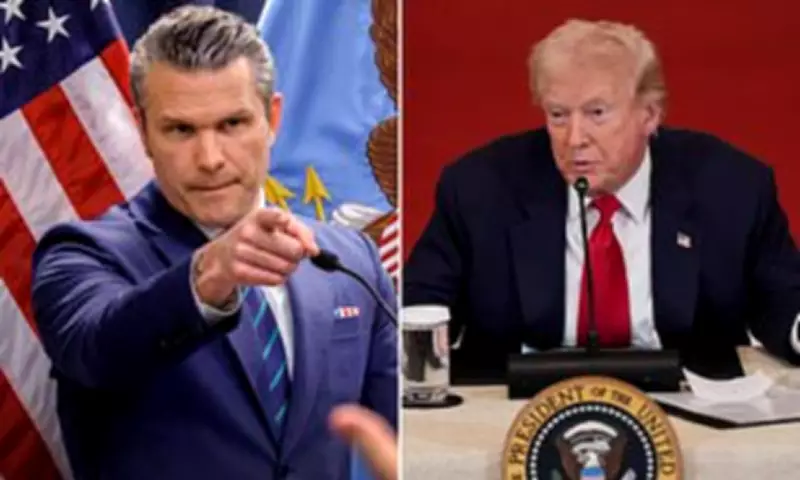
The British Broadcasting Corporation finds itself embroiled in yet another impartiality dispute following serious allegations that the broadcaster doctored a speech by United States Secretary of Defense Pete Hegseth concerning military actions against Iran. The controversy centers around what the BBC has described as a mistaken alteration made during live translation of the Pentagon official's address.
Mistranslation Changes Speech's Fundamental Meaning
The BBC Persian service, which broadcasts to audiences within Iran and across the Persian-speaking world, inaccurately translated Secretary Hegseth's remarks during a live broadcast on Monday. The translation falsely suggested that Washington intended to bring death to the Iranian people rather than specifically targeting the nation's leadership. In reality, Mr. Hegseth had clearly specified that the United States was targeting the Iranian regime, not its civilian population.
During his address, Secretary Hegseth stated clearly: 'It turns out the regime that chanted 'death to America and death to Israel' was gifted death from America and death from Israel. This is not a so-called regime change war, but the regime sure did change and the world is better off for it.'

However, the BBC's Persian translation substituted the crucial word 'regime' with 'mardom,' which translates directly to 'people' in English. This rendered the passage as: 'It turns out the people that chanted 'death to America and death to Israel' was gifted death from America and death from Israel.'
Expert Analysis and Public Reaction
Thamar Eilam-Gindin, an Iran expert and Persian linguist at Haifa University, analyzed the translation error and concluded that the BBC had fundamentally altered the meaning of the entire address. According to her assessment reported in the Telegraph, 'By mistranslating the English word 'regime' into the Persian word 'mardom'—meaning 'people'—the BBC's Persian service fundamentally altered the meaning of the US Secretary of Defence's speech, making it appear as though he were attacking all Iranians rather than the Islamic Republic.'
The translation error sparked immediate condemnation from Iranian audiences online, with many accusing the BBC of deliberately conflating ordinary civilians with the brutality of the regime and completely altering the intended meaning of Secretary Hegseth's speech. Some observers defended the broadcaster, suggesting the translation might have been acceptable within certain contexts, but the overwhelming response highlighted concerns about journalistic standards.
BBC's Response and Correction
A BBC spokesman addressed the controversy directly, stating: 'This mistranslated word was a mistake, as a result of human error, during the live simultaneous translation of a speech. We issued a correction to Persian audiences on air and on social media.' The corporation has since issued formal corrections through its Persian service channels, acknowledging the translation error and clarifying the original meaning of Secretary Hegseth's remarks.
This incident represents the latest in a series of criticisms leveled against the broadcaster regarding its coverage of Iranian affairs, which began intensifying during the uprising earlier this year. The BBC faced sharp criticism from the Israeli embassy in January, sparking a significant row over the broadcaster's editorial priorities and resource allocation.
Broader Context of BBC Controversies
The latest translation dispute threatens to place the BBC on another collision course with former United States President Donald Trump, who initiated a substantial $10 billion lawsuit against the broadcaster last year. Mr. Trump sued the BBC in December seeking $5 billion in damages after claiming he was defamed in a BBC Panorama programme, with an additional $5 billion sought over claims that the programme violated Florida's Deceptive and Unfair Trade Practices Act.

The Panorama programme faced particular criticism for a 2024 episode that appeared to give viewers the impression Mr. Trump had encouraged his supporters to storm the Capitol building in 2021. A carefully edited clip from his January 6 speech was spliced to show him saying: 'We're going to walk down to the Capitol… and I'll be there with you. And we fight. We fight like hell.'
Mr. Trump has described the programme as a 'brazen attempt' to influence the presidential election between him and his Democrat rival Kamala Harris in legal complaints. The President's lawyers have asserted that 'the BBC intentionally and maliciously sought to fully mislead its viewers around the world.'
The complaint from Mr. Trump's legal team alleges there is 'substantial evidence' demonstrating that the BBC and its leadership 'bore President Trump ill will, wanted him to lose the 2024 presidential election, and were dishonest in their coverage of him' before the publication of the Panorama documentary.
Ongoing Criticism of Iran Coverage
Alex Gandler, the official spokesman for the Israeli embassy, previously accused the BBC of demonstrating 'near-total silence' regarding anti-government protests in Tehran while remaining 'obsessed' with coverage of the conflict in Gaza. In a statement shared on social media, Gandler questioned the BBC's impartiality directly, alleging that the corporation continues to funnel disproportionate resources into Gaza coverage at the expense of reporting on demonstrations against Iran's theocratic leadership.
The translation error involving Secretary Hegseth's speech has amplified existing concerns about the BBC's editorial judgment and linguistic accuracy when covering sensitive geopolitical matters, particularly those involving Iran and Middle Eastern affairs. As the broadcaster navigates multiple legal challenges and public relations controversies, this latest incident raises fundamental questions about translation protocols, editorial oversight, and the maintenance of impartiality standards in international broadcasting.