Blair Documentary's Narrow Focus Overlooks Broader Legacy, Expert Claims
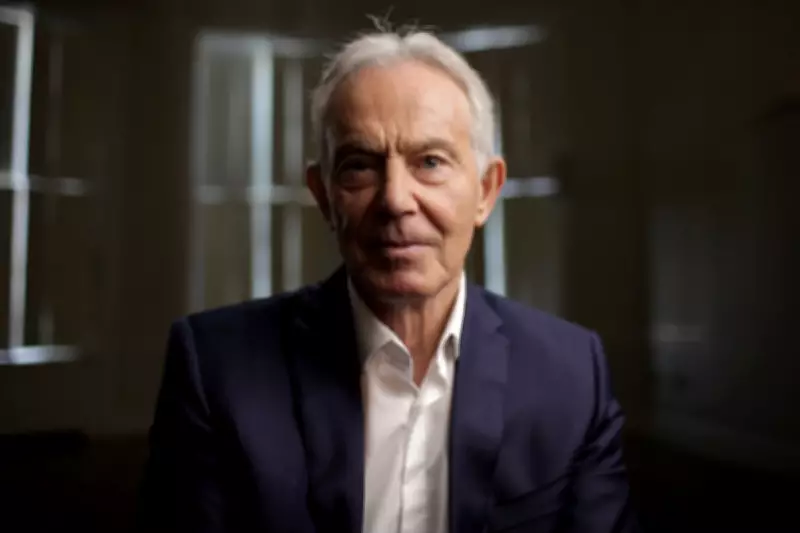
Channel 4's recent documentary on Tony Blair appeared fixated on compelling the former prime minister to concede that the Iraq invasion was an error, according to biographer John Rentoul. However, Rentoul, who authored a biography of Blair and co-teaches a course on his government at King's College London, perceives a significant shift in how Blair is now remembered by younger generations.
From Iraq Obsession to Governance Appreciation
In the initial years of the "Blair Years" course, which Rentoul has taught with Professor Jon Davis since 2008, students predominantly sought to comprehend Blair's choice to support the American-led invasion of Iraq. Mirroring documentary maker Michael Waldman's approach, they were captivated by why Blair undertook an action widely viewed as misguided and his reluctance to retrospectively acknowledge it as a mistake.
Nevertheless, in recent times, student interest has pivoted markedly. They are now far more engaged with understanding how Blair functioned as an effective prime minister. Their inquiries focus on his strategies for enhancing public services, his ability to convey optimism, and his techniques for securing and maintaining electoral victories across multiple terms.
Resistance to Psychoanalysis and Personal Probing
Despite Waldman's efforts to depict a comprehensive portrait, Blair resisted introspection more forcefully than Rentoul had previously observed. Blair explicitly told Waldman, "It's very important to understand about me that I'm not into psychoanalysis. There's far too much of it and people spend far too long constantly analysing why they do what they do. I know why I do what I do, because I believe in it. If people don't accept that, I'll just get on with doing it."
Speculation persists regarding the influence of Blair's father, Leo, who was adopted by working-class parents in Glasgow, pursued a career as a barrister and law lecturer, engaged actively in politics, and aspired to become an MP. A Conservative who abandoned his youthful Communism to embrace proto-Thatcherite views in the early 1960s, Leo saw his political ambitions dashed by a stroke. This may have motivated Tony, then aged 11, who both rebelled against his father by adopting compassionate left-wing politics and sought to achieve success on his behalf.
Additionally, Blair inherited from his father an intuitive grasp of Margaret Thatcher's "stand on your own two feet" philosophy, which devastated the Labour Party during the 1980s. Interestingly, Charles Moore, Thatcher's biographer, recently addressed King's College students, noting that Thatcher similarly deflected questions about her early life and motivations, albeit through different tactics.
Family Insights and Political Continuity
Waldman's attempts to probe Blair's private thoughts, such as inquiring about what occupies his mind "in the middle of the night," were met with adept deflection. When Blair declined to answer, Waldman questioned, "Why not, you're no longer a politician?" Blair retorted, "You're always a politician."
This statement holds true, as Blair remains active in politics broadly. He recently participated in the inaugural meeting of Donald Trump's Board of Peace, aiming to advance solutions for Gaza. As his daughter Kathryn remarked in the documentary, "He's not finished."
The film's most valuable segments feature first-time interviews with Blair's children—Kathryn, Euan, and Leo—and his wife Cherie. They affirm that the Blair family was not merely a public relations construct but a genuine unit, with Blair being the first TV-era prime minister to raise young children in Downing Street.
Rentoul recalls an off-the-record discussion in Blair's No 10 office, interrupted by four-year-old Leo coming to say goodnight. Two decades later, Leo reflects on his childhood in Downing Street, stating, "I remember being very sad" when the family departed in 2007.
Unresolved Family Dynamics and Public Perception
Cherie Blair remains unreconciled to leaving Downing Street, with her animosity toward Gordon Brown undiminished by time. When asked if Tony considered stepping down before the 2005 election, she advised, "No. Don't do it." She also believes Blair erred in transferring power to Brown two years later.
Euan revealed the family's coping mechanism as Blair's popularity waned post-Iraq: "There was this mutual understanding. We would never let him see it affecting us too much. He would never let us see it affecting him too much."
The documentary serves as a corrective to Blair's portrayal as a detached figure of destiny, grounding him in his upbringing and the family he built with Cherie. Critical responses varied, with some reviewers baffled by Blair's lack of introspection and others frustrated by his continued defense of Saddam Hussein's removal.
Enduring Political Relevance
However, more insightful reactions highlight Blair's enduring political significance. Rentoul notes that annually, it becomes simpler to elucidate Blair's prime ministerial strengths to students, as each successor inadvertently underscores them through contrasting shortcomings. As one Conservative reviewer observed, "The right needs its own Tony Blair." This sentiment resonates across the political spectrum, indicating that Blair's legacy continues to shape contemporary political discourse.