

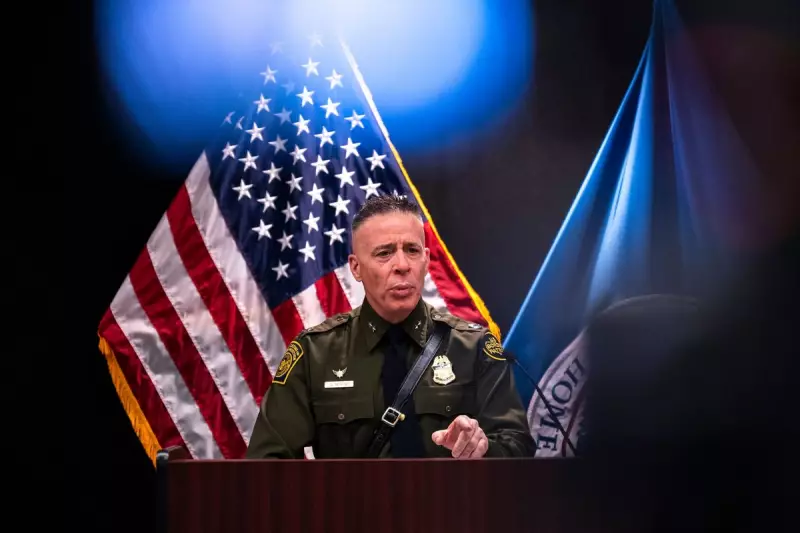
In a contentious press conference that has sparked nationwide debate, a senior Border Patrol official has pointed the finger at Democratic politicians and journalists for the escalating chaos in Minneapolis, while conspicuously avoiding direct questions about federal agents' fatal shooting of protesters during recent demonstrations.
Bovino's Blame-Shifting Rhetoric
Greg Bovino, serving as commander-at-large of the United States Border Patrol, delivered pointed remarks during a Sunday briefing in Minneapolis, Minnesota. He asserted that inflammatory language from political figures and media representatives had directly contributed to the volatile situation unfolding in the city.
"When politicians, community leaders and some journalists engage in that heated rhetoric we keep talking about, when they make the choice to vilify law enforcement, calling law enforcement names like Gestapo or using the term kidnapping, that is a choice that has made their actions and consequences that come from those choices," Bovino stated emphatically.

The Border Patrol chief expanded his criticism to include those who consume such messaging, suggesting a chain of responsibility extending from speakers to listeners. "When someone chooses to listen to a politician, a so-called journalist, or a community leader that spouts that type of vilification towards law enforcement or anything else… there are consequences and actions there also," he added, implying that recent violence represented those consequences.
Fatal Shootings and Evaded Accountability
Bovino's comments followed two highly controversial incidents where federal agents fatally shot protesters during Minneapolis demonstrations. The most recent tragedy involved Alex Pretti, a 37-year-old intensive care unit nurse who was killed while reportedly assisting another protester on Saturday.
Multiple video recordings captured the disturbing sequence of events showing Pretti being sprayed with mace, thrown to the ground, beaten by officers, and ultimately shot multiple times. Despite visual evidence suggesting Pretti never drew his legally carried weapon, federal authorities have characterized him as intending to "assassinate" agents.
This incident occurred less than three weeks after another fatal shooting by Immigration and Customs Enforcement agents, claiming the life of 37-year-old poet Renee Nicole Good shortly after she reportedly told an agent "I'm not mad at you, dude."
Dodging Direct Responsibility
When journalists pressed Bovino about whether he or the Department of Homeland Security would accept any responsibility for these fatal outcomes, the Border Patrol commander skillfully deflected the inquiries. He referred to both Pretti and Good as "suspects" who had allegedly threatened law enforcement officers.
"It goes back to the choices that we just talked about when individuals make poor choices, poor decisions, come into a law enforcement situation, an active law enforcement situation conspire to come into that situation," Bovino responded, redirecting blame toward the deceased individuals rather than addressing potential procedural failures.
When specifically questioned about whether Pretti was unarmed during the shooting—given video evidence suggesting an agent removed his weapon before another opened fire—Bovino offered only procedural reassurance. "The investigation is going to uncover all those facts," he stated, providing no substantive clarification about the controversial incident.
Political Reactions and Escalating Tensions
Minnesota Governor Tim Walz delivered a sharply contrasting perspective during his own press briefing, condemning the federal administration's handling of the situation in strong terms. "You heard the most powerful people in this country… sullying [Pretti's] name within minutes of this event happening and then closing the crime scene, sweeping away the evidence, defying a court order and not allowing anyone to look at it," Walz asserted.
The Democratic governor framed the conflict as transcending political disagreement, stating "We're no longer having a political debate. We're having a moral debate." He criticized what he characterized as a pattern of misinformation and obstruction from federal authorities investigating the shootings.

Former Presidents Weigh In
The controversy has drawn commentary from multiple former presidents across the political spectrum. Barack Obama issued a statement describing the situation as "a wake-up call to every American" and warning that "many of our core values as a nation are increasingly under assault."
Obama emphasized expectations for lawful conduct from federal agents, writing "Americans expect them to carry out their duties in a lawful, accountable way, and to work with, rather than against, state and local officials to ensure public safety. That's not what we're seeing in Minnesota."
Former President Bill Clinton similarly characterized the shooting as "unacceptable" and criticized federal authorities for "lied to us, told us not to believe what we've seen with our own eyes, and pushed increasingly aggressive and antagonistic tactics."
Meanwhile, current political leadership has taken a different approach, with social media posts calling for increased cooperation between state authorities and federal immigration enforcement while advocating for legislative changes regarding sanctuary city policies.
Broader Implications and Ongoing Investigations
The Minneapolis incidents have reignited national conversations about federal law enforcement tactics, accountability mechanisms, and the appropriate relationship between different levels of government during civil unrest. Bovino's deflection of responsibility while attributing blame to political opponents and media figures represents a significant escalation in rhetorical tensions surrounding these issues.
As investigations continue into the precise circumstances of both fatal shootings, the contrasting narratives from federal officials and state leaders suggest deepening divisions in how different authorities interpret events and assign responsibility. The Border Patrol's characterization of protesters as threatening suspects conflicts directly with video evidence and witness accounts presented by local officials and independent observers.
This developing situation continues to unfold with multiple investigations underway, conflicting narratives from different levels of government, and growing public concern about federal law enforcement tactics during civil demonstrations.





