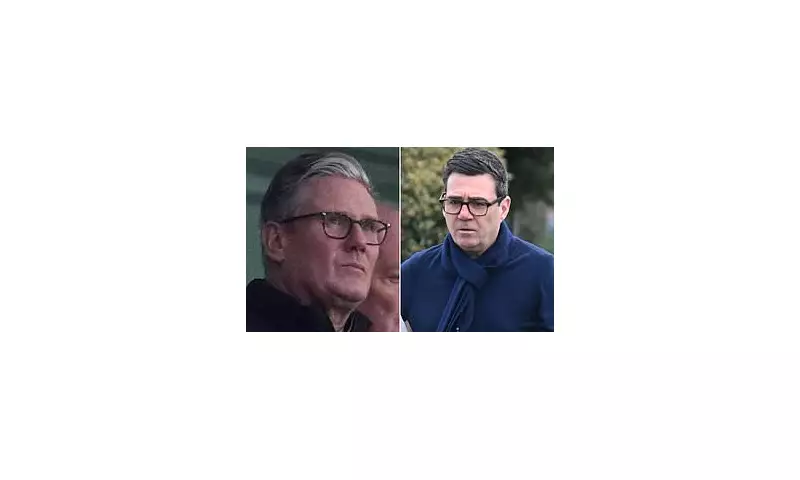
Keir Starmer was confronted with stark warnings last night that his controversial decision to block Andy Burnham's parliamentary ambitions has significantly heightened the probability of a leadership challenge against him. The Prime Minister stands accused of running scared after personally spearheading efforts to prevent the Greater Manchester mayor from contesting the Gorton and Denton by-election, a move that risks igniting a full-scale civil war within the Labour Party.
Burnham Breaks Silence with Scathing Criticism
In a dramatic intervention, Andy Burnham publicly criticised what he described as the dysfunctional manner in which the Labour Party is currently being managed. The mayor revealed the particularly galling detail that media outlets were informed of the National Executive Committee's decision before he received official notification himself.
Posting on social media platform X, Burnham expressed his profound disappointment with the NEC's ruling and voiced serious concerns about its potential impact on crucial upcoming elections. He pointedly remarked that 'the fact that the media was informed of the NEC decision before I was tells you everything you need to know about the way the Labour Party is being run these days.'

Burnham added with evident frustration that 'you would think that over 30 years of service would count for something, but sadly not,' highlighting what many perceive as disrespectful treatment of a senior party figure with decades of dedicated service.
Labour MPs Warn of Accelerated Demise
The decision to prevent Burnham from standing has provoked fury among Labour parliamentarians, with several warning Sir Keir that this controversial move could substantially hasten his political demise. The blocking of what many consider Labour's strongest candidate for the seat has effectively gifted an advantage to Nigel Farage's Reform UK party, adding to the growing sense of crisis within Labour ranks.
Karl Turner, Labour MP for Kingston upon Hull East, stated unequivocally that sabotaging Burnham's bid 'provides more chance of a challenge' should the party lose the impending by-election. This sentiment was echoed by former shadow chancellor John McDonnell, who sent a direct message to the Prime Minister warning that 'if he thinks this strengthens his position, I think it will be used to hasten his demise if he's not careful.'
Former Labour MP Diane Abbott, now sitting as an independent, added her voice to the chorus of concern, predicting that 'if the results in May are as bad as we all think they're going to be, a challenger will emerge from somewhere.'
High-Stakes Political Gamble
In what represents a major political gamble, Sir Keir personally argued against allowing Burnham to resign his mayoral position and contest the parliamentary seat. The Prime Minister joined an overwhelming majority of a specially convened panel from Labour's ruling National Executive Committee in voting against the prospect of triggering fresh Manchester mayoral elections.
The Labour Party has defended its position by stating that permission was denied to 'avoid an unnecessary mayoral election, which would use substantial amounts of taxpayers' money and resources that are better spent tackling the cost-of-living crisis.' Official estimates suggest that running simultaneous mayoral and parliamentary elections could cost millions of pounds, with the previous mayoral contest alone costing approximately £4.7 million.
Internal Divisions Laid Bare
The decision-making process revealed deep fractures within Labour's senior ranks. During a 45-minute meeting of ten NEC members, the panel voted 8-1 in favour of blocking Burnham's ambitions, with Home Secretary Shabana Mahmood abstaining from the crucial vote. In a clear sign of internal disagreement, Labour's deputy leader Lucy Powell emerged as Burnham's sole ally on the panel, casting the only vote in support of his candidacy.
Labour sources have indicated that the ruling was motivated by concerns about preventing a costly and potentially toxic battle for the Manchester mayoralty against Reform UK. There were significant fears within party headquarters that Reform could capture what would represent their biggest political prize to date under Nigel Farage's leadership.

Leadership Contenders Circle
The escalating controversy has intensified jostling among potential successors to Sir Keir, with Health Secretary Wes Streeting and Deputy Prime Minister Angela Rayner widely expected to lead any forthcoming leadership challenge. Allies of the Health Secretary believe he has secured what they describe as the 'solid' support of nearly half of Labour's 404 MPs should he decide to mount a challenge for the party leadership.
Mr Streeting has made little secret of his ultimate ambition to become Prime Minister and has been consistently linked with a potential challenge should Labour suffer significant losses in May's local elections. Meanwhile, former deputy prime minister Ms Rayner remains frequently discussed as a credible contender, as does Energy Secretary Ed Miliband, who consistently tops polls among party members.
Union Backlash and North-South Divide
The decision has provoked anger not only among parliamentary colleagues but also from influential trade union leaders. Unison general secretary Andrea Egan issued a warning against what she termed 'control freakery' prior to the ruling and tweeted afterwards that 'this isn't the way any democratic organisation should be run. Now's the time to unite our movement, not divide it.'
The controversy has exposed and potentially exacerbated a growing North-South divide within the Labour Party, with many northern MPs expressing particular dismay at the treatment of the Greater Manchester mayor. Jo White, head of the influential Red Wall caucus, had previously called for northern constituencies to determine their own representation, adding to the sense of regional grievance.
As Labour faces difficult local elections in May, with expectations of disastrous performances in Wales and Scotland alongside potential losses to Reform UK, the blocking of Andy Burnham has created precisely the kind of internal division that many fear could prove catastrophic for the party's electoral prospects.