Andy Burnham Condemns Labour's 'Bankrupt' Campaign Strategy Following Byelection Setback
Greater Manchester Mayor Andy Burnham has reignited hostilities with Keir Starmer's Labour leadership, delivering a blistering critique of what he termed the "bankruptcy" of the party's approach to campaigning. This comes just one week after Labour suffered a humiliating defeat in the previously safe seat of Gorton and Denton.
The Chasm Between Westminster and the People
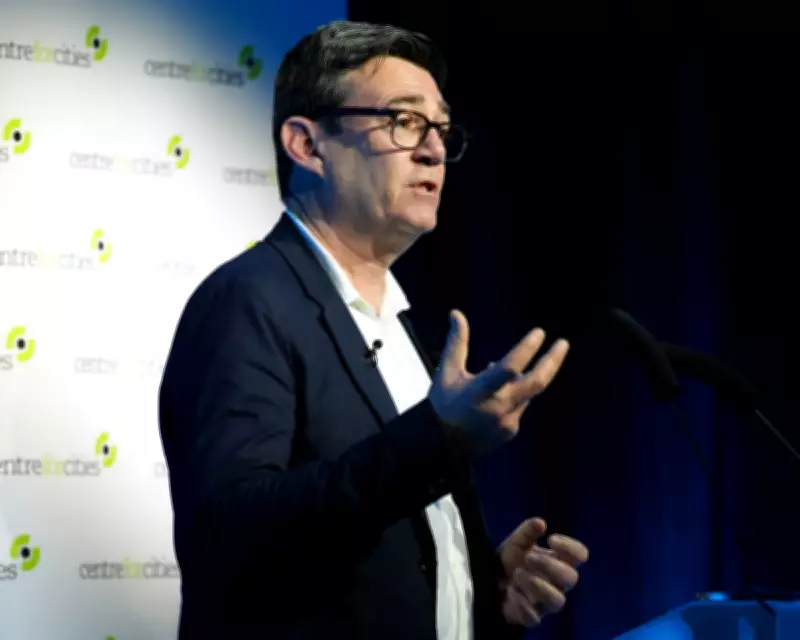
In a speech at the British Library in London that has reignited speculation about his leadership ambitions, Burnham declared that the byelection "revealed the full depth of the chasm between people and Westminster politics." The mayor, widely regarded as a potential rival to Starmer, argued that Labour's traditional campaigning style prevents meaningful connection with non-Labour voters and other progressive parties.
"What I want to say today is that the time has most definitely come for a serious conversation about our political system and its pervading culture, particularly so in the aftermath of the Gorton and Denton byelection," Burnham stated emphatically. "I don't think anybody can seriously dispute that statement."

Byelection Fallout and Leadership Speculation
Burnham was speaking exactly one week after Labour's shocking loss in the Manchester constituency, where Starmer and his allies had previously blocked the mayor from standing as the party's candidate. Labour's deputy leader and Burnham ally, Lucy Powell, has since claimed that Burnham would "probably" have won the contest, which instead saw Green Party candidate Hannah Spencer emerge victorious, with Labour finishing a distant third behind Reform UK in second place.
The mayor pointed to polling by More in Common that found a majority of people no longer believe the cost of living crisis will ever end, describing this as "code red for Westminster politics." Burnham warned, "This is getting extremely dangerous, and change in our political system and culture is desperately needed."
Manchesterism Versus Westminsterism
During his address, Burnham outlined for the first time in detail his vision of "Manchesterism" - a governing philosophy he positioned as "the opposite of Westminsterism." This concept has become closely associated with the former MP's apparent pitch for the Labour leadership, though he presented it as a broader alternative to current political practices.
The mayor launched a withering attack on colleagues in the UK government, claiming that Westminster and Whitehall no longer appear interested in "sharing growth" with regions like northern England. He expressed particular frustration with what he described as "the resistance of the system to free us up more," despite a decade of devolution efforts.
Devolution Discontent and Whitehall Resistance
"After 10 years of devolution they are still pushing us away as if they know all the answers, and still they hold on and refuse to devolve," Burnham told his audience. "I am getting to the point where I refuse to spend more of my time making the case. It just makes you think they don't actually want growth everywhere. They just want to hold on to things down here. We need Whitehall reform but we also need Westminster reform."
Burnham did prompt laughter from attendees when he declared his ambition to turn Manchester into Britain's "leading green city," before adding wryly, "Some might say it took a step that way recently" - a clear reference to the Green Party's byelection victory in the constituency.
Unanswered Questions and Event Controversy
Following his speech, Burnham fielded numerous questions at the event organized by the Centre for Cities thinktank. However, he remained conspicuously silent when Andrew Carter, the organization's chief executive, stated that a question about allegations of so-called "family voting" irregularities fell outside the event's "rules" and would not be addressed.
The mayor's comprehensive critique of both his own party's campaigning methods and the broader Westminster political culture represents his most significant intervention since Labour's byelection defeat, further fueling speculation about his future ambitions and the deepening divisions within the party's leadership.