Church of England Faces Mounting Criticism Over £100 Million Slavery Reparations Fund
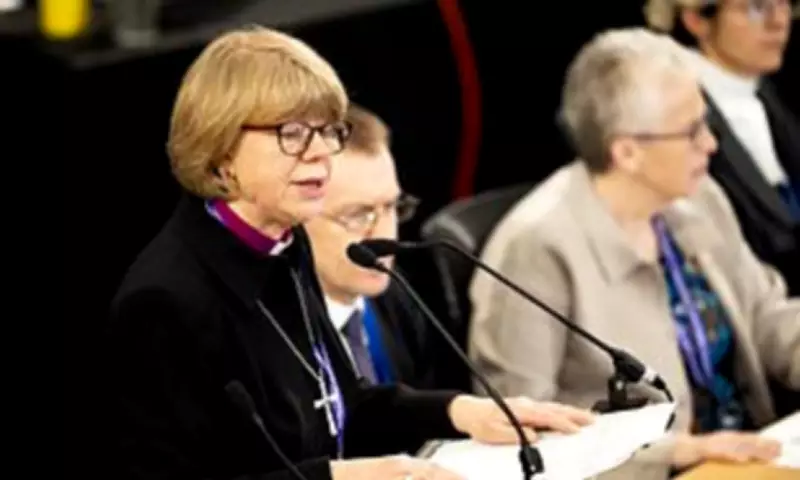
The newly appointed Archbishop of Canterbury, Dame Sarah Mullally, has encountered significant opposition from churchgoers regarding plans to allocate £100 million towards slavery reparations. During a fringe meeting at the Church of England's General Synod in Westminster, attendees accused church leadership of misleading the public and exacerbating tensions by proceeding with the controversial initiative.
Academic Experts Challenge Historical Basis of Reparations Plan
Professor Richard Dale, an Emeritus Professor from the University of Southampton and Fellow of the Royal Historical Society, addressed approximately one hundred worshippers at the gathering. He asserted that the Church Commissioners' report, which claims historical links to the slave trade, contains fundamental errors that undermine the entire reparations project.
"History matters and what is certain is that such a scheme should not be launched on the back of a false historical narrative," Professor Dale declared. "This narrative is demonstrably false. The Church Commissioners' historical advisers have misled the Commissioners, the Commissioners have misled Church leaders and Church leaders have misled the public at large."

Professor Dale explained that researchers confused the South Sea Company, which participated in slave trading, with South-Sea Annuities, which did not. According to his analysis, Queen Anne's Bounty—a fund established in 1704 to support poor Anglican clergy—had only about 0.1% of its investments tied to the former, with no recorded profits, compared to 30% in the latter.
Broader Concerns About Ethical Justification and Implementation
The Reverend Professor Lord Biggar, Professor of Moral and Pastoral Theology at the University of Oxford, also participated in the panel discussion. He criticized church leaders for adopting what he described as a "lazer focus" on "white oppressors and black victims," arguing that this perspective lacks historical justification.
"Why ignore Africans enslaved by other black Africans? Slavery was practised by every skin colour on every continent," he remarked, adding that church authorities have failed to provide a carefully reasoned ethical justification for the reparations project.
Other panelists echoed these concerns. Charles Wide KC, a retired Old Bailey judge and former Church treasurer, suggested that the funds would be better spent supporting parish ministries and maintaining church buildings. Academic Dr Alka Sehgal Cuthbert warned that pressing ahead with the reparations plan could "encourage segregational beliefs" based solely on skin colour, describing the approach as "putting out the fire with gasoline."
Background and Current Leadership Stance
The Church of England's slavery reparations proposal, known as Project Spire, was announced in January 2023 following the publication of a report commissioned by the Church Commissioners. That report concluded that Queen Anne's Bounty had financed what it termed "great evil" through investments in African chattel enslavement and acceptance of donations derived from slavery.
Former Archbishop of Canterbury Justin Welby expressed deep regret for these historical connections and pledged action to address what he called the Church's "shameful past." Last month, Dame Sarah Mullally reaffirmed her commitment to the £100 million fund, describing it as a "gospel imperative" and a form of repentance for past investments in slave-trading companies.
She emphasized that the reparations money would not divert resources from parishes, noting that £1.6 billion has already been allocated to support local churches over the next three years. However, opposition remains strong among Synod members and many worshippers who believe the substantial sum should be redirected toward parish ministry and building maintenance instead.