Colombian President Urges Court to Lift Suspension on Emergency Tax Decree
Colombian President Gustavo Petro has made a direct appeal to the nation's highest court, urging it to lift a suspension on an economic emergency decree that would grant his government the authority to raise taxes without congressional approval. This move comes as severe floods devastate northern regions of the country, creating an urgent need for recovery funding.
Flood Crisis Demands Immediate Financial Response
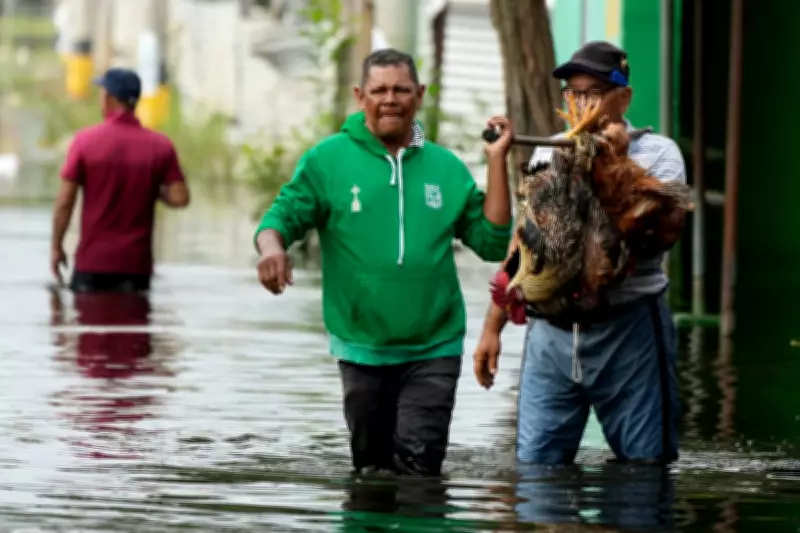
During a televised Cabinet meeting on Tuesday, President Petro emphasized the critical necessity of raising tens of millions of dollars to support recovery efforts in two northern Colombian provinces. These areas have been severely impacted by floods that have resulted in at least 14 fatalities and displaced approximately 69,000 residents. The president stated clearly, "The best thing would be for the suspension on the emergency decree to be lifted," highlighting the significant challenges in financing reconstruction without these powers.
Background of the Emergency Decree and Legal Challenges
This emergency decree was originally issued by Petro in late December, following a holiday recess for Colombian courts. It was designed to enable the government to increase taxes without the usual requirement of congressional approval. The decree cited several pressing needs, including defending the military from drone attacks by rebel groups and settling outstanding debts with health insurance companies. However, in January, Colombia's constitutional court suspended the decree, ruling that the reasons provided did not constitute unexpected emergencies as required by law.

The government's push for this decree follows a failed attempt last year to pass a tax bill aimed at raising government revenues by around $4 billion in 2026. Now, with the flood crisis unfolding, officials argue that the situation presents a valid and urgent emergency that justifies the decree's implementation.
Government Officials and Local Impact
Interior Minister Armando Benedetti reinforced the government's position on Tuesday, asserting, "If the court lifts the suspension on the decree, we will have the resources to tend to this crisis." The floods have particularly affected the largely rural provinces of Sucre and Córdoba in northwestern Colombia, where recovery efforts are hampered by limited funds.
According to Colombia's National Meteorology Institute, the floods were triggered by two cold fronts in the Caribbean that brought unusually strong winds and heavy rainfall. Some northern areas experienced a month's worth of rain in just one week, leading to widespread devastation. In Montería, the largest city in Córdoba province, streets remained flooded on Tuesday, with residents resorting to canoes to salvage belongings like mattresses and furniture from their homes.
Rodolfo Ortega, a resident of Montería, described the dire situation, saying, "Many of our things have rotted. The only thing we have been able to recover are our clothes." This personal account underscores the human toll of the disaster and the pressing need for effective governmental intervention.
Looking Ahead: Court Decision and Recovery Efforts
As the constitutional court considers the government's request to lift the suspension, the outcome will significantly impact Colombia's ability to respond to the flood crisis. The debate centers on whether the current circumstances qualify as an unexpected emergency under Colombian law, a determination that could set a precedent for future governmental actions. With recovery efforts stalled by financial constraints, the decision holds profound implications for the affected communities and the broader political landscape in Colombia.