Trump Administration's Failed Bid to Indict Democratic Lawmakers Over Military Advice
The administration of former President Donald Trump has encountered a significant setback, as efforts to indict six Democratic lawmakers for alleged seditious behavior have collapsed. The controversy centers on a video released in November 2025, in which the Democrats urged military personnel to refuse unlawful orders, sparking outrage from Trump and leading to a Department of Justice probe that ultimately failed to result in charges.
The 'Seditious Six' and Their Viral Message
Dubbed the 'seditious six' by conservative commentators, the group includes Senators Mark Kelly of Arizona and Elissa Slotkin of Michigan, along with Representatives Jason Crow of Colorado, Maggie Goodlander of New Hampshire, and Chris Deluzio and Chrissy Houlahan of Pennsylvania. In the viral video, the lawmakers, all of whom have backgrounds in the US military or intelligence agencies, emphasized that soldiers have a legal right to reject illegal commands, stating, 'Our laws are clear. You can refuse illegal orders.'
This message provoked a fierce reaction from Trump, who took to social media to denounce the Democrats, writing in all caps, 'SEDITIOUS BEHAVIOR, punishable by DEATH!' and adding, 'HANG THEM GEORGE WASHINGTON WOULD !!' His comments, coming from the commander-in-chief of the US military, escalated tensions and led to immediate security concerns for the lawmakers involved.
Enhanced Security and Ongoing Threats
In response to Trump's threats, Capitol Police swiftly offered round-the-clock protection to the six Democrats. Senator Slotkin described the situation in mid-November, noting, 'Capitol Police came to us and said, "We're gonna put you on 24/7 security." We've got law enforcement out in front of my house. I mean, it changes things immediately.' This move underscored the perceived danger and the political volatility surrounding the case.
Further compounding the pressure, Secretary of War Pete Hegseth initiated proceedings to strip Senator Kelly of his military rank and pay, though this process remains ongoing. Kelly responded defiantly, stating, 'It wasn’t enough for Pete Hegseth to censure me and threaten to demote me, now it appears they tried to have me charged with a crime — all because of something I said that they didn’t like.'
Legal Hurdles and Constitutional Protections
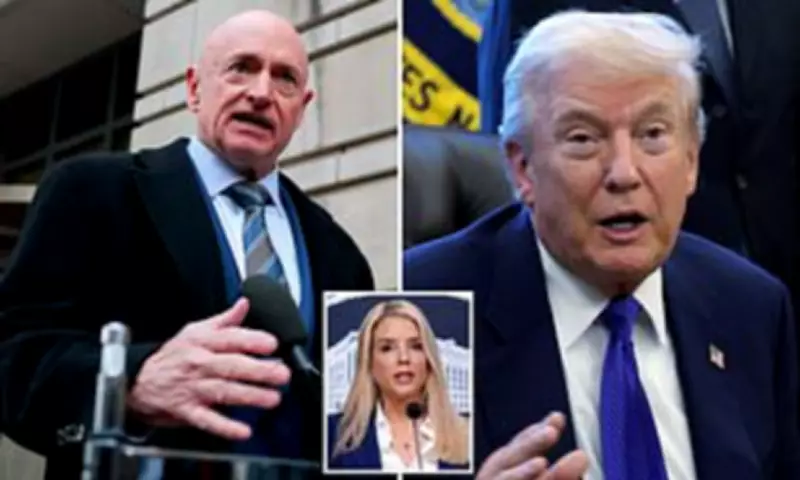
The Department of Justice's attempt to indict the Democrats was led by the US Attorney's Office for the District of Columbia, overseen by Trump appointee and former Fox News host Jeanine Pirro, under the jurisdiction of Attorney General Pam Bondi. Notably, the federal attorneys assigned to the case were political appointees rather than career prosecutors, as confirmed by a source familiar with the matter to NBC News.
Legal experts have argued that prosecuting lawmakers for political speech would infringe on their constitutional rights. Under the Speech or Debate clause in Article 1 of the Constitution, legislators enjoy broad protections for remarks related to the 'legislative sphere,' making it challenging for the executive branch to pursue charges. This legal framework likely contributed to the DOJ's failure to secure indictments.
Reactions and Broader Implications
Following the failed indictment, the Democrats expressed relief and defiance. Representative Crow asserted, 'If these f***ers think that they’re going to intimidate us and threaten and bully me in the silence, and they’re going to go after political opponents and get us to back down, they have another thing coming. The tide is turning.' Houlahan added, 'It’s a vindication for the Constitution,' while Slotkin posted on X, 'But today wasn’t just an embarrassing day for the Administration. It was another sad day for our country.'
Slotkin further criticized the administration, stating, 'Because whether or not Pirro succeeded is not the point. It’s that President Trump continues to weaponize our justice system against his perceived enemies. It’s the kind of thing you see in a foreign country, not in the United States we know and love.' This sentiment highlights broader concerns about the politicization of justice and free speech in America.
The Uniform Code of Military Justice supports the lawmakers' stance, as it mandates obedience to lawful orders but permits refusal of illegal ones. This context underscores the legitimacy of their advice, even as the administration sought to penalize them. The failed indictment marks a notable defeat for Trump's efforts to target political opponents and raises questions about the limits of executive power in the US.