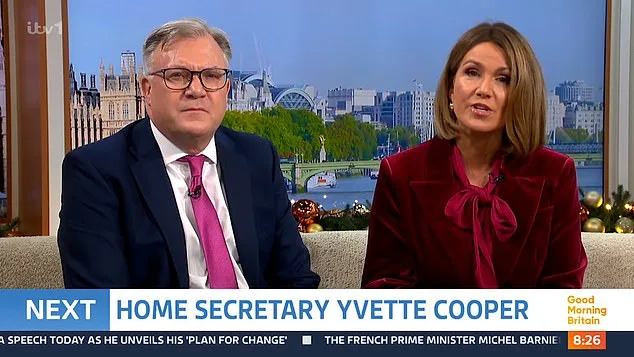
Ed Balls Declines to Interview Wife Yvette Cooper on GMB Amid Bias Row
Good Morning Britain presenter Ed Balls opted to sit out an interview with his wife, Labour Foreign Secretary Yvette Cooper, on Monday 2 March 2026, citing concerns over impartiality and avoiding a repeat of a previous bias controversy.
Host Steps Aside to Prevent Conflict of Interest
During the ITV breakfast show, co-host Susanna Reid announced she would conduct the interview with Cooper, who was appearing to discuss an overnight drone strike at a UK RAF base in Cyprus and government plans to assist British nationals in the Gulf. Reid noted, "I'll be doing that interview, of course, because Yvette is obviously your wife." Balls responded, "I think I'll sit this one out."
This decision follows a significant bias row in August 2024, when Balls interviewed Cooper after Labour faced criticism for its response to riots and far-right civil unrest across the country. That interview sparked 8,201 complaints to Ofcom, questioning Balls's impartiality due to his marital relationship with Cooper.
Historical Context and Ofcom Regulations
Balls and Cooper have been married for over 25 years and share three children, making them the first married couple to serve together in government back in 2008. While Ofcom does not specifically prohibit spouses from interviewing each other, its due impartiality rules state that politicians should not act as newsreaders, interviewers, or reporters in news programmes unless editorially justified, with their political allegiance clearly disclosed.
The situation has drawn comparisons to cases involving GB News, where Ofcom found breaches when Tory MPs interviewed other Tory MPs. Observers noted Balls's softer approach with Cooper contrasted with his earlier interview with Labour MP Zara Sultana, whom he repeatedly interrupted as she urged condemnation of protests as "Islamophobic" and "racist."
By recusing himself, Balls aims to maintain professional standards and avoid further complaints, highlighting ongoing debates about media impartiality and conflicts of interest in broadcasting.