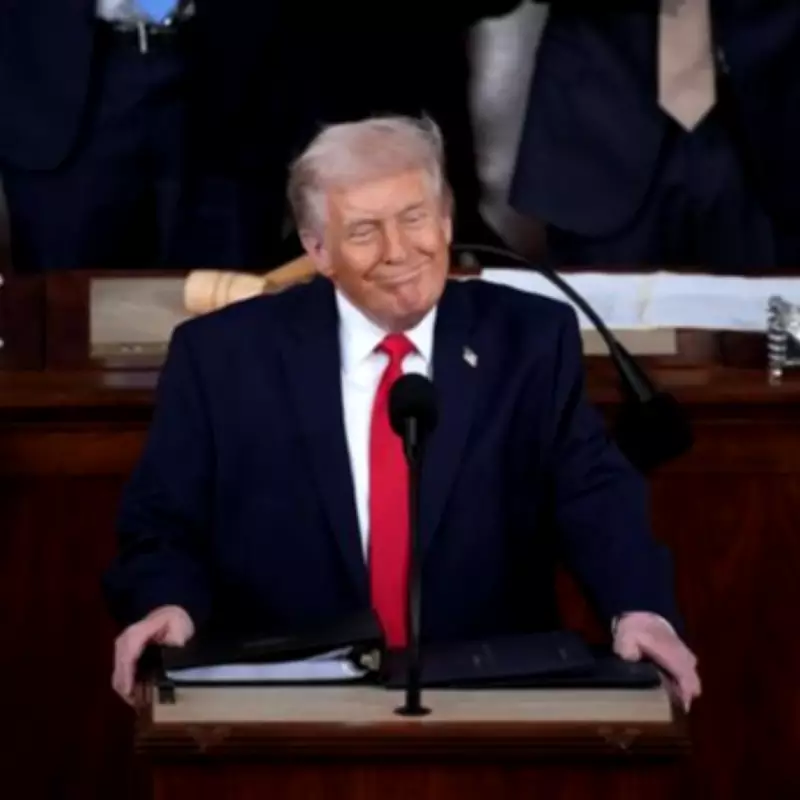
Expert Analysis Reveals Psychological Tactics in Trump's State of the Union Address
A psychotherapist specializing in behavior and confidence has conducted a detailed analysis of Donald Trump's recent State of the Union address, identifying what she describes as calculated psychological tactics throughout the lengthy speech.
Duration as Dominance Strategy
Psychotherapist Shelly Dar, who examined the entire address, noted that the 108-minute duration was not accidental. "Length itself becomes dominance," Dar explained. "It signals stamina, command and refusal to be rushed, particularly at a moment when approval ratings and court rulings are challenging him." She described the entire address as being fundamentally about "control and reframing" from beginning to end.
Repetition as Narrative Construction
Dar highlighted Trump's strategic use of repetition throughout the address as a key psychological tactic. "The repeated line 'we're winning so much' is classic narrative override," she noted. "When external indicators are mixed, repetition works to implant certainty. It is less about data and more about emotional contagion. If he sounds convinced, supporters feel steadied."

Modulated Tone and Visible Tensions
Examining the tone employed throughout the address, Dar observed that Trump remained measured apart from specific exceptions. "His tone, less bombastic but still combative, suggests modulation rather than softening," she analyzed. The psychotherapist pointed to the "stoic exchange with Chief Justice Roberts and Amy Coney Barrett's expressionless response" as creating visible tension during the proceedings.
Strategic Division and Base Consolidation
One particularly notable moment occurred when Trump criticized Democratic Party members for remaining seated during his call to stand for American citizens. Dar commented: "By chastising the court while standing feet away, he projects defiance and signals to voters that institutional pushback will not restrain him." She added that "the darker immigration language and public calling out of Democrats sharpens division" and psychologically consolidates his political base.
Patriotic Imagery as Emotional Anchoring
Regarding Trump's display of support for the US Men's ice hockey team—amid controversy about comments regarding the Women's team—Dar noted the strategic use of patriotic imagery. "The theatrical use of hockey players and military figures injects patriotism and spectacle," she explained. "It shifts the emotional temperature from legal controversy to national pride. That is strategic anchoring."
The Hidden Agenda Revealed
According to Dar's analysis, the underlying psychological agenda of the address was clear: "The hidden agenda appears clear, and it is to frame himself as strong, embattled and victorious, and make opposition look obstructive in contrast." The entire speech, she concluded, represented a sophisticated psychological operation designed to project strength and control while reframing political narratives to his advantage.
The State of the Union address featured multiple dramatic moments, including opposition protests, the President championing his own policies, and patriotic displays with Olympic athletes. Dar's analysis suggests these were not random occurrences but carefully orchestrated elements of a broader psychological strategy aimed at influencing public perception and political dynamics.