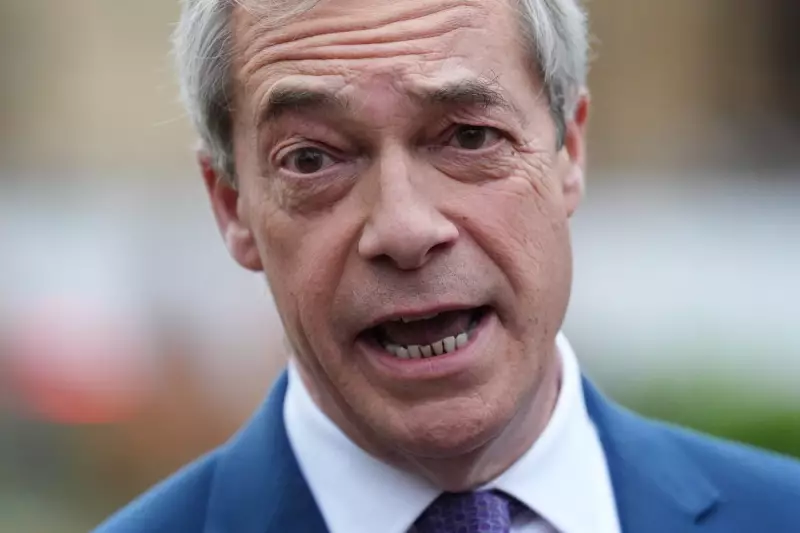
Reform UK leader Nigel Farage has pledged that a government led by his party would issue pardons to military veterans convicted for their actions during the Northern Ireland Troubles. The controversial commitment forms part of a broader policy to halt what the party describes as the "unfair hounding" of former servicemen.
Ending Prosecutions Through Legislation
According to a policy document obtained by The Daily Telegraph, Reform UK would introduce legislation to create a "statutory bar" designed to terminate current legal proceedings and prevent future prosecutions against British veterans for historical conduct related to the conflict. Mr Farage indicated this could be achieved either through new laws or by exercising the royal prerogative of mercy.
"We are proud to be launching our veterans wing. We will fight the injustice being done to our former servicemen and stand up for their rights," the Reform leader told the newspaper. The policy paper argues this approach would "draw a line under a situation where terrorists have faced no consequences for their heinous actions whilst veterans have been unfairly hounded."

Historical Context and Statistics
The Reform document cites historical data, noting that British forces were responsible for approximately 11 percent of deaths during the Conflict in Ireland from 1969 to 1993. Despite this proportion, the party highlights that the vast majority of around 30 potential inquests into Troubles-related killings and approximately 600 pending civil cases involve the actions of lawfully deployed British security forces.
More than 3,500 people lost their lives during three decades of violence known as the Troubles, which began in January 1969 when the UK government deployed troops to Northern Ireland.
Contrast with Existing Legacy Framework
This pledge emerges against a complex legal backdrop concerning how the UK addresses legacy issues from the Troubles. Earlier this month, MPs voted on a Government remedial order concerning the 2023 Legacy Act, originally passed by the previous Conservative administration.
That legislation, which has not been enacted, offered immunity from prosecution to individuals accused of Troubles-era crimes if they provided information to a truth recovery body. However, in 2024, the High Court in Belfast ruled parts of the Act incompatible with the European Convention on Human Rights.
The then-Conservative government initiated an appeal against this ruling, but the process was discontinued by Labour ministers following the 2024 general election.
Political Reactions and Comparisons
The Reform policy document draws a direct comparison with past approaches to paramilitaries, stating the pledge to pardon veterans would match "what was given to the IRA under [former Labour Prime Minister Tony] Blair; they were released from prison, pardoned or given comfort letters, and even allowed to engage in front-line politics."
Shadow armed forces minister Mark Francois responded by stating the Conservatives have been "defending those who defended us" for "years." He welcomed support from other parties but questioned Reform's recent parliamentary engagement.
"However, the Conservatives have voted repeatedly in Parliament to oppose Labour’s assault on our 2023 Legacy Act – which actually protects NI Veterans – including last Wednesday, when Farage and [Robert] Jenrick didn’t even bother to vote, to defend our Vets. Where were they instead?" Mr Francois asked.
The debate continues to highlight the deeply sensitive and politically charged nature of addressing historical accountability and justice nearly three decades after the Good Friday Agreement.