Nigel Farage's Shadow Government Unveiled Amidst Internal Tensions and Defensive Posturing
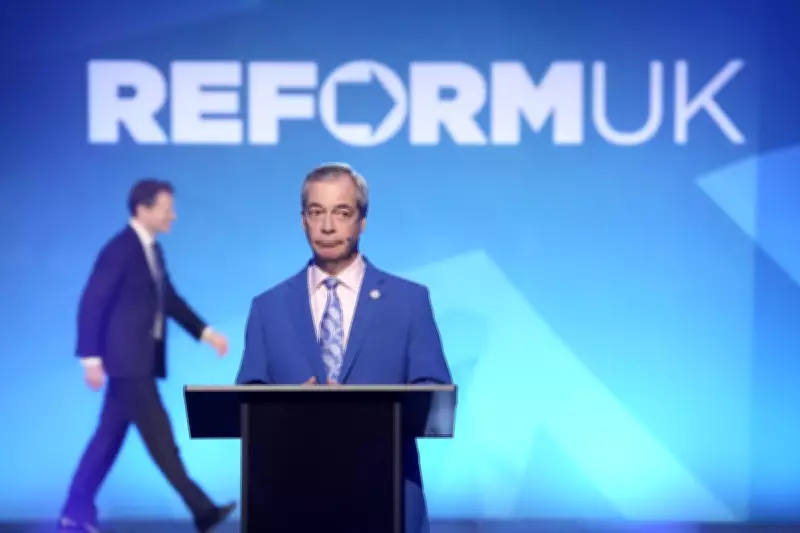
Nigel Farage has officially revealed his shadow government, a move intended to project Reform UK as a professional outfit ready for governance. However, the announcement was marred by defensive exchanges, internal jostling, and a persistent sense that the party remains a one-man band. The event, held on Tuesday 17 February 2026, saw Farage fielding questions with visible impatience, while key appointments like Robert Jenrick as shadow chancellor and Suella Braverman as shadow education secretary highlighted ongoing power struggles within Reform.
Robert Jenrick's Strategic Defection and Ambitions
Robert Jenrick, who defected from the Conservatives after being expelled by Kemi Badenoch for plotting his move, secured a prominent role as shadow chancellor. This position grants him significant influence over policy, yet it sets up potential conflicts with Farage, whose instincts lean toward tax cuts and increased spending. Many within Reform speculate that Jenrick's calculation in joining was partly with an eye on leadership succession, should anything happen to Farage. When asked about this, Farage avoided naming a successor, instead emphasizing Reform's independent brand and identity.
During the news conference, Farage frequently intervened on Jenrick's behalf, such as when a journalist from the Express inquired about the two-child limit on benefits—a policy on which Farage has zigzagged. "I want to speak for Robert here," Farage stated, deflecting the question and later noting that Jenrick would address it in a speech the following day. This protective stance underscored Jenrick's perceived value but also hinted at underlying tensions.

Suella Braverman's Appointment and Limited Contributions
Suella Braverman, appointed as shadow education, skills and equalities secretary, drove a hard bargain for her role. As a twice-failed home secretary, her addition to the shadow cabinet raises questions about what she brings to Reform. Farage appeared surprisingly deferential to her and Jenrick's ministerial experience, stating, "We've got an awful lot to learn. These guys will help us." Yet, her track record suggests limited appeal, contrasting with Jenrick's unexpected skill in making videos, which has garnered some positive attention.
Internal Jostling and Leadership Dynamics
The shadow cabinet reveal exposed internal rivalries, particularly between Jenrick and Richard Tice, both vying for leading economics roles. Farage attempted to mediate by expanding Tice's responsibilities to include energy within the business department and bestowing upon him the title of "shadow deputy prime minister" to avoid Jenrick outranking him too obviously. This maneuvering mirrors the kind of position-jostling seen in established parties, with some Reform insiders comparing Farage to a football manager overspending on star players.
Farage's defensiveness was palpable when journalists raised past associations and criticisms. Reciting a list of individuals with whom he has fallen out over the years, he retorted that there were people "in this room" who had worked with him for a decade. He also dismissed questions about Jenrick's tenure as immigration minister under the Conservatives, which contributed to high immigration levels, by asserting Jenrick had resigned over the policy and adding, "What more do you want? We don't need to answer the question."
Zia Yusuf's Persuasive Performance and Policy Conviction
Oddly, the most persuasive shadow cabinet member was Zia Yusuf, the shadow home secretary, who is not an MP. He presented a wall of statistics to argue that the British people have been betrayed by a political class failing to control immigration. While Reform's policy for stopping small boat crossings remains unconvincing, Yusuf delivered it with a clarity and conviction lacking in his colleagues. His references to a future under "Prime Minister Nigel Farage" highlighted the leader-centric nature of the party, reinforcing the one-man band image.

Farage's Growing Impatience and Electoral Implications
Farage seemed to tire quickly of journalists' questions, lamenting the length of the list provided by his media handlers and cutting off inquiries with remarks like, "We haven't got time." He was particularly stung by a question referencing Kemi Badenoch's comment about being glad to rid the Tory party of "drama queens," responding sharply, "If people mess about, are disloyal, they won't be here for long." This defensive posture, combined with the internal dynamics on display, suggests Reform may struggle to present a united front ahead of the general election.
Ultimately, the shadow government unveil did little to dispel the notion that Reform is overly reliant on Farage's persona. Despite efforts to showcase a professional team, the event highlighted conflicts, defensive rhetoric, and a leader struggling to share the spotlight. As the election approaches, this complicated array of instruments risks falling apart, undermining Reform's credibility as a viable alternative to established parties.