US Public Support for Iran War Hits Historic Low Amid Rising Security Fears
Support for the ongoing war with Iran has reached historically low levels among the American public, with less than half of citizens approving of the military action according to recent polling data. A comprehensive analysis reveals this represents the weakest initial popular backing for any major US conflict in recent decades, starkly contrasting with overwhelming public enthusiasm at the onset of previous wars.
Comparing Historical War Support
When the United States initiated hostilities with Iran, approximately 41 percent of Americans expressed approval for the attack according to contemporaneous polling. This figure stands in dramatic contrast to historical precedents. Following the attack on Pearl Harbor in 1941, about 97 percent of Americans supported the declaration of war against Japan. Even in more recent conflicts that later became deeply unpopular, initial majority support was substantial: 76 percent for the Iraq War and 92 percent for the Afghanistan campaign at their respective beginnings.
The New York Times analysis highlights how this conflict breaks from established patterns of American war sentiment. Observers point to multiple factors contributing to this tepid public response, including intense political polarization that makes national consensus increasingly difficult and widespread opposition across party lines to new overseas military commitments.
Communication Failures and Political Context
Sarah Maxey, an associate professor of international relations at Loyola University Chicago, noted the absence of a clear pre-war communication strategy. "Before the Iraq War in 2003, we had a whole year of why this mattered, why we exhausted other operations, why we needed this," she explained. "We have not had many foreign conflicts without a clear communication strategy beforehand."
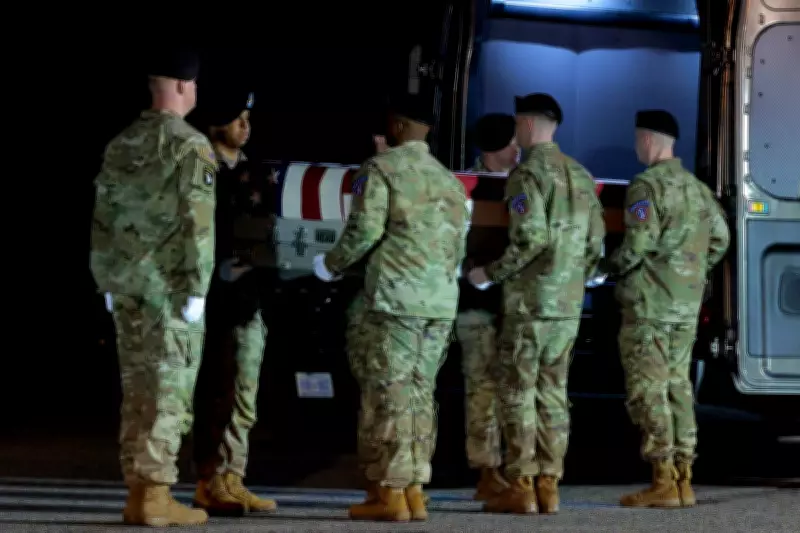
This messaging vacuum, combined with former President Trump's campaign promises to avoid unnecessary foreign entanglements, has resulted in a deeply unpopular military engagement. The conflict has already claimed the lives of seven US service members, further complicating public perception.
Polling Reveals Deep Partisan Divides
A weekend Quinnipiac University poll provides detailed insight into current public sentiment. The survey found that 53 percent of voters oppose military action in Iran, with only 40 percent expressing support. These opinions break sharply along partisan lines: 89 percent of Democrats and 60 percent of independents oppose the strikes, while 85 percent of Republicans support them.
The poll also uncovered significant security concerns among Americans. Fifty-five percent of respondents did not believe Iran posed an imminent threat to the United States before the strikes. However, 77 percent now believe it is either very likely or somewhat likely that a terrorist attack will occur on US soil as a direct result of the war.
Administration's Conflicting Messaging
Despite public skepticism, the Trump administration maintains a triumphant public posture regarding the conflict. Defense Secretary Pete Hegseth declared the US is "crushing the enemy" and described Iran as standing alone and "badly losing." He characterized the Iranian regime as "barbaric savages" who are "desperate and scrambling."
The administration has produced boastful, highlight-reel style videos combining actual war footage with clips from video games. Behind this confident facade, however, the administration faces mounting scrutiny over a suspected US strike on a girls' primary school in Minab that may have killed more than 150 people.
Internal Concerns and Strategic Calculations
Internally, aides have reportedly urged Trump to begin claiming that US military objectives have largely been achieved and to outline an exit strategy for the joint American and Israeli campaign. According to The Wall Street Journal, insiders fear a prolonged conflict could "deplete" Trump's support among his conservative base.
The multi-billion-dollar war presents increasing political challenges during a midterm election season focused on economic affordability. The US military expended more than $5 billion in munitions during just the first two days of the conflict, according to a report shared with Congress.
President Trump has offered contradictory timelines for the war's conclusion, alternating between describing a potential multi-week conflict and declaring that hostilities could end "very soon" and are already "very complete, pretty much." This inconsistent messaging further complicates public understanding and support for the military engagement.