Holocaust Memorial Garden Climbing to Become Criminal Offence Under New Law
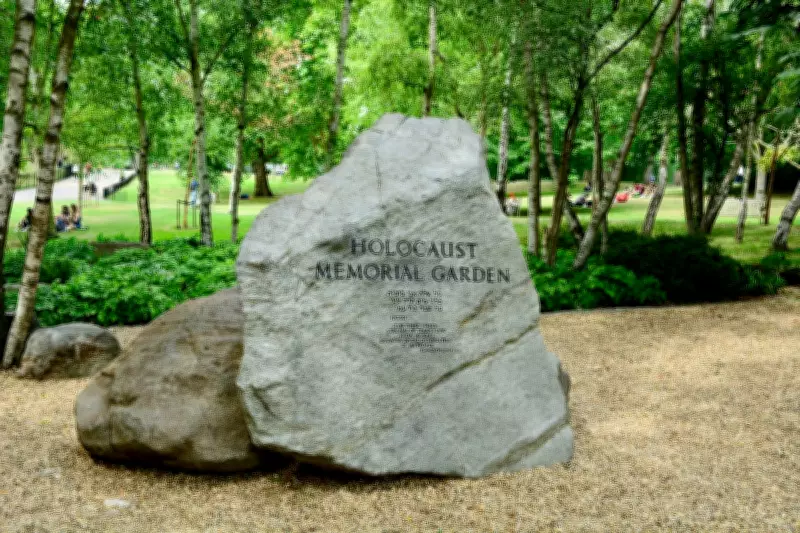
Climbing over the Holocaust Memorial Garden in Hyde Park is set to become a criminal offence, following its recent obscuration during a nearby demonstration. Peers have agreed to add the London garden, which features boulders and birch trees, to a draft list of memorials where ministers propose a ban on climbing as part of the Crime and Policing Bill.
Potential Penalties for Trespassers
Individuals found scaling the garden without "a good reason" could face severe consequences, including up to three months in prison and a fine of up to £1,000. This move aims to protect the memorial from vandalism and disrespect, particularly after it was covered with tarpaulin in April 2024 due to fears of antisemitic attacks.
Other Protected Memorials
The list of protected sites extends beyond the Holocaust Memorial Garden to include several other culturally significant monuments across the UK:

- The Cenotaph in Whitehall
- Birmingham’s Hall of Memory
- The Liverpool Cenotaph
- The Response in Newcastle
- The Portsmouth Naval War Memorial
- The statue of Sir Winston Churchill outside Parliament
- The Monument to the Women of World War II in Whitehall
The Churchill statue, recently daubed with graffiti such as "Free Palestine" and "Never Again is Now", would also fall under the new law, highlighting the broader context of protecting historical figures and events from defacement.
Government and Peer Support
Lord Parkinson of Whitley Bay, a Conservative peer, proposed including the Holocaust Memorial Garden in the Bill, citing the need for additional protection. He noted that the garden had to be covered in tarpaulin recently, underscoring the risk of vandalism. Lord Katz, speaking for the Government, supported this proposal, describing both the Holocaust Memorial Garden and the Monument to the Women of World War II as "culturally significant".
Lord Katz emphasized that the Bill "intentionally sets out a clear and fixed list of memorials, which provides certainty for the public, policing and the courts." He warned that including any listed or scheduled memorials beyond this list could undermine the clarity and consistency intended by the measure.
Enforcement and Practical Considerations
Addressing concerns about enforcement, Lord Katz clarified that the offence is designed to capture the act of climbing, not walking within the garden. He stated, "I am content that in enforcing this offence, police officers will use their discretion to consider whether an offence is committed." This ensures that everyday activities, such as sitting on steps at memorials like the Royal Artillery Memorial in Hyde Park, will not be penalized.
Additional Provisions in the Bill
The Crime and Policing Bill also includes amendments to ban protests outside the homes of public office-holders, such as MPs, peers, members of the Senedd, and the mayor of London. Lord Katz asserted that "harassment and intimidation must never be accepted as a part of a public office-holder’s role," while acknowledging the legitimacy of campaigners doorknocking during election periods.
Exemptions to this ban include key government properties:
- 10, 11, and 12 Downing Street
- The Palace of Westminster
- Chequers in Buckinghamshire
- Chevening House in Kent
Background on the Holocaust Memorial Garden
Built in 1983, the Holocaust Memorial Garden in Hyde Park serves as a poignant tribute, featuring a stone inscribed with the words: "For these I weep. Streams of tears flow from my eyes because of the destruction of my people." Its inclusion in the Bill reflects ongoing efforts to preserve such sites from harm and ensure they remain respected spaces for reflection.
The Bill is currently undergoing further scrutiny before it can become law, with peers and ministers working to balance protection with practical enforcement.