Home Secretary Approves Ban on Contentious Pro-Iranian Rally in London
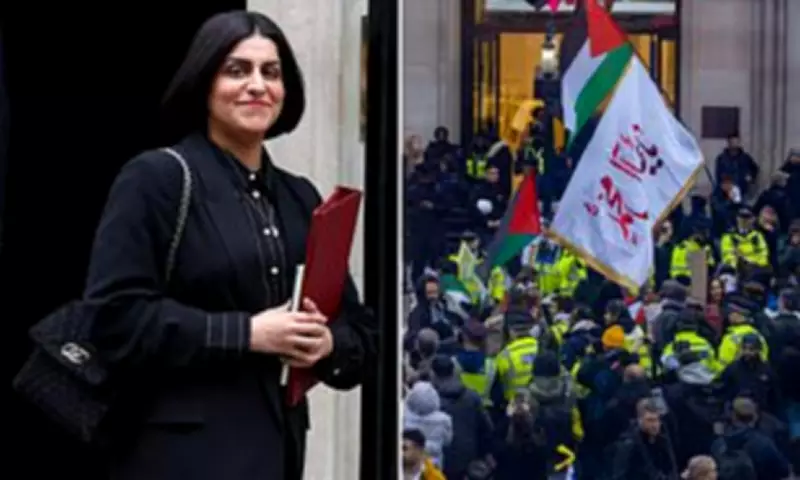
The Home Secretary, Shabana Mahmood, has yielded to mounting pressure and approved a police request to prohibit a pro-Iranian rally scheduled for London this weekend. This decision follows intense demands from over 100 MPs and peers, alongside a Labour minister, who argued that the Al Quds march fosters hatred and extremism within British society.
Security Concerns and Public Disorder Risks
In a statement, Ms Mahmood explained her rationale, emphasising the necessity to prevent serious public disorder. She cited the anticipated large scale of the protest, coupled with multiple planned counter-protests, all unfolding against the volatile backdrop of the ongoing Middle East conflict. The Home Office has characterised the march as "uniquely contentious," aligning with Scotland Yard's assessment.
"I am satisfied doing so is necessary to prevent serious public disorder, due to the scale of the protest and multiple counter-protests, in the context of the ongoing conflict in the Middle East," Ms Mahmood stated. She further warned that should any stationary demonstration proceed, police would enforce strict conditions, adding, "I expect to see the full force of the law applied to anyone spreading hatred and division instead of exercising their right to peaceful protest."
Police Assessment and Historical Context
Metropolitan Police Assistant Commissioner Ade Adelekan provided detailed insight into the security evaluation. He noted that the Al Quds march, which originated in Iran and is organised in London by the Islamic Human Rights Commission—a group supportive of the Iranian regime—presents unique risks. The police force, which does not possess the authority to ban protests independently, formally requested the Home Secretary's intervention.
"The threshold to ban a protest is high and we do not take this decision lightly; this is the first time we have used this power since 2012," Mr Adelekan remarked. He elaborated that the assessment considered the likely high numbers of both protesters and counter-protesters, extreme tensions between factions, and the impact of the volatile Middle East situation, including Iranian regime attacks on British allies and military bases overseas.
Political and Public Backlash
The move comes after Sarah Sackman, a courts minister, became the first government figure to publicly call for action against the annual march, scheduled for Sunday during Ramadan. Ms Sackman, a barrister and MP for Finchley and Golders Green—an area with a significant Jewish population—asserted that expressions of support for the Iranian regime and its proxies have no place in British society.
"They shouldn't be on the streets of London calling for hate and hostility against this country. That's thoroughly anti-British and I expect the police and the Home Secretary to take the necessary action," she told LBC. Shadow home affairs minister Alicia Kearns echoed these sentiments, stating that allowing the march would be an insult to British Armed Forces currently targeted by Iranian-backed groups.
Organiser Background and Past Incidents
The Islamic Human Rights Commission (IHRC), the march organiser, has previously described Iran's assassinated Supreme Leader, Ayatollah Ali Khamenei, as a martyr and a "rare role model." Past demonstrations have featured chants calling for Israel to be "wiped off the map" and displays of flags associated with Iranian-backed terror group Hezbollah. Last year's rally included chants of "Zionism has to fall."
Established in 1979 following the Iranian revolution, the annual event is named after the Arabic term for Jerusalem. This year, heightened Middle East tensions have raised fears that it poses an elevated risk of violence and disorder.
Cross-Party Opposition and Potential Alternatives
A cross-party group of MPs and peers, including Labour figures Baroness Hodge of Barking and Lord Mendelsohn, Labour MP Luke Akehurst, former anti-extremism tsar Lord Walney, and Reform UK leader Nigel Farage, wrote to the Home Secretary. They argued that permitting the march would legitimise Iran's agenda, send a troubling message, weaken Britain's international credibility, and undermine domestic cohesion.
While the ban halts the planned march, police sources indicated that demonstrators might still be allowed a static protest outside the Home Office, their intended meeting point. However, the Met has made clear that any such assembly would face stringent conditions. Mr Adelekan cautioned, "Given the tensions, we have to accept that confrontations could still take place." Counter-protests are expected from groups like Stop The Hate, which aims to combat anti-Semitism during pro-Palestine marches.
The IHRC has defended the event, stating it offers a platform for those standing against colonialism, oppression, and apartheid. Nonetheless, the government's decisive action reflects a broader commitment to maintaining public order and security in a highly charged geopolitical climate.