House of Lords Under Intense Scrutiny Following Epstein and Mandelson Controversies
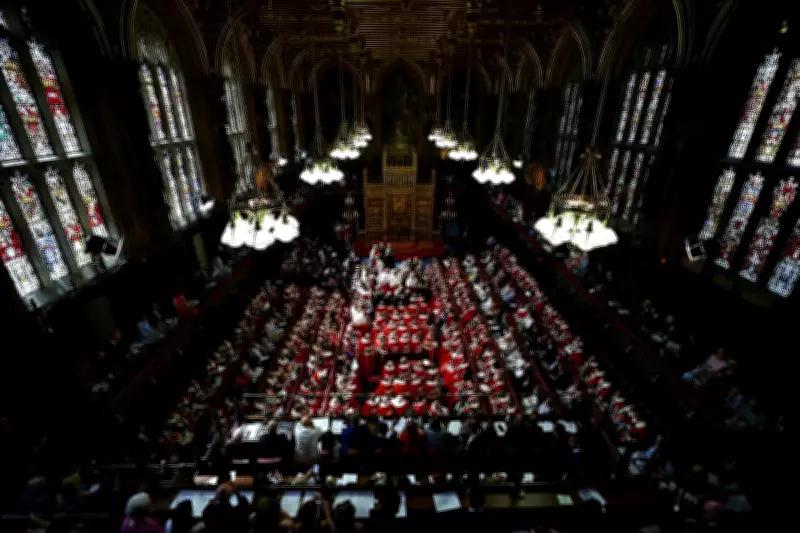
The House of Lords, Britain's unelected upper parliamentary chamber, is facing unprecedented scrutiny as fallout from the Jeffrey Epstein files reaches its gilded halls. The resignation of former UK ambassador to Washington Peter Mandelson from the Lords due to his friendship with the convicted sex offender has ignited fierce debate about the institution's relevance and ethical standards.
A Chamber Under Fire
Critics argue this episode highlights fundamental flaws in what they describe as an antiquated, undemocratic institution that moves far too slowly in addressing misconduct among its members. The chamber, comprising more than 850 life members bearing the titles "Lord" or "Lady," faces growing pressure for substantial reform.
"It's a mess," stated Jenny Jones, one of two Green Party members in the Lords. "Despite our supposed status as a modern democracy, we maintain a semi-feudal system that belongs to another era."

Historical Relic Meets Modern Controversy
For seven centuries, the House of Lords consisted primarily of noblemen who inherited their positions, alongside a small number of bishops. The 1950s introduced "life peers" - retired politicians, civic leaders, and notable figures appointed by the government, including the chamber's first female members.
In 1999, Prime Minister Tony Blair's Labour government removed most hereditary peers, though 92 were permitted to remain temporarily to avoid aristocratic rebellion. A quarter century later, Prime Minister Keir Starmer's current Labour government has introduced legislation to finally oust the remaining hereditary members, labeling them an indefensible relic.
"Hereditary peers actually work harder than average peers," countered Charles Hay, the 16th Earl of Kinnoull, who leads cross-bench peers. "Removing them means discarding many effective contributors to parliamentary work."
Legislative Power and Ethical Breaches
While most acknowledge the Lords' important role in reviewing legislation passed by the elected House of Commons, critics argue the upper chamber sometimes oversteps its authority. Currently, a bill to legalize assisted dying approved by the Commons has become bogged down with hundreds of amendments in the Lords.
Ethical breaches among peers have further damaged the institution's reputation. Until recently, parliamentary authorities had limited power to address misconduct or criminal behavior among members. Lord Archer of Weston-Super-Mare (author Jeffrey Archer) was imprisoned for perjury in 2001, while Lord Black of Crossharbour (media baron Conrad Black) served a US prison sentence for fraud in 2007. Neither could be expelled under the rules of their time.
Although regulations now permit expulsion for code of conduct breaches, imprisonment, or non-attendance, no peer has actually been expelled for misconduct. Several have resigned preemptively, including one convicted of sexual assault and another filmed allegedly using cocaine with sex workers.
The Mandelson and Doyle Controversies
Peter Mandelson's resignation has particularly highlighted systemic issues. Despite losing his position and facing a police investigation for misconduct in public office - including messages to Epstein asking "Need a Lord on the board?" - he retains his title as Lord Mandelson.
Similarly under pressure is Matthew Doyle, Starmer's former chief of staff, now Lord Doyle, who was appointed to the Lords despite his friendship with a man later jailed for possessing indecent images of children.
Removing titles from disgraced lords would require new legislation, something not undertaken since 1917 when several peers were stripped of their titles for supporting Germany during World War I.
The Glacial Pace of Reform
Labour remains committed to eventually replacing the House of Lords with a "more representative" second chamber, but progress remains painfully slow. In December, the Lords established a committee to consider introducing an 80-year retirement age and tightening participation requirements.
"Lords reform is glacial," observed Meg Russell, politics professor and head of the Constitution Unit at University College London. "Issues are discussed for decades before any meaningful action occurs."

The Mandelson and Doyle controversies have renewed concerns about member quality and selection processes. While crossbenchers are appointed by an independent committee, most life peerages are distributed by the prime minister, often rewarding aides, allies, and donors.
"There's really no proper quality check, no limit on numbers, and the entire system appears anachronistic," Russell emphasized. "Clearly, more rigorous vetting processes are needed before individuals enter the chamber."
Calls for Radical Change
The Green Party advocates abolishing the Lords entirely, replacing it with an elected upper house. "We should call it the Senate or something similar and abandon this ridiculous class-based nomenclature," said Jones, formally titled Baroness Jones of Moulsecoomb. "I would gladly be called senator rather than lady."
As anger among Labour lawmakers about Mandelson escalates into a potential leadership crisis for Starmer, the fundamental question remains: can Britain's ancient second chamber reform itself sufficiently to meet modern democratic standards, or does it require complete replacement?