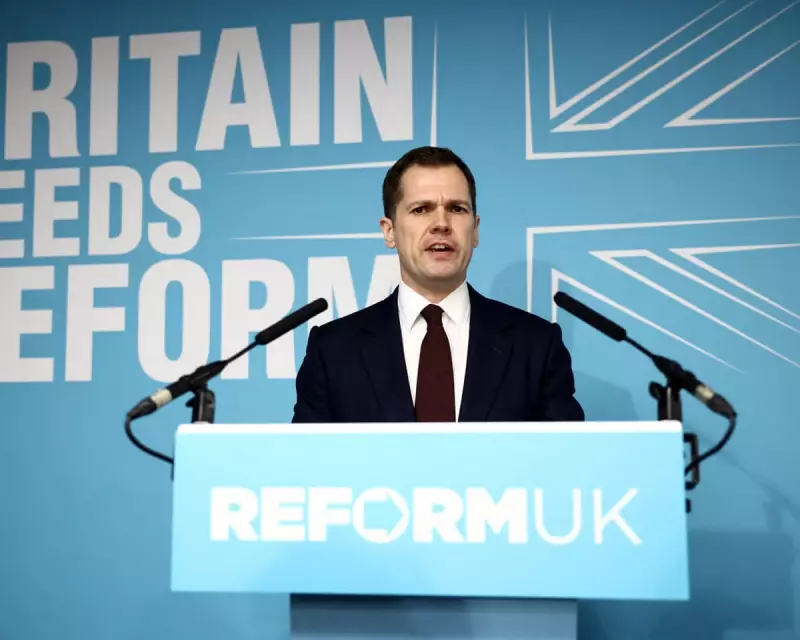
In a dramatic political earthquake, former Conservative shadow justice secretary Robert Jenrick has defected to Nigel Farage's Reform UK, delivering the most significant blow yet to Kemi Badenoch's beleaguered Tory party.
A Day of Political Chaos and Defection
The saga unfolded with startling speed on Thursday. Senior figures in Kemi Badenoch's office were sent a document purporting to be Jenrick's entire draft resignation speech, along with a media plan. The document, according to party sources, urged other Conservatives to defect and accused the party of having 'lost its way'. It also singled out senior shadow cabinet colleagues for criticism, including Priti Patel and Mel Stride.
Badenoch moved decisively. Shortly after 11am, she released a video statement announcing that Jenrick had been dismissed from the shadow cabinet, stripped of the whip, and suspended from the party. The message was emailed directly to members, framed as an effort to end years of internal psychodrama. The timing was deliberate, landing just as Nigel Farage was facing journalists at a press conference in Scotland.

Farage initially insisted there was 'no deal' and accused Badenoch of panicking, saying she had 'added up two and two and made five'. Yet, by mid-afternoon, what began as a pre-emptive strike by the Tory leader ended in a chaotic, public crossing of the floor. Farage presented Jenrick – a man he once described as 'a fraud' – to the press as Reform UK's newest recruit.
Jenrick's Scathing Indictment of the Tory Party
When Jenrick finally appeared at the Reform press conference – delayed after reportedly getting lost in Millbank Tower – he delivered a blistering condemnation of his former party. The Conservatives in Westminster, he declared, 'aren't sorry, they don't get it, they haven't changed, they won't change, they can't change'.
'In opposition, it is easy to paper over these cracks,' he continued, 'but the divisions and delusions are still there. I can't in good conscience stick with a party that has failed so badly.'
In a remarkable statement from a man who served as a minister under four consecutive prime ministers – Theresa May, Boris Johnson, Liz Truss, and Rishi Sunak – he asserted: 'Both Labour and the Conservatives broke Britain.' Jenrick insisted his move was not about personal advancement, stating, 'No one joins Reform unless they believe Nigel Farage is the best person to lead this country.'
Strategic Gambits: Farage's Plan and Badenoch's Dilemma
Initially, Badenoch's swift sacking of Jenrick appeared a masterstroke. She looked decisive and in control, daring others to challenge her. It was a rare moment where she tackled the Reform threat head-on. However, that momentum evaporated as the day wore on, leaving her camp braced for potentially more defections.
Badenoch later denied it was 'a very bad day', arguing that defections to Reform showed 'a lot of people have gone into politics for the wrong reasons'. She said, 'Robert Jenrick is not my problem any more. He's Nigel Farage's problem now.'
For Farage, the defection of a high-profile former minister like Jenrick is a key strategic prize. While Labour criticises Reform for welcoming a 'flood' of failed Tories, Farage sees them differently. Established former ministers help Reform shed its image as a protest movement or pressure group. They lend credibility, making the party look more like a serious, government-in-waiting operation to voters who agree with them on issues like immigration but worry about economic competence.
Farage did, however, draw a line. He stated that after the 7 May local elections, there would be no more Tory defections accepted, and promised that on that date, the Conservative party would 'cease to become a national party'.
Unsettled Politics and What Comes Next
Jenrick's loyalty was always questionable; he previously resigned as immigration minister from Rishi Sunak's government, arguing the Rwanda scheme did not go far enough. He will now likely seek a prominent role on Reform's front bench, possibly in economic policy, though this could cause tensions with existing figures like deputy leader Richard Tice.

The events of Thursday expose the profoundly unsettled state of right-wing politics in Britain. Badenoch moved to protect her party, Farage seized an unexpected prize, and Jenrick made a leap that revealed his ambition. The fallout matters far beyond one man's career. It will test whether Reform can turn defections into lasting credibility and whether the Conservatives can halt the slow hollowing-out that made such a dramatic defection possible in the first place.