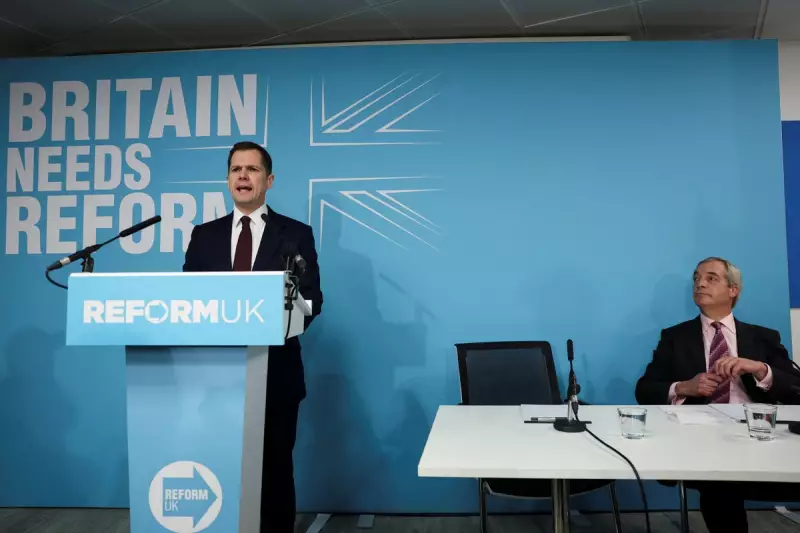
The political landscape was jolted on Friday, 16 January 2026, as former Conservative minister Robert Jenrick crossed the floor to join Nigel Farage's Reform UK. His dramatic move, immediately branded "treachery with a scowl" by furious Tory colleagues, marks a seismic shift in British politics and a significant blow to the Conservative Party under Kemi Badenoch.
The Staged Defection and a Symbolic No-Show
In a moment rich with symbolism, Jenrick was late to his own political unveiling. As Nigel Farage introduced him to applause from Reform loyalists, the new recruit was nowhere to be seen. Farage was left filling time for two awkward minutes before Jenrick, the party's seventh MP, finally appeared. The official reason was a mix-up in an unfamiliar building, but rumours swirled that he was distracted by a well-timed leak from Kemi Badenoch's office, which had sabotaged his launch by releasing part of his speech early.
This public stumble foreshadowed the intense personal and political cost of his decision. Jenrick's former colleagues in the shadow cabinet, whom he had sat with just days before on Tuesday, were swift to condemn his actions as outright treachery. The chair of his local Conservative association in Newark said they felt "absolutely betrayed." Drawing a comparison to the fall of Margaret Thatcher, some Tories noted that while that episode was "treachery with a smile on its face," Jenrick's characteristically stern demeanour made his a betrayal delivered with a scowl.
A Web of Suspicion and the High Price of Disloyalty
Jenrick enters his new political home under a cloud of suspicion. Reform itself is divided over accepting senior Conservatives from the last government, despite Jenrick having resigned as immigration minister in protest at Rishi Sunak's policies. The psychological toll of such a switch is immense, a point underscored by past defectors who speak of loneliness and the struggle for acceptance.
The parallels to popular culture were not lost on Westminster. Both Labour and Liberal Democrat press teams used imagery from the reality TV show The Traitors to mock Jenrick online. As journalist John Rentoul observed, loyalty is the glue of party politics, which is why defectors like Winston Churchill (twice) and Shaun Woodward have historically been treated with such disdain. Former colleague Michael Gove offered a stark warning from his own experience, telling Jenrick that his 2016 move against Boris Johnson was seen by most as simple treachery, regardless of his reasons. Gove suggested Jenrick would be seen as caught "mid-plot."
The Inside Story: Leaks, Clashes, and a Pre-emptive Strike
The defection was the culmination of rising tensions. A mole within Jenrick's office had leaked a draft of his defection speech to Kemi Badenoch, whose team attempted to disguise the source by claiming it had been left "lying around." This leak triggered Badenoch's decisive pre-emptive strike, sacking Jenrick before he could resign.
The rift had been widening for weeks. At a shadow cabinet away day held in an office overlooking the Tower of London—a location one attendee wryly noted was fitting for traitors—Jenrick had clashed directly with Badenoch. He argued that Britain was "broken," while she countered that some things were damaged but repairable. Jenrick later used this exchange in his defection speech, accusing some colleagues of believing the country was broken but refusing to admit the Conservative Party broke it.
In his final, fiery address, Jenrick launched personal attacks on former shadow cabinet colleagues by name, criticising Mel Stride on welfare and Priti Patel on immigration. This advanced notice of the attacks gave Badenoch the moral high ground to act first. While Jenrick claimed he would have left "in the next few days," even Nigel Farage admitted he thought there was only a 60-40 chance the defection would actually happen.
Badenoch's swift action limited the immediate damage and crucially stripped Jenrick of his bargaining power with Farage, likely costing him a top shadow cabinet role like chancellor. Nevertheless, the defection stands as hard currency in parliamentary politics: its very high cost makes it a potent indicator of the tectonic forces reshaping the right. Robert Jenrick may be branded a traitor, but his move has undeniably strengthened Reform UK and weakened the Conservatives.