Katie Miller's Political Pivot to Podcasting Meets Mixed Reception
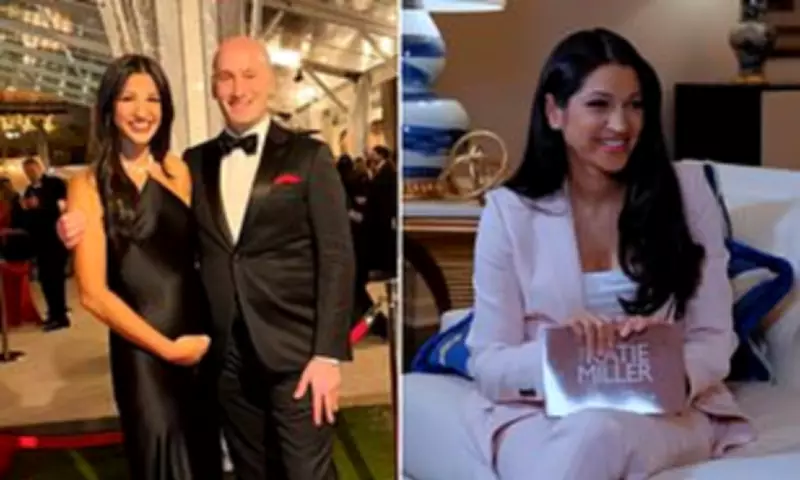
Katie Miller, a seasoned political operative with over a decade of experience, has recently stepped into the public spotlight with her new venture as a MAGA podcaster. The 34-year-old, who is pregnant with her third child, is married to White House Deputy Chief of Staff Stephen Miller and has been active in Republican politics since 2014. In August 2025, she launched The Katie Miller Podcast, aiming to establish herself as a conservative media personality.
High-Profile Interviews Fail to Boost Podcast Ratings
Despite securing interviews with notable figures such as actress Cheryl Hines, entrepreneur Elon Musk, and rapper Nicki Minaj, Miller's podcast has struggled to gain traction. On Apple Podcasts, it holds a modest rating of 2.6 out of five stars, while on Rephonic, it scores 2.5 out of five. This mediocre performance has sparked criticism, with some observers suggesting the White House is overly eager to promote her as a public figure.
One user on X, formerly known as Twitter, commented, 'There's something hilarious about the combination of the overwhelming mediocrity of Katie Miller and the desperation with which the top levels of the federal government are trying to make her a thing.' This sentiment highlights the challenges Miller faces in captivating audiences and building a loyal following.

Style Transformation and Brand Building Efforts
Since relocating to Washington, D.C., in 2014, Miller has undergone a significant style evolution. Previously seen in casual attire like jeans, playsuits, and dresses with risqué cut-outs in old Instagram posts, she has now adopted a more polished look. Her current wardrobe features tailored apparel with cleaner lines and block colors, projecting a mature and professional image.
James Christopher, a political commentator and public relations expert, told the Daily Mail that this change is deliberate. 'When you move from behind-the-scenes communications to being on-camera, you're not just "messaging," you're building a brand that has to read as credible to people who don't already like you,' he explained. 'The polish is a legitimacy play. It's the difference between being an operator and being a personality.'
Challenges in Establishing an Independent Identity
Christopher noted that Miller's visibility is closely tied to her husband's reputation as a hardline immigration strategist, which may hinder her success. 'That's a double-edged sword: it guarantees attention, but it also casts her as an extension of Stephen Miller at a moment when he's under intense scrutiny over immigration enforcement and messaging,' he said. He advised Miller to separate herself from this association to be taken more seriously, suggesting it currently provides 'more weight than lift.'
To build a lasting profile, Christopher recommended that Miller focus on developing an independent identity. 'If she wants a profile that lasts, she has to build an identity that isn't "Stephen Miller's wife,"' he bluntly stated. He proposed she leverage her communications background by specializing in areas like government reform or political media strategy, rather than relying on 'culture wars' to appeal to masses.
Strategies for Future Success
Christopher emphasized the importance of substance over spectacle. 'One serious long-form interview, one well-argued op-ed, and a consistent set of issues will do more for her than a thousand attention stunts,' he pointed out. 'Right now, the stunt content tends to signal performance, not leadership.'
He also advised Miller to distance herself from her husband's immigration policies without drawing undue attention. 'The more she's seen defending or mirroring immigration crackdowns, the more her brand becomes collateral damage every time the issue flares,' he warned. Instead, he suggested building 'soft-power credibility' through philanthropic efforts in areas like veterans' affairs, mental health, or women's leadership, which could help her reach beyond partisan audiences.

Miller, who served in various communications and press roles during the first Donald Trump administration, has often interacted with journalists but not as an expert or spokesperson. Christopher described her as 'a White House–adjacent communications figure rather than a formal power center inside the administration,' noting that this distinction is crucial for her public perception.
As she navigates her podcasting career, Miller faces the dual challenge of overcoming mediocre ratings and establishing a unique voice in a crowded conservative media landscape. Her style evolution and high-profile interviews have not yet translated into significant influence, underscoring the difficulty of earning credibility in the public arena.