Labour Leadership Blocks Burnham's Parliamentary Ambitions
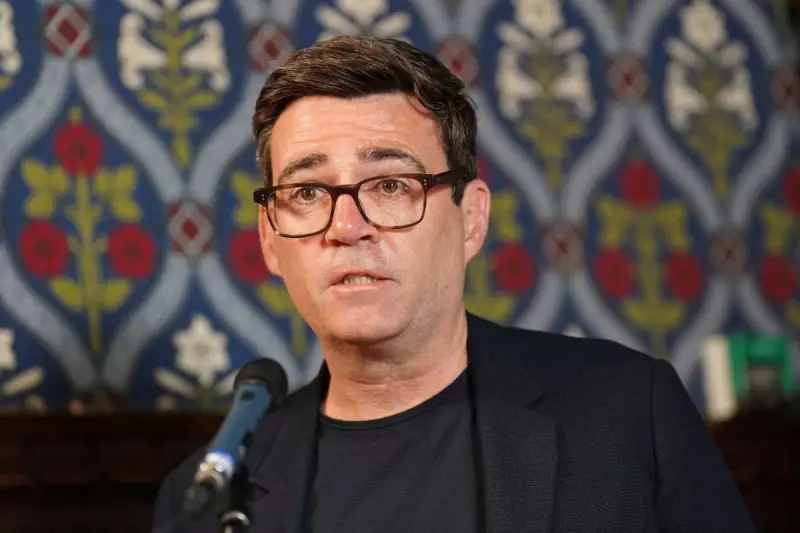
Andy Burnham, the Mayor of Greater Manchester, has expressed profound disappointment after Labour's National Executive Committee (NEC) formally blocked his bid to contest the upcoming Gorton and Denton by-election. The decision, reached during a Sunday morning vote, has ignited significant controversy within the party, exposing deep divisions between leadership figures and grassroots supporters.
NEC Cites Resource Concerns in Controversial Decision
Members of Labour's ruling National Executive Committee voted decisively to deny Mr Burnham permission to stand as a candidate in the crucial parliamentary contest. The committee's primary justification centered on the substantial party resources that would be required to fight what they termed an "unnecessary" mayoral by-election in Greater Manchester should Burnham win the parliamentary seat and subsequently resign his current position.
The decision was formally made by a ten-member sub-group of the NEC, which was chaired by Home Secretary Shabana Mahmood. In an official statement confirming the outcome, the Labour Party emphasized that the NEC had acted to prevent "an unnecessary election for the position of Greater Manchester mayor," suggesting that logistical and financial considerations outweighed Burnham's personal political ambitions.

Burnham Voices Concerns Over Electoral Impact
In a carefully worded statement released on social media several hours after the NEC's announcement, Mr Burnham conveyed both his personal disappointment and broader apprehensions about the decision's ramifications. "I am disappointed by today's NEC decision and concerned about its potential impact on the important elections ahead of us," the mayor stated.
He further elaborated on his motivations for seeking the candidacy, explaining: "I decided to put myself forward to prevent the divisive politics of Reform from damaging that. We are stronger together and let's stay that way." Despite the setback, Burnham pledged his "full support" to whoever ultimately becomes Labour's candidate in the constituency, promising to assist party members in Manchester and Tameside whenever needed.
Internal Party Backlash and Supportive Voices
The NEC's ruling has provoked immediate and substantial backlash from numerous Labour MPs and prominent trade unions, creating a visible fracture within the party's ranks. Several backbenchers have publicly called for the committee to reconsider its decision, including Socialist Campaign Group secretary Richard Burgon and former cabinet minister Louise Haigh.
Ms Haigh described the decision as "incredibly disappointing" and urged the NEC to "change course and make the right decision." She warned PA Media: "Otherwise I think we'll all come to regret this."
Trade union leaders have echoed these sentiments with considerable force. Andrea Egan, the newly-elected general secretary of Unison, Britain's largest trade union, stated: "I know many, many trade unionists will be so disappointed and angry at local members not being given a say over who their candidate should be. This isn't the way any democratic organisation should be run."
The TSSA union went further, accusing the NEC of blocking Burnham for "factional reasons" and declaring that "Labour has lost its way and must change its path to survive."
Defenders of the Decision Urge Party Unity
Conversely, some Labour figures have defended the NEC's controversial ruling, arguing that it allows the party to avoid damaging internal conflicts and focus on winning the by-election. Phil Brickell, MP for Bolton West, suggested that recent speculation about Burnham's candidacy had caused the Labour Party to "quickly turn inward... undermining the PM's efforts at home and abroad."
Rugby MP John Slinger welcomed what he called the "quick and clear decision," stating it enabled the party to "move on from the damaging, introspection and psychodrama of the last week" and "pull together" behind the eventual candidate.

Usdaw general secretary Joanne Thomas also indicated her union's acceptance of the decision, acknowledging the conclusion that Burnham's candidacy would inevitably lead to "major disruption" for the party's electoral strategy.
Future Westminster Prospects Remain Open
Despite the current blockage of his parliamentary ambitions, senior Labour politicians have hinted that Burnham's path to Westminster might reopen in the future. Local Government Secretary Steve Reed told the BBC: "In due course, I look forward to seeing Andy back in Parliament," suggesting a potential return after Burnham's term as Greater Manchester mayor concludes in 2028.
For now, Burnham has confirmed he will return to his mayoral duties with "full focus," vowing to continue defending the achievements built within the city-region over many years. The episode nevertheless leaves Labour grappling with significant internal tensions as it prepares for crucial electoral contests, with the decision highlighting ongoing struggles between central party control and local democratic processes.