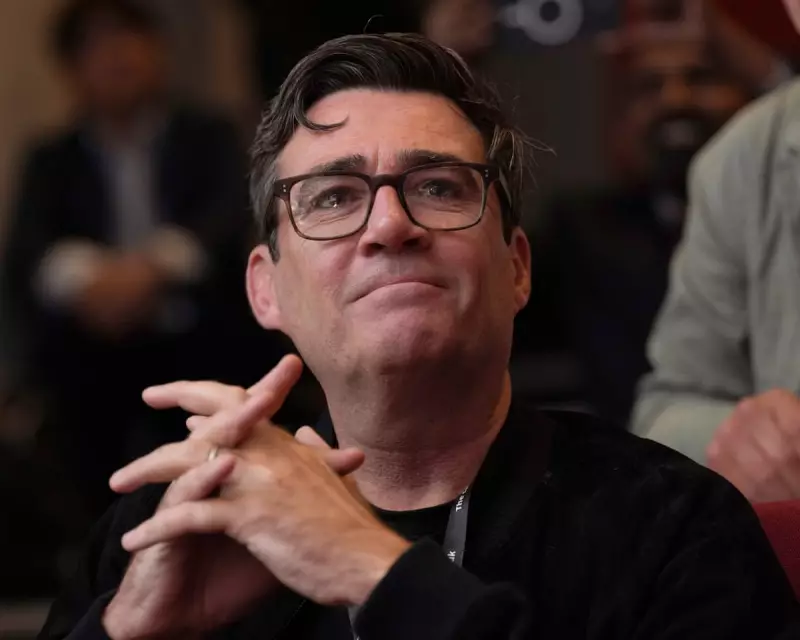
Labour Leadership Rejects Burnham's Byelection Ambition
In a significant political development, the Labour Party's national executive committee has formally refused Greater Manchester Mayor Andy Burnham's request to stand as the candidate in the forthcoming Gorton and Denton byelection. This decision effectively blocks a potential return to Westminster for one of the party's most prominent regional figures and represents a clear assertion of authority from the central leadership under Keir Starmer.
Strategic Setback for Ambitious Mayor
The rejection marks a substantial setback for Burnham's political ambitions and highlights the ongoing tensions between Labour's national leadership and its powerful regional mayors. While Burnham has publicly pledged loyalty to Starmer, his attempt to secure the candidacy was widely interpreted as the preliminary stage of a potential leadership challenge, particularly given the Prime Minister's persistently disappointing personal poll ratings.
Allies of the Prime Minister have been openly critical, describing the move as being driven primarily by "Andy Burnham's ambition" rather than party unity. Conversely, supporters of the Mayor argue that with Labour facing the prospect of a Nigel Farage-led government, the party desperately needs to change direction and that Burnham represents a viable alternative leadership option.

Returning to Familiar Roles
With his Westminster aspirations temporarily thwarted, Burnham will now return to focusing on his established dual roles: governing Greater Manchester and maintaining his position as a persistent, if unofficial, critic of Starmer's leadership. This latter function has become increasingly noticeable during periods when the Prime Minister faces political difficulties.
Observers note Burnham's tendency to re-enter the media spotlight during Starmer's challenging moments. During the 2021 party conference, when Starmer was struggling against Boris Johnson's vaccine bounce, Burnham appeared at numerous fringe events, emphasising his status as a Labour figure actually exercising power in government. Similarly, at last autumn's conference, he gave interviews recounting how Labour MPs had approached him about potentially replacing Starmer.
Avoiding Electoral Battle
The NEC's decision also spares Burnham from what promises to be a difficult electoral contest. Despite Labour's substantial 13,000-plus majority in the constituency previously held by Andrew Gwynne, the party now faces a multi-front political battle against Reform UK, the Greens, and possibly a pro-Gaza independent candidate.
Although charismatic Green leader Zack Polanski has decided not to stand, the Greens remain confident about their prospects and could significantly dilute Labour's vote share, potentially costing the party the seat. Burnham can now observe this contest from his mayoral office, with allies prepared to brief media that his local popularity would have secured victory had he been permitted to stand.
Developing "Manchesterism" Philosophy
Burnham's political appeal has been partly enhanced by his absence from Westminster, allowing him to develop a distinct, if occasionally vague, left-leaning philosophy he terms "Manchesterism." This represents a significant evolution from his previous positions during his time as an MP, when he twice unsuccessfully contested the Labour leadership in 2010 and 2015.
As outlined in a recent opinion piece, Manchesterism combines government investment and intervention with comprehensive devolution, exemplified by Greater Manchester's integrated Bee Network transport system incorporating trains, buses, trams, and cycling routes. This growth-based vision presents an alternative to current national policy approaches.
Long-Term Implications
The critical question remains whether Burnham's regional success and low-key charisma could translate to national electoral appeal sufficient to reverse Labour's polling fortunes. With the next general election potentially as distant as mid-2029, and Starmer showing few signs of political recovery, this question may eventually require answering.

For now, Burnham assumes the role of heir presumptive – the king over the water representing hope rather than practical reality. This position allows him to maintain political relevance without facing the immediate pressures of a challenging byelection or direct confrontation with the Prime Minister, while continuing to develop his distinctive political philosophy from his regional power base.