Labour Activists Commissioned PR Firm to Investigate Journalists Exposing Undeclared Donations
Labour Together, the activist group that played a crucial role in Keir Starmer's election as Labour leader, paid a substantial sum to a US public relations company to conduct surveillance on Sunday Times journalists. The journalists were investigating secret, undeclared donations made to the organisation, raising serious questions about press freedom and political transparency.
The £36,000 Investigation into Reporters' Backgrounds
The group authorised payment of £36,000 to Apco, an American public relations company, with instructions to examine the personal, political and religious backgrounds of the reporters behind the story. According to The Sunday Times, this investigation was ordered with the explicit intention of discrediting the journalists' work and undermining their reporting.
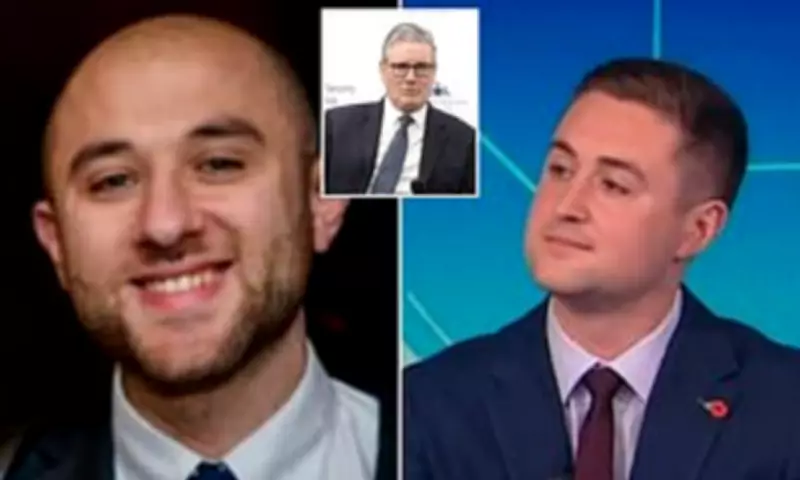
At the time of commissioning, Labour Together was run by Josh Simons, who has since become a Labour MP and Cabinet Office minister. Simons succeeded Morgan McSweeney as head of the organisation, though McSweeney remained aware of the decision to initiate the probe according to sources familiar with the matter.

Deeply Personal and False Claims in 58-Page Report
The resulting 58-page document, titled 'Operation Cannon' and marked 'private and confidential', identified Gabriel Pogrund, The Sunday Times Whitehall editor, and Harry Yorke, the newspaper's deputy political editor, as 'persons of significant interest'. Nearly ten pages of the report contained deeply personal and demonstrably false claims about Mr Pogrund.
These allegations included baseless suggestions linking the journalist to Russian sabotage campaigns, inappropriate commentary on his Jewish faith, and intrusive claims about his personal relationships. The Sunday Times reported that these accusations appeared to be fabricated without evidence or proper verification.
The Original Investigation into £730,000 Undeclared Donations
The controversy stems from an article published by Mr Pogrund and Mr Yorke in November 2023, which revealed that Labour Together had failed to declare £730,000 of donations received between 2017 and 2020. Their reporting questioned whether this represented a deliberate cover-up by Morgan McSweeney, who was then the group's chief executive.
McSweeney resigned last week from his position as Starmer's chief of staff amid revelations that he had advocated for the appointment of Peter Mandelson, a figure previously embroiled in political scandals, as US ambassador. Internal emails published by the Conservative Party showed that McSweeney had been advised by lawyers to describe the donation oversight as an 'admin error' if he had no better explanation.
Report Shared with Key Labour Figures and GCHQ
The Apco report was circulated among key Labour politicians in 2024, including current cabinet ministers and special advisers. Despite containing apparently false information, these accusations were reportedly believed and repeated by influential figures, forming the basis of a whispering campaign against the journalists and their newspaper.
A modified version of the document, with the personal section about Mr Pogrund removed, was submitted to the National Cyber Security Centre, part of GCHQ. While the cybersecurity agency declined to launch a full investigation, this referral was allegedly used to tarnish the legitimacy of the original Sunday Times article, with cabinet ministers and advisers quietly suggesting it was connected to Russian state interests.
Author's Background and Questionable Methodology
The report was authored by Tom Harper, Apco's senior director and a former Sunday Times employee. Harper reportedly attempted to portray Mr Pogrund and Mr Yorke as participants in a Russian campaign to damage Starmer's reputation, alleging without evidence that emails supporting their story likely originated from a suspected Kremlin hack of the Electoral Commission.

This conclusion appeared to disregard alternative explanations and was reached without basic IT or cybersecurity consultation, despite Apco not being a cybersecurity company. Harper also wrote that Mr Pogrund's reporting on the Royal Family 'could be seen as destabilising to the UK and also in the interests of Russia's strategic foreign policy objectives', while falsely claiming previous stories had been sourced from pro-Russian actors.
Political Reactions and Calls for Accountability
The Scottish National Party has demanded the dismissal of what they termed the 'creepy Labour Party spy minister', while Conservative MP Nick Timothy emphasised the importance of press freedom, stating: 'The freedom of the press and the ability of journalists to work free from harassment and intimidation is a vital foundation of our free society.'
Former Labour MP Jon Cruddas commented on the investigation, saying: 'I have heard of black briefings, but never heard of anything like this. This is dark s***.' SNP Westminster Leader Stephen Flynn MP called on Keir Starmer to address serious questions about his judgement and his relationship with Labour Together.
Labour Together's Response and Ongoing Investigations
Labour Together has acknowledged hiring Apco but has not confirmed additional details about the arrangement. Josh Simons, now the Labour MP for Makerfield, stated that Apco had exceeded its brief, expressing surprise at the inclusion of unnecessary information about Gabriel Pogrund. He claimed to have requested removal of this material before sharing the report with GCHQ and welcomed an investigation launched by the Public Relations and Communications Association.
Keir Starmer has publicly emphasised the importance of press freedom but has not acknowledged his relationship with Labour Together or its donors. The group's patrons include hedge fund manager Martin Taylor, who made his wealth through Nevsky Capital, a £1.5 billion Cayman Islands fund with investments in Russian companies such as Gazprom, and businessman Sir Trevor Chinn.
The full implications of this surveillance operation continue to unfold, raising fundamental questions about political transparency, journalistic independence, and the appropriate boundaries of opposition research in democratic societies.