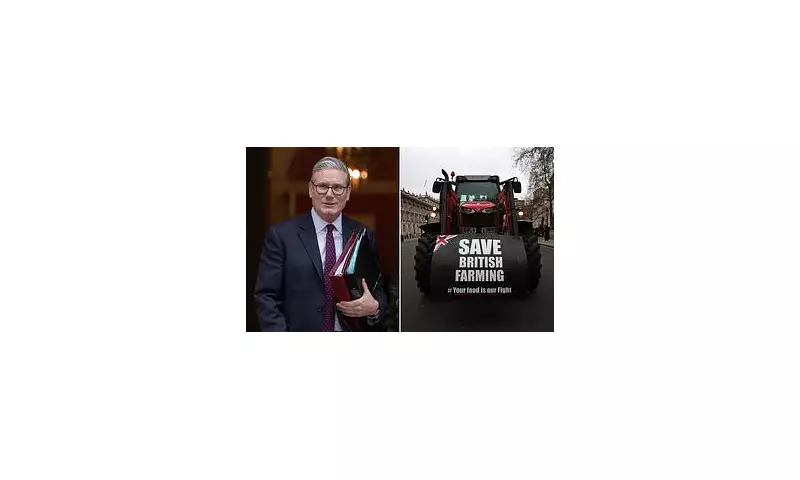
Prime Minister Keir Starmer has been forced into a significant and humiliating retreat on his controversial family farm inheritance tax, more than doubling the threshold in a move that will halve the number of estates affected. The climbdown marks the latest in a series of policy reversals that have eroded the Prime Minister's authority and sparked intense questions about the durability of his leadership.
A Major Concession After Mounting Pressure
The government announced that the threshold at which inheritance tax will apply to agricultural businesses will surge from £1 million to £2.5 million. This dramatic shift is a direct response to fierce opposition from within Starmer's own party and relentless campaigning from rural communities. The policy, first announced by Chancellor Rachel Reeves in her maiden Budget last year, was due to take effect from April 2026 and triggered over 14 months of protests, including tractor convoys to Westminster.
The rebellion reached a critical point when more than 30 Labour MPs abstained on a vote concerning the policy, with one, Markus Campbell-Savours of Penrith and Solway, rebelling outright and facing suspension from the parliamentary party. This internal dissent, coupled with a poorly received animal welfare strategy, forced the Prime Minister's hand. Sir Keir is understood to have intervened personally after meeting NFU President Tom Bradshaw ten days ago.

Relief, But Not Full Resolution for the Countryside
Farming leaders welcomed the change but were quick to stress that the fight to scrap the tax entirely would continue. Tom Bradshaw of the National Farmers' Union (NFU) told the BBC the adjustment would bring "a sense of relief" and allow many families to "sleep easy this Christmas." He described the original levy as a "cruel tax."
However, Gavin Lane of the Country Land and Business Association warned that the announcement "only limits the damage – it doesn't eradicate it entirely." He argued that many family farms, with their high-value land and machinery, would still be valued above the new threshold while operating on razor-thin margins, leaving the tax burden unaffordable.
The human cost of the policy was starkly highlighted by Jonathan Charlesworth, whose farmer father took his own life the day before the 2024 Budget in anticipation of the changes. He called the U-turn a "well-fought-for victory for our precious countryside and the custodians of it."
Political Fallout and Financial Implications
The reversal has significant political and financial repercussions. The Treasury had expected the tax to raise £520 million a year by 2029; that figure is now revised down to approximately £300 million, raising questions about how the shortfall will be managed. Politically, the episode is seen as a severe blow to Starmer's standing.
Conservative leader Kemi Badenoch labelled it a "huge U-turn" on "cruel, immoral" plans, while Tory environment spokeswoman Victoria Atkins said it was "too late for some" and that "businesses and lives have been lost." The government's official line, delivered by Environment Secretary Emma Reynolds, was that it had "listened closely to farmers" and was acting to "protect more ordinary family farms."
This tax retreat follows other painful policy reversals on winter fuel allowance, welfare reform, and the two-child benefit cap, creating a narrative of a Prime Minister struggling to impose his will on a restive parliamentary party and casting a long shadow over his future.