White House Press Secretary Faces Social Media Backlash Over Executive Order Announcement
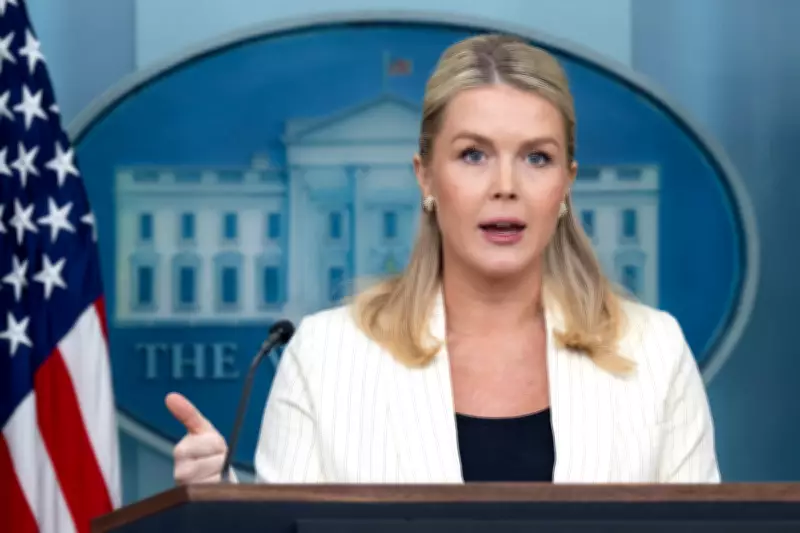
White House press secretary Karoline Leavitt has become the target of widespread online mockery following her social media post promoting President Donald Trump's executive order aimed at accelerating reviews of psychedelic drugs for mental illness treatment. The timing of her announcement has drawn particular attention amid growing public scrutiny of Trump's own mental state.
Social Media Users Seize on Unfortunate Timing
Leavitt's initial post on X simply stated: "Fact Sheet: President Donald J. Trump is Accelerating Medical Treatments for Serious Mental Illness," accompanied by a link to the executive order. This straightforward announcement was immediately misinterpreted by many social media users who suggested it appeared Leavitt was announcing that Trump himself was seeking treatment for serious mental health conditions.
Journalist Aaron Rupar responded: "We've noticed and I'm glad he's getting help," while the press office team for California Governor Gavin Newsom quipped: "For himself?" CNN contributor Bakari Sellers added: "Thank GOD, he's getting the help he needs." The misinterpretation spread rapidly across platforms, with one user remarking: "Karoline, when I first read the post, my heart soared. I thought Donald was accelerating medical treatments for his serious mental illness. Then I figured it out. Thanks a lot."

Context of Increased Presidential Scrutiny
The social media reaction comes during a period of heightened examination of Trump's mental state, following multiple outbursts on his Truth Social platform during the ongoing conflict in Iran. Additional attention has focused on Trump's recent sharing of an AI-generated image depicting himself as Jesus, which he later claimed he believed portrayed him as a doctor.
Internet users amplified the mockery through creative memes, including one showing Trump in what appeared to be a mental health facility with his hands restrained. In the meme, another patient resembling Jack Nicholson's character from "One Flew Over the Cuckoo's Nest" asks: "Why are you in here?" to which an AI-generated image of Trump responds: "Nobody believes that I'm Jesus."
Clarification and Executive Order Details
Recognizing the confusion, Leavitt subsequently reshared her original post with additional clarification: "President Trump signed an Executive Order that will accelerate access to treatments for patients with serious mental illness, reaffirming his commitment to advancing solutions that provide hope to Americans with devastating, complex, and treatment-resistant conditions."
Trump announced the executive order during an Oval Office event on Saturday alongside podcast host Joe Rogan. The order specifically aims to speed up reviews of therapeutic benefits associated with LSD, psilocybin, ecstasy, and other psychedelic substances. During the announcement, Trump highlighted the potential of ibogaine—a Schedule I controlled substance derived from a West African shrub—citing studies showing "80 to 90 percent reduction in symptoms of depression and anxiety within one month" among participants.
In a moment of levity during the announcement, Trump joked: "Can I have some, please?" prompting laughter from attendees before adding: "I'll do whatever it takes...I don't have time to be depressed. If you stay busy enough, maybe that's what works too, that's what I do."
Broader Policy Context and Bipartisan Support
This executive action follows commitments from Health Secretary Robert F. Kennedy Jr. and other administration officials to facilitate medical access to psychedelic substances—an issue that has garnered unusual bipartisan support in Washington. Veteran organizations and psychedelic advocates have long argued that ibogaine shows significant promise for treating challenging conditions including post-traumatic stress disorder and opioid addiction.
The administration's push represents a notable policy shift regarding substances that have traditionally faced strict regulatory barriers, despite growing evidence of their therapeutic potential for mental health conditions that often prove resistant to conventional treatments.